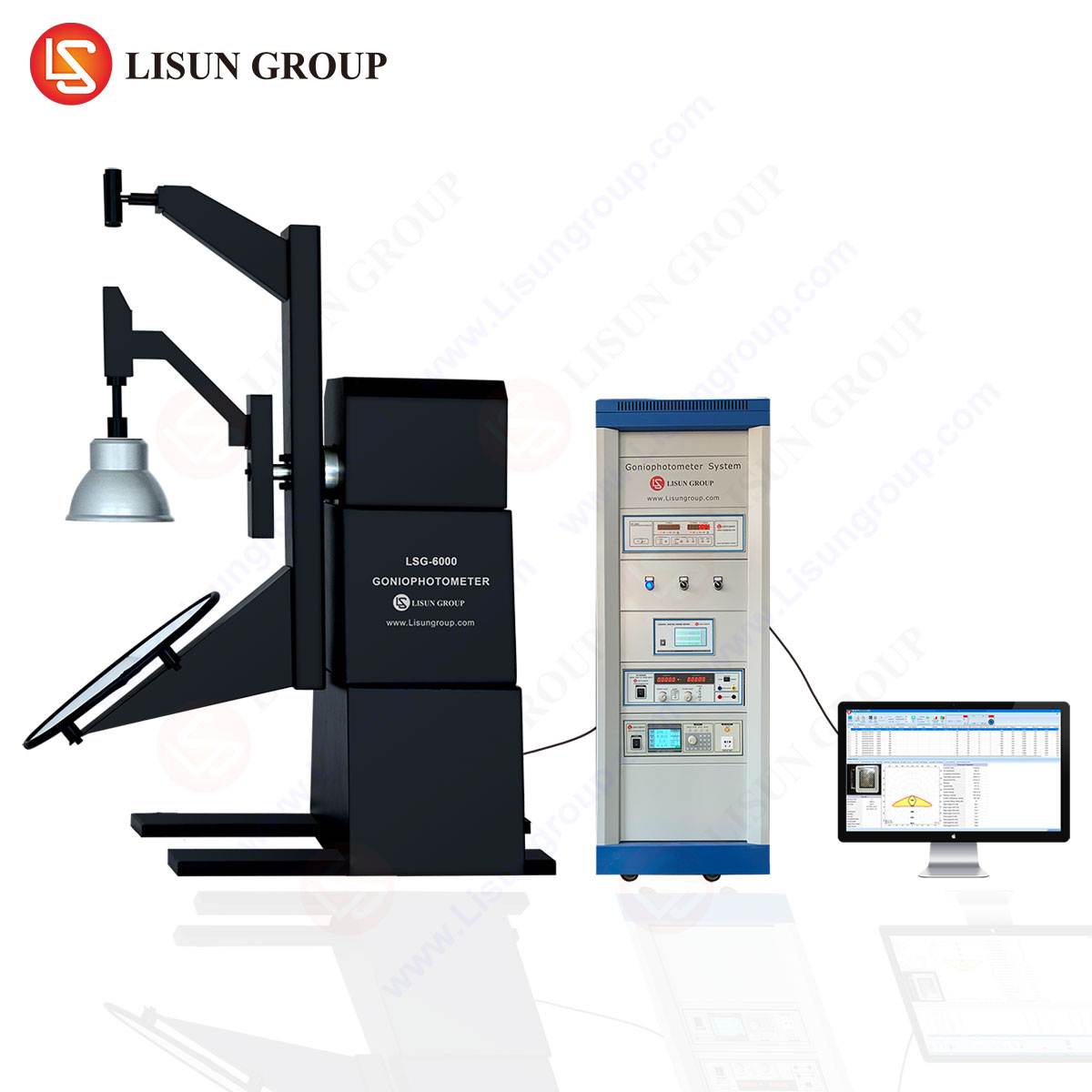






A Comprehensive Examination of Type C Goniophotometric Testing for Luminous Intensity Distribution
Fundamental Principles of Goniophotometric Measurement
Goniophotometry constitutes a foundational metrological discipline within optical science, dedicated to the precise characterization of the spatial distribution of luminous intensity from a light source. The term itself is derived from the Greek words ‘gonia’ (angle) and ‘phos’ (light), accurately describing its core function: measuring light as a function of angle. A Type C goniophotometer, as classified by the Commission Internationale de l’Éclairage (CIE), represents a specific mechanical configuration where the photometer or spectrometer remains in a fixed position, while the light source under test (SUT) is rotated around its own photometric center in two orthogonal axes. This configuration is particularly advantageous for testing luminaires where maintaining a constant electrical and thermal connection is critical, as the SUT’s movement is controlled and predictable.
The operational principle hinges on the inverse-square law, which states that the illuminance (E) at a point on a surface is directly proportional to the luminous intensity (I) of the source in the direction of that point and inversely proportional to the square of the distance (d) between the source and the point (E = I/d²). By rotating the SUT through a full range of vertical (C-planes) and horizontal (γ-angles) positions and measuring the illuminance at a fixed detector, the goniophotometer constructs a complete three-dimensional luminous intensity distribution. This data set, often referred to as an I-table, is the primary output. It can be further processed to generate critical photometric data files, such as IES (Illuminating Engineering Society) and EULUMDAT (European Lumen Data Format) files, which are indispensable for lighting design software used in applications ranging from urban street lighting planning to sophisticated stage and studio setups.
Mechanical Configuration and Operational Dynamics of Type C Systems
The Type C goniophotometer’s architecture is defined by its dual-axis rotational system. The SUT is mounted on a rotating arm that controls the vertical γ-angle. This entire arm assembly is itself mounted on a turntable that controls the horizontal C-plane rotation. This arrangement ensures that the photometric center of the SUT remains coincident with the intersection point of these two axes throughout the measurement process. The detector, typically a high-precision photometer or a high-resolution spectroradiometer, is positioned at a fixed distance on the optical bench, aligned with the center of rotation.
This configuration offers distinct operational benefits. By moving the luminaire and not the detector, the optical path length remains constant, simplifying the application of the inverse-square law. Furthermore, it mitigates the risk of disturbing delicate fiber optic connections or complex thermal management systems that may be integral to the SUT, a common requirement in LED module testing and optical instrument research and development. The stability of the detector also enhances measurement accuracy and repeatability, as it is not subject to the vibrations and positional uncertainties associated with moving a sensitive optical sensor. For large or heavy luminaires, such as those used in high-bay industrial lighting or medical surgical lights, the Type C design can be engineered to provide robust support and precise positioning.
The LSG-6000 Goniophotometer: A System for High-Accuracy Photometry
The LISUN LSG-6000 Goniophotometer exemplifies the application of Type C principles in a high-performance testing system. Designed to meet the rigorous demands of international standards, including IEC 60598-1, IESNA LM-79-19, and EN 13032-1, the LSG-6000 is engineered for comprehensive photometric and colorimetric analysis of various light sources.
Key Specifications of the LSG-6000:
- Measurement Geometry: Type C (moving luminaire, fixed detector).
- Measuring Distance: 5m, 10m, 15m, 20m, or 30m (configurable to meet specific requirements).
- Angular Resolution: Typically ≤ 0.1° for high-resolution scanning.
- Detector Options: High-precision photopic filter photometer or high-resolution CCD spectroradiometer.
- Luminous Intensity Range: A wide dynamic range capable of measuring from faint indicator LEDs to high-power stadium lights.
- Data Output: Full IES, LDT, and EULUMDAT file generation for lighting design applications.
The system operates by automatically rotating the SUT through a user-defined sequence of C-planes and γ-angles. At each position, the detector captures illuminance data. The integrated software then calculates the corresponding luminous intensity and, when equipped with a spectroradiometer, full spectral power distribution, correlated color temperature (CCT), color rendering index (CRI), and chromaticity coordinates. This comprehensive data set is vital for industries like LED manufacturing and display equipment testing, where precise color quality is as critical as luminous flux output.
Standards Compliance and Global Testing Protocols
Adherence to international standards is paramount for ensuring the validity, repeatability, and comparability of goniophotometric data. The LSG-6000 is designed to comply with a comprehensive suite of these standards, facilitating global market access for lighting products.
- IEC 60598-1: This foundational standard for luminaire safety often references photometric performance requirements, for which goniophotometer data is essential.
- IESNA LM-79-19: “Electrical and Photometric Measurements of Solid-State Lighting Products.” This is a critical standard for the LED industry, prescribing the approved methods for measuring total luminous flux, electrical power, and luminous intensity distribution. The Type C configuration is explicitly recognized as a compliant method within LM-79.
- CIE 70, CIE 121, CIE S025: These CIE publications provide the fundamental scientific framework for photometry, including the characteristics of the human photopic vision and test methods for LED lamps, modules, and luminaires.
- EN 13032-1: The European standard for the measurement and presentation of photometric data for luminaires, which mandates specific requirements for data formatting and measurement conditions.
- ANSI/IES RP-16-17: Defines the nomenclature and photometric definitions used in the lighting industry across North America.
Compliance with these standards ensures that data generated by the LSG-6000 is accepted by regulatory bodies, lighting designers, and specifiers in North America, Europe, and other international markets.
Industry-Specific Applications and Use Cases
The versatility of Type C goniophotometer testing, as realized in systems like the LSG-6000, makes it an indispensable tool across a diverse spectrum of industries.
- Lighting Industry and LED & OLED Manufacturing: This is the primary application domain. Manufacturers use the LSG-6000 to validate product performance claims, including total luminous flux (lumens), efficacy (lumens per watt), and beam angle. For directional lamps and spotlights, the precise beam shape and cut-off angles are critical quality parameters. In OLED manufacturing, where light is emitted from a large, planar surface, the Type C system’s ability to handle panel-sized objects is crucial for measuring uniformity and viewing angle characteristics.
- Display Equipment Testing: The performance of backlight units (BLUs) for LCDs and direct-view LED signage is characterized by its angular luminance and color uniformity. A goniophotometer can map the angular emission profile of a BLU to identify hotspots, ensure consistent viewing angles, and optimize optical diffuser films.
- Urban Lighting Design: For streetlights, area lights, and architectural facade lighting, the precise luminous intensity distribution is paramount for achieving compliance with lighting class standards (e.g., IESNA roadway classifications), minimizing light trespass, and maximizing energy efficiency. The IES files generated by the LSG-6000 are directly imported into simulation software like Dialux or Relux to model and predict real-world lighting performance before installation.
- Stage and Studio Lighting: Theatrical and broadcast lighting fixtures are defined by their beam characteristics. Goniophotometry provides the hard data for parameters such as field angle, beam angle, and intensity throw-distance calculations, enabling lighting designers to select the correct fixture for a specific application.
- Medical Lighting Equipment: Surgical lights and medical examination lamps have stringent requirements for shadow reduction, color rendering, and illuminance levels. Goniophotometric testing verifies that the complex optical systems in these devices produce a uniform, cool, and high-CRI field of light, which is critical for accurate diagnosis and patient safety.
- Sensor and Optical Component Production: Beyond finished luminaires, goniophotometers are used to characterize the angular response of light sensors, the transmission/reflection properties of diffusers, lenses, and filters, and the emission patterns of optical fibers, supporting R&D in photonics and sensor technology.
Comparative Advantages in a Competitive Landscape
The LSG-6000, as a modern Type C system, offers several distinct competitive advantages derived from its inherent design and engineering execution.
Stability and Accuracy: The fixed detector configuration eliminates a significant source of measurement uncertainty. Without the need to move the sensitive optical head, the system avoids potential calibration drift and positional errors that can afflict moving-detector designs. This results in superior long-term measurement stability and repeatability.
Operational Versatility: The system is adept at handling a wide variety of SUTs, from small LED packages to large, heavy, and complex luminaires. This is particularly beneficial for testing laboratories that serve multiple industries, from photovoltaic module inspection (where angular reflectance is measured) to scientific research laboratories studying novel material luminescence.
Data Integrity and Workflow Efficiency: The integration of automated software for data acquisition, processing, and report generation streamlines the testing workflow. The direct generation of standardized IES and LDT files eliminates manual data translation errors and accelerates the time-to-market for lighting products. The high angular resolution allows for the detection of subtle optical artifacts that lower-resolution systems might miss, providing deeper insights for optical instrument R&D.
Future-Proofing with Spectroradiometry: The system’s compatibility with a CCD spectroradiometer ensures it is equipped to handle the evolving needs of the lighting industry, where color quality, spectral tuning, and non-visual biological effects (melopic ratio) are becoming increasingly important metrics beyond simple photometry.
Frequently Asked Questions (FAQ)
Q1: What is the primary difference between a Type A, Type B, and Type C goniophotometer?
The classification is based on the axes of rotation relative to the luminaire. In Type A, the luminaire rotates around a vertical axis (for horizontal plane measurements) and the detector moves in a vertical arc. In Type B, the luminaire rotates around a horizontal axis and the detector moves in a horizontal arc. In Type C, the luminaire rotates around both its vertical and horizontal axes while the detector remains completely stationary. The Type C is often preferred for its mechanical stability and simpler optical path.
Q2: Why is a long optical bench distance (e.g., 10m or more) sometimes necessary?
A longer distance is required to satisfy the “far-field” condition for photometry. According to standards, the measurement should be performed at a distance at least five times the maximum dimension of the light source. For large luminaires, such as streetlights or high-bay industrial fixtures, a long distance is essential to ensure that the illuminance measurement accurately represents the luminous intensity, without near-field errors.
Q3: Can the LSG-6000 measure the spectral power distribution in addition to luminous intensity?
Yes, when equipped with an optional high-resolution CCD spectroradiometer instead of a standard photometer, the LSG-6000 can capture the full spectral power distribution at every measurement angle. This allows for the calculation of colorimetric data, including Chromaticity (x,y, u’v’), Correlated Color Temperature (CCT), and Color Rendering Index (CRI, Ra), across the entire spatial emission of the luminaire.
Q4: How does the system handle luminaires that require active thermal management during testing?
The Type C configuration is inherently advantageous for this scenario. Since the luminaire’s position changes in a controlled and predictable manner, its power cables and any cooling fluid hoses can be routed along the rotating arm and through the central pivot point. This prevents cable twisting (which can cause connection issues) and allows for continuous operation of integrated fans or liquid cooling systems, ensuring the SUT is measured at its stable operating temperature.