


Understanding Goniophotometers for Lighting Measurement
The Fundamental Role of Angular Photometric Data
In the quantitative evaluation of lighting products, the measurement of total luminous flux (lumens) provides only a partial characterization. A comprehensive understanding of a luminaire’s performance necessitates knowledge of its spatial light distribution—the intensity of light emitted in every direction. This angular photometric data is critical for predicting real-world performance, ensuring regulatory compliance, and driving innovation. The instrument engineered specifically for this multidimensional measurement is the goniophotometer. By rotating a light source about two perpendicular axes while measuring luminous intensity at defined angular intervals, a goniophotometer constructs a complete three-dimensional intensity distribution, known as the luminous intensity distribution curve (LIDC). This data set serves as the foundational input for calculating total luminous flux, efficacy, zonal lumen distribution, and for performing lighting simulation software analyses. The precision and accuracy of these measurements are paramount across diverse fields, from energy-efficient LED design to the exacting requirements of medical and stage lighting.
Architectural Principles of Modern Goniophotometer Systems
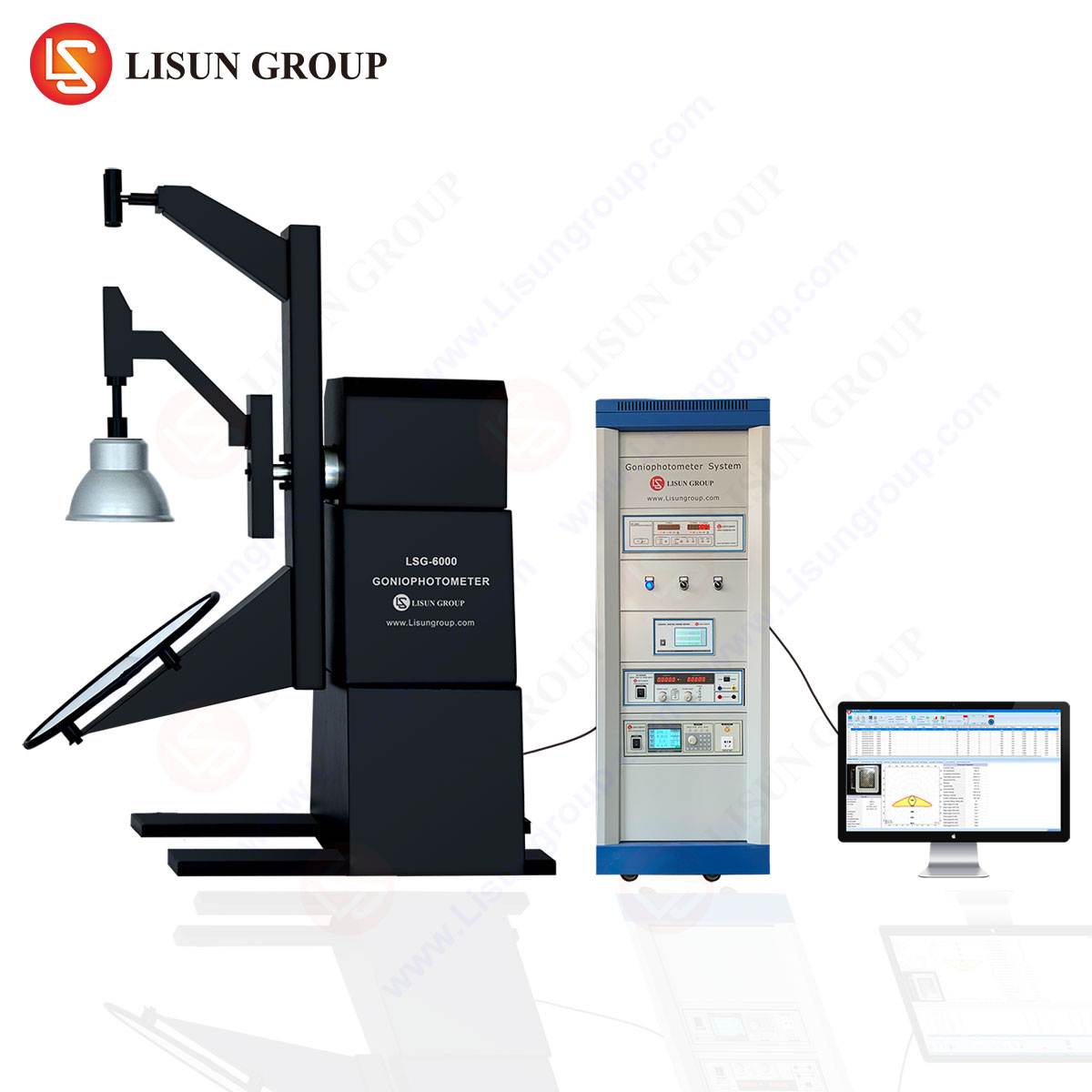
Contemporary goniophotometers are sophisticated electromechanical-optical systems comprising several integrated subsystems. The core mechanical structure facilitates the precise rotation of the device under test (DUT). Designs are categorized as Type A (axis of first rotation vertical, simulating tilt) or Type C (axis of first rotation horizontal, simulating azimuthal rotation), with Type C being prevalent for general lighting applications due to its alignment with common photometric coordinate systems (C-γ). A high-stability photometer or spectroradiometer, mounted on a fixed or moving arm, captures light from the DUT at a constant distance, adhering to the inverse-square law’s far-field condition. This detector is typically housed within a temperature-stabilized enclosure and is calibrated against national standards. The entire apparatus is managed by dedicated software that controls motion, synchronizes data acquisition, processes raw photometric data, and generates standardized reports. Environmental control, including darkroom conditions and thermal management of the DUT, is essential to mitigate measurement uncertainty. Modern systems, such as the LISUN LSG-6000 Goniophotometer Test System, exemplify this integration, featuring a Type C design with a large two-meter measurement radius, a high-precision double-row circular rail guideway, and a servo-motor control system for exceptional positional accuracy and repeatability.
Deconstructing the LSG-6000 Goniophotometer Test System
The LISUN LSG-6000 represents a fully automated, large-radius goniophotometer designed for the comprehensive evaluation of luminaires up to 150 kg in weight and 2000 mm in length. Its specifications are engineered to meet the stringent requirements of international testing standards.
Key Specifications:
- Measurement Geometry: Type C (C-γ coordinate system)
- Measurement Distance: 2 meters to 5 meters (adjustable, with 2m/3m/5m standard options)
- Angular Resolution: 0.1° (minimum step)
- Maximum DUT Dimensions: 2000 x 2000 x 2000 mm (L x W x H)
- Maximum DUT Weight: 150 kg
- Detector Options: High-precision photopic luminance meter (V(λ) matched) or high-speed array spectroradiometer
- Compliance Standards: Fully conforms to IESNA LM-79-19, IEC 60598-1, EN 13032-1, CIE 70, CIE 121, and ANSI C78.377.
Testing Principle: The LSG-6000 operates on the moving detector, fixed DUT principle. The luminaire is mounted on the vertical rotation axis (γ-axis). The detector, positioned at the selected constant photometric distance (e.g., 2m), traverses a vertical arc (C-plane) around the DUT. After a complete scan of a C-plane, the DUT rotates incrementally about its vertical axis, and the detector scans the next C-plane. This process continues until the entire spherical or hemispherical space is mapped. The integrated software constructs the 3D intensity distribution from this data set.
Competitive Advantages: The system’s large two-meter radius minimizes near-field errors for sizable luminaires, ensuring far-field condition compliance. The use of a high-precision circular guideway and servo-motors eliminates the backlash and vibration common in belt-driven or less rigid systems, directly enhancing angular accuracy and measurement repeatability. Its modular design allows for seamless integration of spectroradiometers for chromaticity and color rendering index (CRI) measurements as a function of angle, a critical requirement for modern LED products.
International Standards and Protocol Compliance
Goniophotometric measurements are governed by a suite of international and national standards which define test conditions, procedures, and data reporting formats. Conformance to these standards is non-negotiable for product certification and global market access.
- IEC/EN 13032-1: This is a cornerstone standard, “Light and lighting – Measurement and presentation of photometric data of lamps and luminaires.” It meticulously details measurement conditions, photometric coordinate systems (Type A, B, C), and the required data formats (e.g., IESNA LM-63, EULUMDAT) for lighting design software.
- IESNA LM-79-19: An approved method for the electrical and photometric testing of solid-state lighting (SSL) products. It mandates goniophotometry for total luminous flux measurement of luminaires, specifying environmental stabilization, electrical settings, and measurement uncertainty considerations.
- ANSI C78.377 & IEC 62663: These standards define chromaticity bins for LED packages and modules. Angular color uniformity, measured via a spectroradiometer-equipped goniophotometer like the LSG-6000, is essential to verify that a luminaire’s chromaticity remains within specified quadrants across all viewing angles.
- CIE 70, CIE 121, CIE S025: Publications from the International Commission on Illumination (CIE) provide the scientific foundation, detailing measurement principles for luminous flux, testing procedures for LED lamps and modules, and general requirements for LED product testing.
- DIN 5032-7: The German national standard for photometric measurements, often referenced in European technical documentation.
Compliance with these standards ensures that data generated by systems like the LSG-6000 is recognized by testing laboratories (e.g., UL, TÜV, Intertek), lighting designers, and regulatory bodies worldwide.
Industry-Specific Applications and Use Cases
The application of goniophotometry extends far beyond basic lumen output validation, serving as a critical tool in specialized sectors.
LED & OLED Manufacturing: For LED luminaires and OLED panels, angular color consistency is as critical as intensity distribution. Goniophotometers with integrated spectroradiometers measure the spatial variation of correlated color temperature (CCT) and CRI, identifying color over-angle shifts that affect quality and user perception. This is vital for compliance with ANSI C78.377 and for high-end architectural applications.
Display Equipment Testing: The evaluation of backlight units (BLUs) for LCDs or the uniformity of direct-view LED video walls requires precise measurement of luminance and chromaticity as a function of angle. Goniophotometric data ensures viewing angle consistency and color fidelity across the screen.
Urban Lighting Design and Sensor Production: Street and area luminaires must meet specific zonal lumen distributions (e.g., IES Type II, III, IV) to maximize on-road illumination while minimizing light trespass and glare (uplight). Goniophotometric data is used to classify luminaires and model their performance in software like Dialux or Relux. Furthermore, the angular response of ambient light sensors and optical components is characterized using similar principles.
Stage, Studio, and Medical Lighting: These fields demand extreme control over beam shape, field angle, and intensity fall-off. Goniophotometers provide the detailed beam profiles and photometric data files necessary for programming moving lights or ensuring surgical luminaires provide shadow-free illumination within a defined field.
Photovoltaic Industry and Optical R&D: While not for light emission, goniophotometric principles are applied in gonioradiometers to measure the angular responsivity of photovoltaic cells or the bidirectional reflectance distribution function (BRDF) of materials. In optical instrument R&D, they characterize the angular emission patterns of lasers, lenses, and diffusers.
Data Outputs and Their Analytical Utility
The primary output of a goniophotometric test is the luminous intensity distribution (LID) file. Common formats include:
- IESNA LM-63 (.ies): The de facto standard for lighting design software in North America.
- EULUMDAT (.ldt): A common format in Europe.
- CIBSE TM14 (.cib): Used in the UK.
From the full 3D data set, numerous derived metrics are calculated:
- Total Luminous Flux (Φ): The integral of intensity over 4π steradians.
- Luminous Efficacy (lm/W): Total flux divided by electrical input power.
- Zonal Lumen Summary: The flux emitted within specific angular zones (e.g., 0-30°, 90-180° for uplight).
- Beam Angles: The angles at which intensity falls to 50% (and sometimes 10%) of the maximum center-beam intensity.
- Utilization Factors: Critical for indoor lighting calculations.
- Chromaticity Coordinates (x,y or u’,v’) vs. Angle: For color-over-angle analysis.
These outputs form the technical backbone of product datasheets, regulatory submissions, and lighting design simulations.
Mitigating Measurement Uncertainty and Error Sources
The accuracy of goniophotometric data is contingent upon controlling multiple sources of uncertainty. Key factors include:
- Distance Accuracy: Strict maintenance of the constant photometric distance is required to satisfy the inverse-square law condition.
- Alignment Errors: Misalignment between the DUT’s photometric center and the goniometer’s axes of rotation introduces significant errors, particularly for directional sources.
- Temperature Dependence: LED output is highly temperature-sensitive. Standards require measurement only after the DUT has reached thermal equilibrium within a controlled environment.
- Stray Light: Measurements must be conducted in a darkroom to prevent ambient light from affecting the detector.
- Detector Linearity and Calibration: The photometer/spectroradiometer must have a linear response over a wide dynamic range and be traceably calibrated to national standards (e.g., NIST, PTB).
- Mechanical Precision: Backlash, vibration, and axis wobble in the goniometer mechanics directly translate to angular positioning errors. Systems employing robust guideways and direct-drive servo motors, such as the LSG-6000, inherently minimize this mechanical uncertainty.
A comprehensive measurement uncertainty budget, as guided by ISO/IEC 17025, must account for all these components to produce reliable, defensible data.
Integration with Spectroradiometry for Comprehensive Characterization
The convergence of photometric and colorimetric measurement represents the state of the art. By replacing a V(λ)-filtered photometer with a fast array spectroradiometer, a goniophotometer can capture the complete spectral power distribution (SPD) at each angular measurement point. This enables the simultaneous determination of:
- Luminous intensity
- Chromaticity coordinates (CIE 1931, 1976)
- Correlated Color Temperature (CCT)
- Color Rendering Index (CRI, including R9)
- TM-30 (Rf, Rg) color fidelity and gamut indices
This holistic angular characterization is indispensable for quality control in high-color-rendering applications like museum lighting, retail display, and medical diagnostics, where color consistency across the beam is paramount.
Frequently Asked Questions (FAQ)
Q1: What is the significance of the measurement distance (e.g., 2m vs. 5m) in a goniophotometer like the LSG-6000?
The measurement distance must be sufficient to ensure the detector is in the far-field (photometric distance) of the luminaire, where the inverse-square law is valid. A larger distance is required for physically large luminaires to minimize spatial integration errors. The LSG-6000’s adjustable distance allows it to accommodate a wide range of DUT sizes while maintaining far-field conditions as prescribed by standards like IEC 13032-1.
Q2: Can a goniophotometer measure the efficacy (lm/W) of a luminaire?
Yes, efficacy is a direct calculation from goniophotometric data. The system measures the total luminous flux (lm) by integrating the angular intensity data. When combined with a precision power analyzer that measures the luminaire’s electrical input power (W) simultaneously, the software can calculate luminous efficacy (lm/W). This integrated electrical measurement is a requirement of standards such as IES LM-79.
Q3: How does the system handle the thermal stabilization of LED luminaires during testing?
LED output is temperature-dependent. Reputable goniophotometer systems, including the LSG-6000, incorporate protocols to manage this. The standard procedure involves a pre-test stabilization period where the luminaire is operated at rated power within the test environment until its photometric output varies by less than 0.5% over a 30-minute interval, as per LM-79. The test is then conducted without interruption to maintain thermal equilibrium.
Q4: What file formats are generated, and how are they used in lighting design?
The primary outputs are IES (LM-63) and EULUMDAT (LDT) files. These are standardized data formats that contain the complete angular intensity distribution. Lighting design software (e.g., Dialux, AGi32, Relux) imports these files to digitally model the luminaire in a virtual space, enabling accurate predictions of illuminance levels, uniformity, and visual comfort before physical installation.
Q5: Is it possible to measure near-field data for ray tracing or optical design purposes?
While traditional goniophotometry focuses on far-field intensity, advanced systems can be configured for near-field goniophotometry or goniometric measurements using a luminance camera. This captures the luminance distribution of the source itself at close range, generating data suitable for use in optical ray-tracing software (e.g., ASAP, TracePro, LightTools) to model secondary optics and predict far-field performance through simulation. This is a specialized application common in optical instrument R&D.