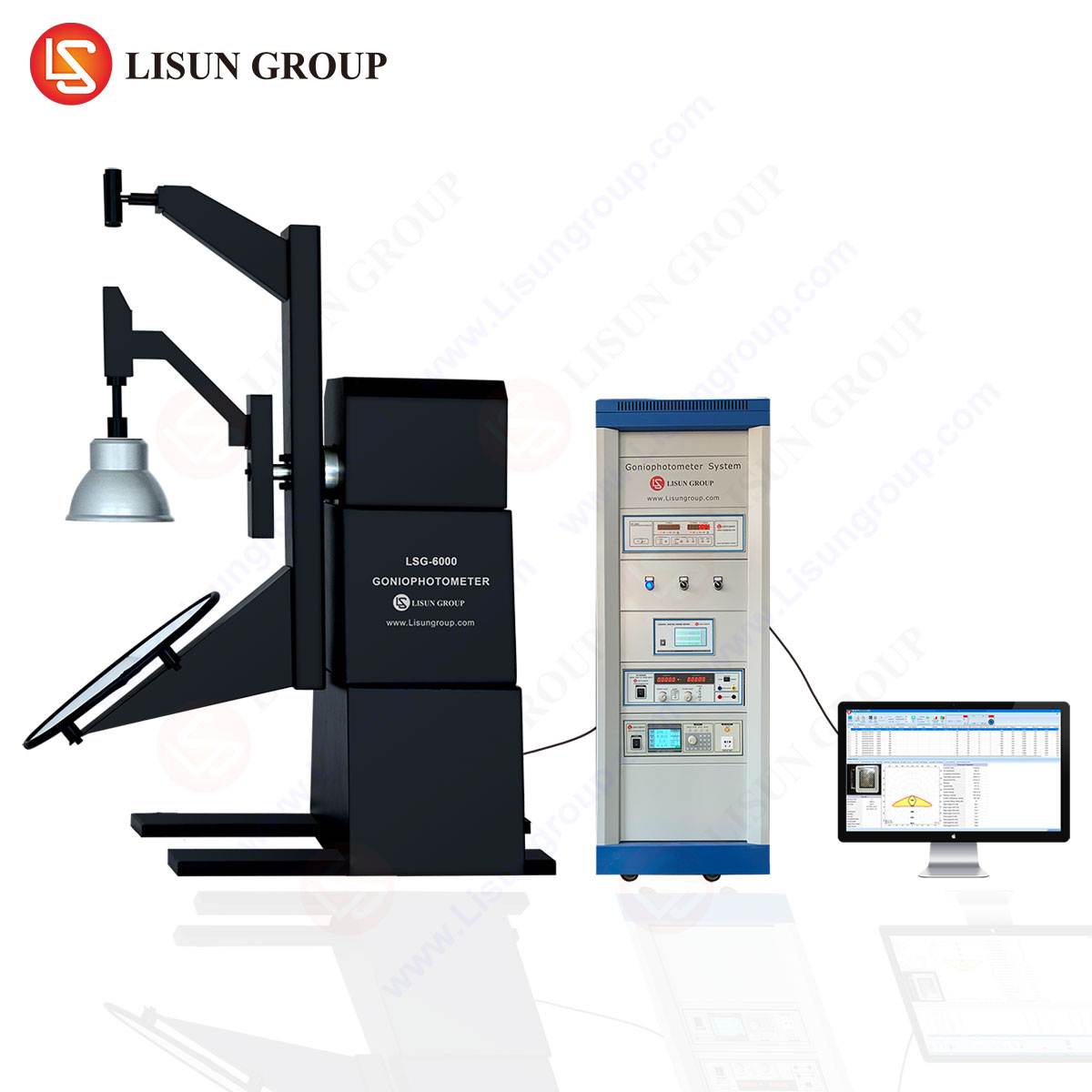




Understanding the Goniophotometer Working Principle: A Comprehensive Technical Analysis
Abstract
The precise characterization of the spatial distribution of light emitted from a source is a fundamental requirement across numerous scientific and industrial disciplines. A goniophotometer serves as the primary instrument for this purpose, providing the complete photometric and colorimetric data necessary for design, validation, and compliance. This article details the core working principles of goniophotometric systems, explores their application across diverse sectors, and examines the implementation of these principles within a modern, high-precision system, using the LISUN LSG-1890B Goniophotometer as a representative case study.
Fundamental Principles of Spatial Light Measurement
At its essence, a goniophotometer is a device designed to measure the luminous intensity distribution of a light source as a function of angle. The term itself derives from the Greek words gonia (angle) and phos (light). The fundamental operation involves moving a photodetector, or the light source under test (LUT), through a series of spherical coordinates—typically azimuth (C-plane, γ-angle) and elevation (γ-plane, C-angle)—while recording the luminous flux received at each discrete angular position. This process constructs a three-dimensional intensity distribution, often represented as a photometric solid or an array of luminous intensity values (I(γ, C)).
The core measurement principle is governed by the inverse square law. For a point source, illuminance (E) at a detector is inversely proportional to the square of the distance (d) from the source: E = I / d². By maintaining a fixed and sufficiently large distance between the LUT’s photometric center and the detector’s entrance optics (to approximate far-field conditions), the measured illuminance can be directly converted to luminous intensity (I = E * d²). Modern goniophotometers integrate a high-accuracy spectroradiometer or photometer as the detector, enabling not only intensity mapping but also spectral power distribution, correlated color temperature (CCT), color rendering index (CRI), and chromaticity coordinates (x, y; u’, v’) across the spatial distribution.
System Architectures: Type C and Type B Configurations
Goniophotometers are categorized primarily by their mechanical configuration, which dictates their operational principle and suitability for different LUTs.
The Type C (Moving Detector) system positions the LUT at a fixed central point of a rotating arm. The detector, mounted on the end of this horizontal arm, traverses a great circle around the LUT, primarily varying the elevation (γ) angle. The entire arm assembly then rotates around the vertical axis to change the azimuth (C) plane. This configuration is optimal for measuring luminaires whose light distribution is independent of their orientation around the vertical axis (axially symmetric or nearly so), such as many streetlights and downlights.
Conversely, the Type B (Moving Source) system fixes the detector at a distant point. The LUT is mounted on a two-axis goniometer that rotates in both azimuth and elevation. This architecture is essential for measuring sources whose photometric characteristics are inherently tied to their physical orientation, such as automotive headlamps, display panels, and any asymmetric luminaire. It ensures the LUT’s intended operational orientation is maintained relative to gravity and its own axes during measurement.
The LISUN LSG-1890B: Implementation of Type B Principles
The LISUN LSG-1890B exemplifies a fully automated, large-scale Type B goniophotometer system. Its design directly implements the moving-source principle to cater to complex, orientation-sensitive light sources prevalent in advanced industries.
System Specifications and Testing Principle:
The LSG-1890B features a dual-axis goniometric stage with a high load capacity, capable of rotating the LUT through a full 360° in azimuth (C: 0° to 360°) and 180° or more in elevation (γ: -90° to +90° or 0° to 180°). The detector, a high-precision spectroradiometer or photometer, is positioned at a fixed distance, typically 5m, 10m, or longer, to satisfy far-field measurement conditions as stipulated by standards like IEC 60598-1 and IES LM-79. The system operates under closed-loop servo control, ensuring precise angular positioning and repeatability. Measurement software automates the scanning sequence, collecting illuminance data at user-defined angular increments (e.g., every 0.1° to 5.0°). From this raw data, the system computes the complete luminous intensity distribution (LID), total luminous flux (via integration over the sphere), efficacy (lm/W), and full spatial colorimetry.
Table 1: Key Specifications of the LSG-1890B Goniophotometer System
| Parameter | Specification |
| :— | :— |
| Goniometer Type | Type B (Moving Source) |
| Angular Range | Azimuth (C): 0° to 360°, Elevation (γ): -90° to +90° (or 0°-180°) |
| Angular Accuracy | ≤ ±0.05° |
| Measurement Distance | 5m, 10m, or custom (e.g., 15m, 30m) |
| Detector Options | High-Precision Photometer or CCD Array Spectroradiometer |
| LUT Max Dimensions/Weight | Customizable; typically supports large luminaires (e.g., 2m x 2m, >100kg) |
| Compliant Standards | IEC 60598-1, IES LM-79, IES LM-75, CIE 70, CIE 121, CIE S025, EN 13032-1, ANSI C78.377, etc. |
Industry Applications and Standards Compliance
The LSG-1890B’s Type B architecture and precision make it indispensable across a spectrum of fields.
In the Lighting Industry and LED & OLED Manufacturing, it is used for verifying luminaire performance against IEC 60598 series, IES LM-79, and ANSI C78.377 for SSL products. It certifies beam patterns, cutoff angles for glare control, and total flux output for energy labeling (e.g., EU Ecodesign).
For Display Equipment Testing, it measures viewing angle characteristics of LCD, OLED, and micro-LED displays, assessing luminance uniformity, contrast ratio, and color shift (Δu’v’) versus angle, critical for meeting specifications from VESA and other display consortiums.
In the Photovoltaic Industry, specialized goniophotometers assess the angular dependence of light sources used in solar simulator calibration and the reflectance/transmittance properties of anti-reflective coatings and encapsulants.
Optical Instrument R&D and Scientific Research Laboratories utilize these systems to characterize lasers, lenses, diffusers, and complex optical assemblies, mapping irradiance and intensity profiles for system modeling and validation.
Urban Lighting Design relies on goniophotometric data as input for lighting simulation software (e.g., Dialux, Relux) to predict illuminance levels, uniformity, and obtrusive light (uplight) for projects adhering to IES RP-8 (roadway) and IDA/IES Model Lighting Ordinance guidelines.
Stage and Studio Lighting manufacturers use the data to design and qualify fixtures with specific beam spreads (e.g., spot, flood, wash) and smooth field distributions, ensuring consistent performance for theatrical and film production.
Medical Lighting Equipment, such as surgical and examination lights, must comply with stringent standards (e.g., IEC 60601-2-41) for illuminance, field uniformity, and shadow reduction, all verified via goniophotometry.
Finally, in Sensor and Optical Component Production, the system characterizes the angular response of photodiodes, the directional emission of IR LEDs for sensing, and the scattering profiles of engineered diffractive optical elements.
Competitive Advantages of a Modern Automated System
The LSG-1890B demonstrates several key advantages inherent to its design. Its Type B configuration is non-negotiable for accurate testing of asymmetric and orientation-dependent sources, a limitation of Type C systems. Long measurement distances (10m+) ensure true far-field data for large luminaires, avoiding near-field errors. High angular resolution and accuracy enable the detection of fine features in beam patterns, such as sharp cutoffs or small artifacts. Integrated spectroradiometry provides spatial color data essential for quality control in color-critical applications like museum lighting or high-end retail. Full automation reduces human error, increases throughput, and enables complex measurement sequences unattended. Furthermore, compliance with international standards (IEC, IES, CIE, ANSI, EN) ensures global market acceptance of test reports generated by the system.
Data Acquisition, Processing, and Reporting
The working principle culminates in data processing. The raw matrix of illuminance (or spectral radiance) values is transformed. Luminous intensity is calculated for each angle. Numerical integration over the entire spherical surface yields total luminous flux. The data is used to generate standard photometric reports, including IES (.ies) and EULUMDAT (.ldt) files, which are the industry-standard formats for lighting design software. Polar candela diagrams, iso-candela plots, and 3D renderings of the photometric solid are produced. For color, spatial maps of CCT, Duv, CRI (R1-R15), and chromaticity deviation provide a complete picture of the source’s photometric and colorimetric behavior.
Conclusion
The goniophotometer remains an indispensable tool for the objective quantification of light in space. Its working principle, based on coordinated angular scanning and precise photodetection, provides the foundational data for innovation, quality assurance, and regulatory compliance across a vast array of technologies. The implementation of these principles in advanced systems like the Type B LISUN LSG-1890B addresses the complex needs of modern lighting and optical industries, delivering the accuracy, flexibility, and standardized data output required to drive product development and ensure performance integrity in a globally competitive marketplace.
Frequently Asked Questions (FAQ)
Q1: What is the critical difference between a Type B and Type C goniophotometer, and how do I select the correct type for my application?
A Type B system rotates the light source under test (LUT) while keeping the detector fixed. This is mandatory for luminaires whose light output depends on their orientation relative to gravity, such as automotive lamps, streetlights with tilted optics, or any asymmetric fixture. A Type C system rotates the detector around a fixed LUT and is suitable for sources that are essentially rotationally symmetric. Selection is based on the LUT’s photometric symmetry and the relevant testing standards, which often prescribe the required goniometer type.
Q2: Why is a long measurement distance (e.g., 10m or more) specified for some goniophotometer systems like the LSG-1890B?
A long measurement distance ensures the detector is in the photometric far-field of the LUT. This condition, where the distance is at least five times the maximum dimension of the LUT’s luminous area (per the 5x rule in IES LM-79), is necessary for the inverse square law to hold accurately. It prevents measurement errors caused by the non-point-source nature of the luminaire, ensuring the recorded intensity distribution is correct and applicable for lighting design calculations at various distances.
Q3: Can a goniophotometer measure the absolute total luminous flux of a lamp, and how does this compare to an integrating sphere?
Yes, a goniophotometer can determine total luminous flux by mathematically integrating the measured intensity distribution over the full 4π steradians of space. This is considered an absolute method, as it does not require a calibrated reference standard lamp like the relative method used in most integrating spheres. The goniophotometric method is often used as a primary standard for flux calibration and is particularly advantageous for measuring luminaires with very directional beams or large physical sizes that do not fit inside a practical sphere.
Q4: For display testing, what specific photometric parameters are derived from goniophotometric measurements?
Key parameters include the viewing angle cone (angles at which luminance falls to 50% or 10% of the on-axis value), luminance uniformity across the screen at various angles, contrast ratio versus angle, and color shift (quantified as Δu’v’ in CIELUV color space). These metrics define the visual performance of a display for multiple viewers and are critical specifications for consumer electronics, medical monitors, and aviation displays.
Q5: How does the system handle the measurement of thermally sensitive light sources like high-power LEDs, where output stabilizes over time?
Advanced systems incorporate photometric stabilization monitoring. The measurement software can track the output of the LUT at a fixed reference angle throughout the entire multi-hour scan. A post-processing algorithm then normalizes the entire angular data set against this stabilization curve, effectively correcting for any drift in luminous flux or spectral output that occurred during the measurement period. This ensures the final distribution data represents a self-consistent snapshot of the source’s performance at a defined point in its stabilization cycle.