




Understanding Goniophotometer Measurements for LED Testing: Principles, Standards, and Advanced Applications
Introduction to Photometric Spatial Distribution Analysis
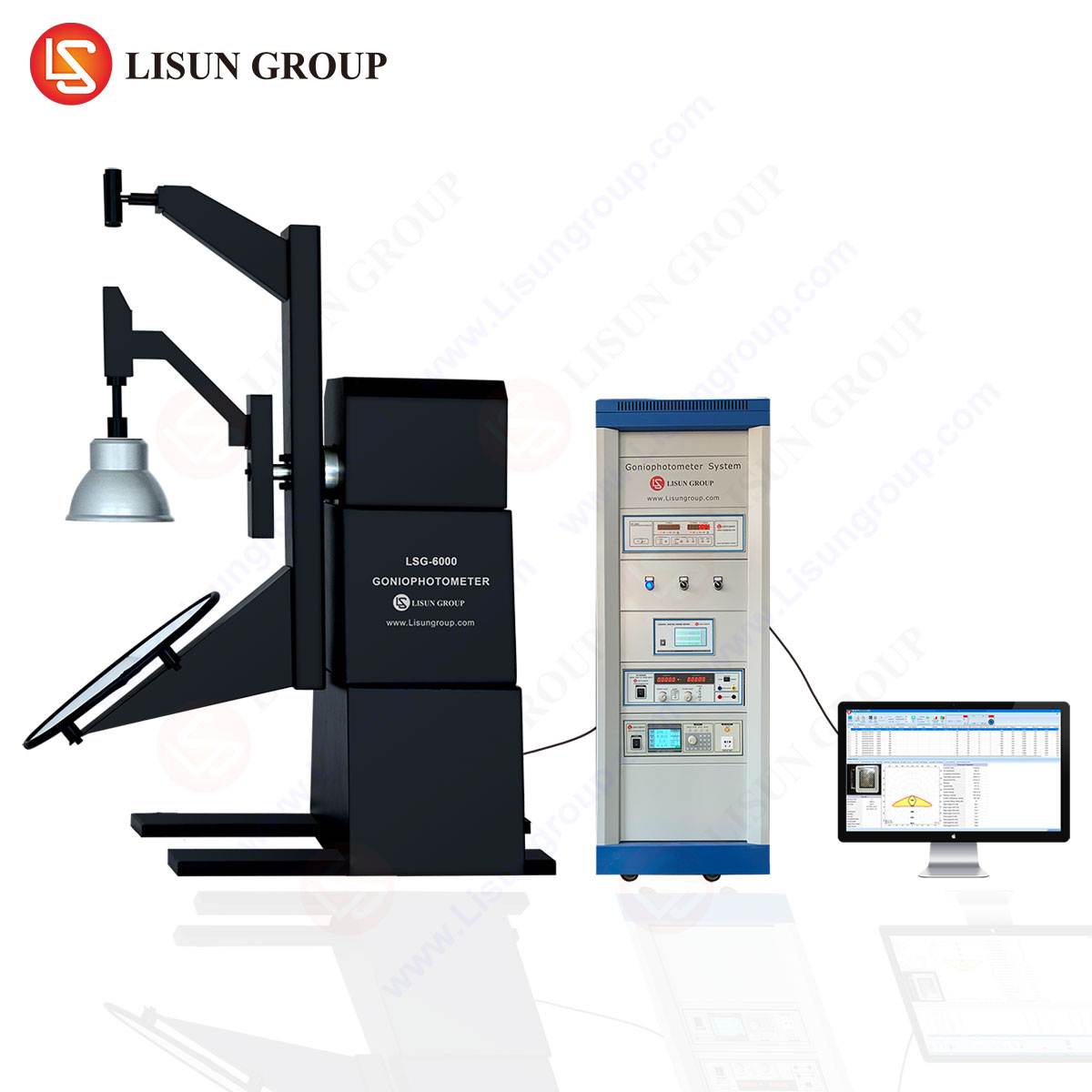
The accurate characterization of light-emitting diodes (LEDs) and luminaires extends far beyond a simple measurement of total luminous flux or center-beam intensity. The spatial distribution of light—how luminous intensity, chromaticity, and other photometric quantities vary with direction—is a critical determinant of performance in virtually every application. Goniophotometry serves as the definitive methodology for acquiring this three-dimensional photometric data. A goniophotometer is a precision instrument that measures the light output of a source as a function of angle, constructing a complete luminous intensity distribution curve (LIDC) and enabling the derivation of key parameters such as total luminous flux, efficacy, beam angles, and luminance. This technical article delineates the principles of goniophotometric measurement, examines relevant international standards, and explores its indispensable role across diverse industries, with a specific focus on the capabilities of modern automated systems such as the LISUN LSG-1890B Goniophotometer Test System.
Fundamental Operating Principles of a Goniophotometer
At its core, a goniophotometer operates on a straightforward geometric principle: a photodetector, typically a spectroradiometer or a photopic-filtered photometer, measures the light from a fixed source at numerous points on a virtual sphere surrounding it. This is achieved by moving either the detector relative to the source, the source relative to the detector, or employing a mirror system to sample angular directions. The most common configuration for general lighting is the Type C (moving detector) system, where the detector traverses a great circle path around the luminaire, which is rotated about its vertical axis. By combining a primary rotation (e.g., gamma, γ, for vertical angle) and a secondary rotation (e.g., C-plane, for azimuthal angle), the instrument samples the full 4π steradians of space.
The measured quantity is luminous intensity (I), expressed in candelas (cd), which is derived from the illuminance (E) measured at a known distance (d) from the source, following the inverse-square law approximation: I = E * d². This data is collected in a spherical coordinate grid, forming a photometric web that can be processed to calculate total luminous flux (Φ) by integrating intensity over all solid angles: Φ = ∫ I(γ, C) dΩ. Advanced systems integrate spectroradiometers to perform goniospectroradiometry, enabling the measurement of spectral power distribution (SPD) and colorimetric data (CIE x,y; u’v’; CCT, CRI) as a function of angle, which is crucial for assessing color uniformity and angular color shift—a common challenge with LED systems.
The LISUN LSG-1890B: Architecture and Technical Specifications
The LISUN LSG-1890B represents a state-of-the-art, fully automated Type C goniophotometer system designed for high-precision testing of LEDs and luminaires. Its architecture is engineered for stability, repeatability, and compliance with stringent international standards.
Key Specifications:
- Measurement Geometry: Type C (moving detector, fixed luminaire rotation in C-planes).
- Measurement Distance: Variable, typically 5m, 10m, or longer to satisfy far-field conditions (distance ≥ 5 times the maximum source dimension).
- Angular Resolution: High-precision stepping motors enable programmable resolution, often down to 0.1°.
- Detector Systems: Compatible with high-accuracy photometers and imaging spectroradiometers (e.g., CCD array spectrometers) for simultaneous photometric and colorimetric data acquisition.
- Software Control: Integrated software automates measurement sequences, data acquisition, and real-time 3D rendering of photometric and colorimetric distributions. It directly outputs standard file formats such as IES (Illuminating Engineering Society) and EULUMDAT (European standard), which are essential for lighting design software.
- Compliance Standards: The system is designed to meet the requirements of IEC 60598-1 (Luminaires), IESNA LM-79-19 (Electrical and Photometric Measurements of Solid-State Lighting Products), CIE 70, CIE 121, CIE S025, ANSI C78.377, ENERGY STAR, and DIN 5032-6.
Testing Principle: In the LSG-1890B, the test luminaire is mounted on a positioning frame that rotates it around its vertical axis (C-plane angles). A high-sensitivity detector, mounted on a robotic arm, moves along a precise vertical arc (Gamma angles from 0° to 180°). For each C-plane setting, the detector scans the vertical arc, capturing illuminance data at each point. This two-dimensional matrix of measurements is then transformed into a three-dimensional intensity distribution. The integrated software performs the necessary geometric and photometric calculations to generate the complete suite of photometric reports.
International Standards Governing Goniophotometric Testing
Goniophotometric testing is governed by a framework of international standards that ensure consistency, accuracy, and comparability of data across laboratories and borders. These standards define everything from measurement distances and environmental conditions to data reporting formats.
- IESNA LM-79-19: This is the paramount standard for SSL product testing in North America. It explicitly approves the use of goniophotometers (Type C) for total luminous flux measurement and mandates the reporting of the LIDC. It specifies requirements for electrical settings, thermal stabilization, and photometric testing geometry.
- CIE 70, CIE 121, and CIE S025: The International Commission on Illumination (CIE) provides foundational documents. CIE 70 details the measurement of absolute luminous intensity distributions. CIE S025 is the global counterpart to LM-79, specifying test requirements for LED lamps, modules, and luminaires, including stringent requirements for goniophotometer accuracy and spectroradiometric angular color measurements.
- IEC 60598-1 & IEC 62722-2-1: While IEC 60598-1 is a general safety standard for luminaires, it references photometric testing. IEC 62722-2-1 specifically addresses performance requirements for LED luminaires, requiring verification of photometric performance claims, for which goniophotometer data is essential.
- Regional and National Standards: Compliance is also driven by regional regulations such as the EU’s Ecodesign Directive, which references EN 13032-4 (light and lighting – measurement and presentation of photometric data), and programs like ENERGY STAR in the U.S. and Canada, which rely on LM-79 data for qualification. Other countries, including Japan (JIS C 8152) and South Korea, have analogous standards that reference or align with IEC and CIE methodologies.
Industry-Specific Applications of Goniophotometric Data
The data generated by systems like the LSG-1890B is critical for R&D, quality control, and regulatory compliance across a wide spectrum of industries.
Lighting Industry and LED/OLED Manufacturing: Here, goniophotometry is fundamental. Manufacturers use it to validate design prototypes, ensure batch-to-batch consistency, generate IES files for lighting designers, and certify products for efficacy (lm/W) and performance labels (e.g., DLC in North America). For OLED panels, measuring the Lambertian characteristics and angular color consistency is vital.
Display Equipment Testing: The viewing angle performance of displays, backlight units (BLUs), and signage is characterized using goniophotometers. Measurements of luminance uniformity, contrast ratio, and color shift as a function of viewing angle are critical for quality assessment in consumer electronics, automotive displays, and large-format public screens.
Urban Lighting Design and Smart Cities: For streetlights, area lights, and architectural façade lighting, the LIDC determines light pollution (uplight), glare control, and uniformity on the ground. Designers use goniophotometer-generated IES files in simulation software (e.g., Dialux, Relux) to optimize pole spacing and height, ensuring compliance with standards like ANSI/IES RP-8 for roadways.
Stage, Studio, and Entertainment Lighting: The beam shape, field angle, and intensity distribution of spotlights, fresnels, and moving heads are their defining characteristics. Goniophotometry provides the precise data needed for lighting designers to plan scenes and for manufacturers to specify product data sheets accurately.
Medical Lighting Equipment: Surgical lights demand extreme uniformity, high color rendering, and specific beam patterns with minimal shadowing. Goniophotometric analysis verifies compliance with stringent medical device standards (e.g., IEC 60601-2-41), ensuring the light field meets clinical requirements for depth of illumination and homogeneity.
Sensor and Optical Component Production: For components like diffusers, lenses, and light guides, goniophotometry measures the scattering profile (BSDF: Bidirectional Scattering Distribution Function). This data is used to validate optical designs for uniformity and efficiency in systems ranging from ambient light sensors to advanced machine vision lighting.
Photovoltaic Industry and Scientific Research: While not for light emission, goniophotometers are adapted to measure the angular response of photovoltaic cells—a critical factor in predicting energy yield under varying sun positions. In research laboratories, they are used to characterize novel materials, such as perovskites for LEDs or photoluminescent quantum yields of advanced phosphors.
Competitive Advantages of Automated Goniophotometer Systems
Modern systems like the LSG-1890B offer distinct advantages over manual or semi-automated setups. Automation eliminates human error, ensures consistent angular positioning, and allows for unattended operation, including multi-sample sequencing for high-throughput quality labs. Integrated spectroradiometry enables simultaneous photometric and colorimetric mapping, a necessity for evaluating angular color uniformity in white LED packages where phosphor geometry can cause significant chromaticity shifts. High dynamic range detectors can accurately measure both the intense central beam and the weak peripheral spill light of a directional luminaire in a single scan. Furthermore, direct software export to industry-standard formats (IES, LDT, CIE) seamlessly integrates the measurement data into the product development and design workflow, from engineering validation to lighting simulation.
Data Interpretation and Key Performance Metrics
The primary output of a goniophotometric test is the Luminous Intensity Distribution Curve, often presented as a polar diagram. Key derived metrics include:
- Total Luminous Flux (lm): The integral of intensity over all directions.
- Luminous Efficacy (lm/W): Flux divided by electrical input power.
- Beam Angle: The full angle where intensity falls to 50% of the maximum.
- Field Angle: The full angle where intensity falls to 10% of the maximum.
- Maximum Intensity (cd): The peak candela value.
- Coefficient of Utilization (CU): Used in lighting calculations, derived from the zonal lumen summary.
- Color Uniformity Metrics: Such as the maximum deviation in Δu’v’ or CCT across specified angular ranges.
Conclusion
Goniophotometry is an indispensable tool in the quantitative evaluation of modern light sources. It provides the comprehensive spatial data required to engineer, specify, and regulate lighting products for optimal performance, efficiency, and visual comfort. As LED technology continues to evolve and penetrate new applications, the demand for precise, standardized, and efficient goniophotometric testing, as exemplified by automated systems compliant with international standards, will only intensify. The data fidelity provided by advanced systems ensures that products perform as designed across the diverse and demanding landscapes of contemporary illumination.
FAQ Section
Q1: What is the primary difference between an integrating sphere and a goniophotometer for measuring total luminous flux?
A1: An integrating sphere measures total flux directly by spatially integrating light within a diffuse cavity but requires correction factors (e.g., for self-absorption) and cannot provide spatial distribution data. A goniophotometer measures flux indirectly by angular integration of the intensity distribution. It is generally more accurate for directional sources, non-typical shapes, or sources with significant spatial color variation, and it simultaneously provides the complete intensity distribution curve.
Q2: Why is angular color measurement important for white LED luminaires, and how does the LSG-1890B facilitate this?
A2: Due to the spatial separation of blue LED chips and surrounding phosphor, white LEDs often exhibit angular color shift (e.g., a yellow/blue tint variation with viewing angle). This can be visually objectionable in applications like downlights or retail lighting. The LSG-1890B, when equipped with an integrated imaging spectroradiometer, captures spectral data at every measurement point, enabling the generation of full spatial maps of CCT, CRI, and chromaticity coordinates to quantify and control this effect.
Q3: For regulatory submissions like ENERGY STAR or DLC, is goniophotometer data required?
A3: Yes, programs like ENERGY STAR for Luminaires and the DesignLights Consortium (DLC) require photometric test data that includes total luminous flux, efficacy, and intensity distribution. This data must be generated in accordance with IES LM-79 or CIE S025, both of which explicitly list Type C goniophotometry as an approved method. The IES file generated by systems like the LSG-1890B is a standard deliverable for such submissions.
Q4: What are the critical environmental controls needed for accurate goniophotometer measurements?
A4: Measurements must be performed in a darkroom to eliminate stray light. Airflow around the luminaire should be minimal and stable to prevent convective cooling changes that would alter the LED junction temperature and, consequently, its photometric output. The ambient temperature should be controlled (typically 25°C ± 1°C) as specified in LM-79 and CIE S025. The luminaire must also reach full thermal stability prior to measurement.
Q5: Can the LSG-1890B test large or heavy luminaires, such as high-bay industrial fixtures or streetlights?
A5: The LSG-1890B is designed with a robust mechanical structure and a mounting frame capable of handling a range of luminaire sizes and weights. The specific capacity (weight and dimensions) depends on the system configuration. For very large or heavy products, consultation with the manufacturer is necessary to ensure the positioning system’s motors and structural integrity are appropriately specified for the application.