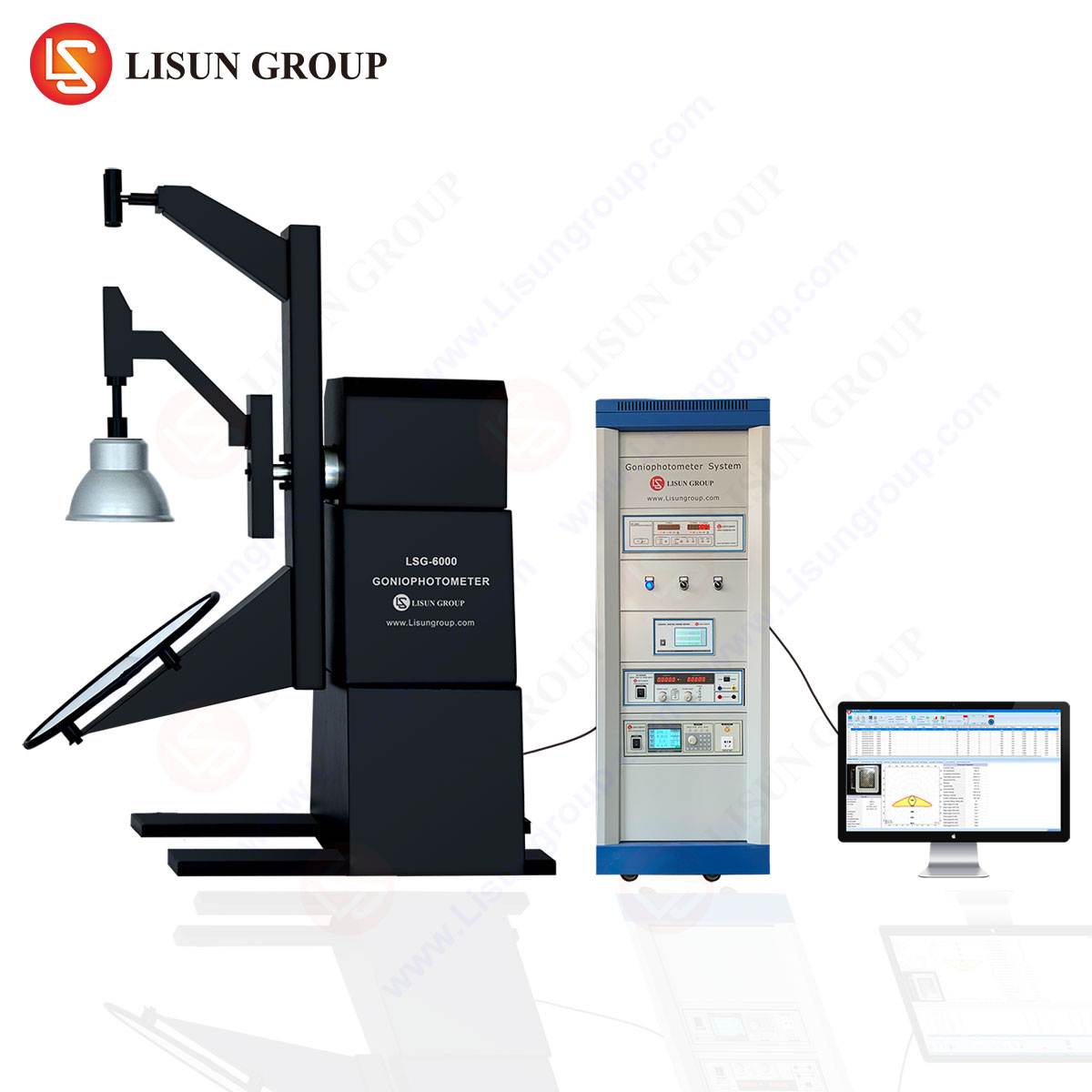



A Technical Treatise on the Interpretation of Goniophotometric Data for Advanced Photometric Applications
Abstract
Goniophotometry represents a cornerstone of modern optical metrology, providing the most comprehensive characterization of a light source’s spatial luminous intensity distribution. The data extracted from these systems is critical for applications ranging from fundamental research to compliance testing and product design optimization. This article provides a detailed examination of the principles behind goniophotometer measurement data, its interpretation, and its application across diverse industries. A specific focus is placed on the operational methodology and technical specifications of the LISUN LSG-1890B Goniophotometer, illustrating its role in generating reliable, standards-compliant data.
Fundamental Principles of Goniophotometric Data Acquisition
A goniophotometer functions by precisely manipulating the angular relationship between a light source under test (LUT) and a photodetector. The core measurement principle involves rotating the LUT along one or two axes (typically the vertical C-axis and horizontal Gamma-axis) while a fixed detector, positioned at a sufficient distance to satisfy far-field conditions, records luminous intensity values. The resultant dataset is a matrix of luminous intensity values as a function of these spherical coordinates. This spatial intensity distribution, often referred to as the luminous intensity distribution curve (LIDC), is the fundamental output. The accuracy of this data is contingent upon the mechanical precision of the goniophotometer, the calibration of the detector, and the elimination of ambient light and reflective interference. The LISUN LSG-1890B, for instance, employs a Type C (moving luminaire) configuration, which is ideal for testing complete, integrated luminaires, ensuring that the entire optical system is characterized as a single entity.
Deciphering the Core Outputs: LIDC, Isocandela Plots, and EULUMDAT Files
The raw angular-intensity data is processed and presented in several standardized formats, each serving a distinct analytical purpose. The Luminous Intensity Distribution Curve (LIDC) is a polar or Cartesian plot displaying intensity versus angle in a specific plane, typically the C0-C180 plane. It provides immediate visual cues on beam shape—whether narrow spot, flood, or asymmetric. A more comprehensive representation is the Isocandela Diagram, a contour plot on a spherical projection where lines connect points of equal luminous intensity. This allows for a full 3D visualization of the light output, identifying potential hotspots, artifacts, or asymmetries not visible in a single-plane LIDC. For data exchange and simulation software compatibility, standardized file formats are essential. The EULUMDAT (ETM) format is a widely adopted text-based format that contains the full photometric data, including the intensity matrix, luminous flux, and other metadata, enabling its direct import into lighting design software like DIALux or Relux.
Derived Photometric Quantities from Goniophotometric Integration
Beyond the spatial intensity map, the goniophotometer serves as the primary instrument for determining total luminous flux (lumens). By numerically integrating the luminous intensity over the entire 4π steradian solid angle, the total light output of the source is calculated. This method, often called the goniophotometric method, is recognized by standards such as IEC 60598-1 and IES LM-79 as a benchmark for flux measurement. Furthermore, the data enables the calculation of efficiency metrics (lumens per watt), zonal lumen summaries, and coefficients of utilization (CU). For the Lighting Industry and LED & OLED Manufacturing, these derived quantities are non-negotiable for product specification, performance benchmarking, and energy efficiency labeling.
The LSG-1890B Goniophotometer: System Architecture and Measurement Fidelity
The LISUN LSG-1890B exemplifies a fully automated, Type C goniophotometer designed for high-precision testing of luminaires. Its system architecture is engineered for data fidelity and operational efficiency. Key specifications include a large 2-meter measurement distance, accommodating a wide range of luminaire sizes while maintaining far-field conditions. Its dual-axis rotation provides a C-axis range of 0-360° with infinite rotation capability and a Gamma-axis range of -90° to +90° or a customized vertical range. The system is typically integrated with a high-precision CCD spectrometer or a photometer head, allowing for spectrally resolved measurements in addition to photometric data. This is critical for the Display Equipment Testing and Medical Lighting Equipment sectors, where colorimetric parameters (CCT, CRI) are as important as photometric ones. The system’s operation is governed by proprietary software that automates the scanning sequence, data acquisition, and report generation, minimizing operator-induced errors.
Table 1: Key Specifications of the LISUN LSG-1890B Goniophotometer
| Parameter | Specification |
| :— | :— |
| Measurement Type | Type C (Moving Luminaire) |
| Measurement Distance | 2 m, 3 m, 5 m, or custom |
| C-Axis (Horizontal) | 0° to 360° (infinite rotation) |
| Gamma-Axis (Vertical) | -90° to +90° (or customized) |
| Angular Resolution | ≤ 0.1° |
| Detector Options | High-Precision Photometer or CCD Spectrometer |
| Compliant Standards | IEC 60598-1, IES LM-79, IES LM-75, CIE 121, CIE S025, EN 13032-1 |
Industry-Specific Applications and Standards Compliance
The application of goniophotometer data spans numerous high-technology fields, each with its own set of regulatory and performance standards.
In the Lighting Industry and Urban Lighting Design, compliance with IEC 60598-1 is mandatory for safety and performance. Data from the LSG-1890B is used to verify glare ratings (UGR), light output ratios (LOR), and to create IES files for simulating public space illumination, ensuring compliance with standards like ANSI/IES RP-8 for roadway lighting.
For LED & OLED Manufacturing and Optical Instrument R&D, the IES LM-79 standard dictates the electrical and photometric testing of solid-state lighting products. The goniophotometric method is an approved technique for measuring total luminous flux and spatial distribution, which is essential for validating product datasheets and driving R&D for higher efficacy and optimized beam control.
In Display Equipment Testing, the uniformity and angular color stability of backlight units (BLUs) are paramount. A goniophotometer equipped with a spectrometer can measure the angular distribution of luminance and chromaticity, ensuring the display meets viewing angle specifications and color consistency, as per standards like ISO 13406-2.
The Photovoltaic Industry utilizes goniophotometry inversely; instead of measuring light emitted, it can characterize the angular acceptance of light for solar panels or the spatial emission of luminescent solar concentrators (LSCs) in research settings.
Scientific Research Laboratories rely on the precision of systems like the LSG-1890B for fundamental studies in material science, such as measuring the light extraction efficiency of novel OLED structures or the scattering properties of advanced optical materials.
For Stage and Studio Lighting, the beam characteristics—field angle, beam angle, and throw distance—are derived directly from the LIDC. This data is crucial for lighting designers to select the correct fixture for a given application, ensuring the creative vision is achievable.
Medical Lighting Equipment, particularly surgical and diagnostic lighting, has stringent requirements for shadow reduction and field uniformity (e.g., per IEC 60601-2-41). Goniophotometric data validates that the light field is homogenous and meets the specified illuminance levels across the target area.
Finally, in Sensor and Optical Component Production, the angular response of sensors and the transmission/reflection profiles of lenses, diffusers, and filters are characterized using goniophotometric principles, ensuring components perform as specified in their integrated systems.
Comparative Advantages of the LSG-1890B in Metrological Context
The LSG-1890B offers several distinct advantages in a competitive landscape. Its fully automated operation and robust software suite reduce measurement time and subjective error, enhancing reproducibility. The system’s high angular resolution (≤0.1°) allows for the detection of fine spatial features in the LIDC that lower-resolution systems might miss, which is critical for R&D and quality control of complex optics. Compliance with a broad portfolio of international standards (IEC, IES, CIE) ensures that data generated is recognized and accepted in global markets. The flexibility in detector choice—from high-speed photometers to full-spectrum CCD spectrometers—makes it a versatile platform adaptable to the specific needs of diverse industries, from basic photometry to advanced colorimetry.
Advanced Data Analysis for Performance Optimization
The ultimate value of goniophotometric data is realized in its analysis. By modeling the luminaire in simulation software using the exported IES or EULUMDAT file, designers can predict performance in a virtual environment before physical prototyping. This enables rapid iteration and optimization of optical designs. Analysis of the zonal flux data can identify inefficiencies in light distribution, guiding redesigns to improve performance. For example, in urban lighting, optimizing the LIDC can reduce light trespass and uplight, contributing to Dark-Sky compliance. In LED manufacturing, analyzing the angular color uniformity can pinpoint issues with phosphor application or primary optic design, leading to improved product quality.
Frequently Asked Questions (FAQ)
Q1: What is the primary difference between a Type A, Type B, and Type C goniophotometer, and why is the LSG-1890B a Type C system?
Type A rotates the luminaire about a vertical axis, Type B about a horizontal axis, and Type C about both axes. The LSG-1890B is a Type C system because it rotates the luminaire in two dimensions, which is necessary for a complete spatial measurement of most real-world luminaires that have asymmetric light distributions. This provides the most comprehensive dataset for lighting simulation and design.
Q2: How does the measurement distance impact the accuracy of the data?
The measurement distance must be great enough to ensure the detector is in the photometric far-field of the luminaire, where the luminous intensity is independent of distance. A general rule is that the distance should be at least five times the maximum dimension of the light-emitting surface. The LSG-1890B’s standard 2-meter distance (and options for longer distances) is designed to meet this criterion for a wide array of luminaires, ensuring accurate intensity measurements.
Q3: Can the LSG-1890B measure the color properties of a light source across different angles?
Yes, when equipped with the optional CCD spectrometer, the LSG-1890B can perform spectroradiometric measurements at each angular position. This allows for the generation of spatial maps of Correlated Color Temperature (CCT), Color Rendering Index (CRI), and chromaticity coordinates (x,y or u’,v’), which is critical for applications in display testing and high-quality architectural lighting.
Q4: What file formats can the LSG-1890B software export, and why is this important?
The system can export standard formats including IES, EULUMDAT, and CIE. This interoperability is vital for sharing photometric data with architects, engineers, and designers who use industry-standard lighting design software (e.g., DIALux, AGi32, Relux) to perform accurate illumination simulations for projects.
Q5: For a luminaire with a very wide beam angle, what special considerations are needed during testing?
For wide-beam luminaires, ensuring that the detector’s entrance optics and the physical setup do not vignette the light at extreme angles is crucial. The large measurement distance and careful calibration of the LSG-1890B mitigate this risk. Furthermore, the system’s software can be configured with a higher density of measurement points near the poles (high Gamma angles) to accurately capture the rapid changes in intensity that can occur in wide-beam distributions.