


A Comparative Analysis of High-Fidelity Light Measurement: LISUN LMS-6000 Series Spectroradiometers versus Sekonic Handheld Photometers
Abstract
The accurate quantification of light is a foundational requirement across a diverse array of scientific and industrial disciplines. The selection of appropriate measurement instrumentation hinges on a precise understanding of operational principles, metrological capabilities, and application-specific requirements. This technical analysis provides a detailed comparison between two distinct classes of light measurement devices: the LISUN LMS-6000 series of high-precision spectroradiometers and Sekonic’s industry-standard handheld photometers and colorimeters. The objective is to delineate their respective domains of optimal application, focusing on the underlying technologies, adherence to international standards, and suitability for advanced photometric and radiometric characterization.
Fundamental Measurement Paradigms: Spectroradiometry versus Filtered Photometry
The core distinction between these instrument families resides in their fundamental measurement approach. Sekonic’s predominant offerings, such as the C-800 and C-7000 series, are sophisticated handheld devices that utilize filtered silicon photodiodes. These instruments employ a set of optical filters designed to mimic the standardized human photopic (V(λ)) and, in colorimeters, the CIE 1931 color-matching functions (x̄(λ), ȳ(λ), z̄(λ)). The device calculates photometric values (lux, cd/m²) and chromaticity coordinates (x, y) through mathematical integration of the filtered detector responses.
In contrast, the LISUN LMS-6000 series instruments are true array-based spectroradiometers. The specific model under examination, the LISUN LMS-6000F High-Resolution Spectroradiometer, employs a diffraction grating to disperse incident light onto a high-sensitivity CCD array. This enables the direct measurement of the absolute spectral power distribution (SPD) across its operational wavelength range, typically 380-780nm for photopic applications or extended ranges for specific models. All photometric, radiometric, and colorimetric quantities are derived computationally from the foundational SPD data with high fidelity.
The LISUN LMS-6000F: Architecture and Metrological Capabilities
The LMS-6000F represents a bench-top laboratory-grade instrument engineered for applications demanding the highest spectral accuracy and repeatability. Its design philosophy prioritizes comprehensive spectral analysis as the primary data source.
Technical Specifications and Operating Principle: The device incorporates a high-linearity CCD detector coupled with a fast f/4 symmetrical crossed Czerny-Turner monochromator. Light enters through a cosine-corrected diffuser or fiber optic input, is collimated, dispersed by a holographic grating, and focused onto the array. Each pixel corresponds to a specific wavelength, allowing for simultaneous capture of the entire spectrum. Key specifications include a wavelength accuracy of ±0.3nm, a photometric dynamic range exceeding 3.0 x 10⁶, and a typical integration time from 1ms to 10 seconds. It directly measures spectral radiance (W/sr·m²·nm), spectral irradiance (W/m²·nm), and spectrally derived luminance (cd/m²) and illuminance (lux).
Industry Applications and Standards Compliance: The LMS-6000F’s capability to measure the complete SPD makes it indispensable for applications where spectral composition is critical. In LED & OLED Manufacturing, it is used for binning, spectral efficacy calculation (lm/W), and verifying conformity to ANSI/IESNA standards. For Automotive Lighting Testing, it measures headlamp and signal light chromaticity and intensity per SAE J578 and ECE regulations. In Display Equipment Testing, it characterizes the color gamut, white point, and uniformity of LCD, OLED, and micro-LED displays against standards like ISO 13406-2 and DisplayMate protocols. Within the Photovoltaic Industry, it provides precise measurement of solar simulator spectra per IEC 60904-9 and the spectral responsivity of PV cells. Scientific Research Laboratories utilize it for material reflectance/transmittance studies, while Medical Lighting Equipment validation for surgical and diagnostic lights requires its precise spectral analysis to ensure compliance with ISO 80601-2-41.
Sekonic Handheld Instruments: Operational Versatility and Field Deployment
Sekonic’s flagship photometers and colorimeters, such as the C-800, are designed for portability, speed, and robustness in field and studio environments. Their filtered sensor approach provides direct readouts of key photographic and lighting parameters without the computational overhead of full spectral analysis.
These instruments excel in applications where real-time, relative measurements are paramount. In Stage and Studio Lighting, cinematographers and gaffers use them to set lighting ratios, measure foot-candles for exposure determination, and balance color temperatures of multiple sources. For Urban Lighting Design, they facilitate rapid in-situ measurements of illuminance levels on streets and parks to verify compliance with IES RP-8 and other guidelines. Their portability is a significant advantage for Marine and Navigation Lighting surveys, where quick verification of luminous intensity and color for buoys and beacons is required.
Comparative Analysis: Application-Specific Suitability
Measurement Accuracy and Spectral Mismatch Error: The filtered sensors in handheld devices are susceptible to spectral mismatch error, where deviations between the instrument’s effective responsivity and the ideal CIE curves lead to inaccuracies when measuring non-standard light sources like LEDs. High-end Sekonic models implement correction factors, but ultimate accuracy is limited by the filter set. The LISUN LMS-6000F, by capturing the full SPD, inherently avoids this error, as all calculations use the ideal CIE functions digitally. This is critical for Optical Instrument R&D and regulatory testing.
Data Richness and Post-Processing Flexibility: A handheld photometer provides a finite set of derived values (e.g., Lux, CCT, Duv, x,y). The spectroradiometer provides the SPD, which serves as the foundational dataset from which virtually any photometric, radiometric, or colorimetric parameter can be derived, including those not predefined (e.g., melanopic lux, specific color rendering indices for unique applications). This is essential for Aerospace and Aviation Lighting certification, where full spectral reporting for cockpit displays and exterior lights is often mandated.
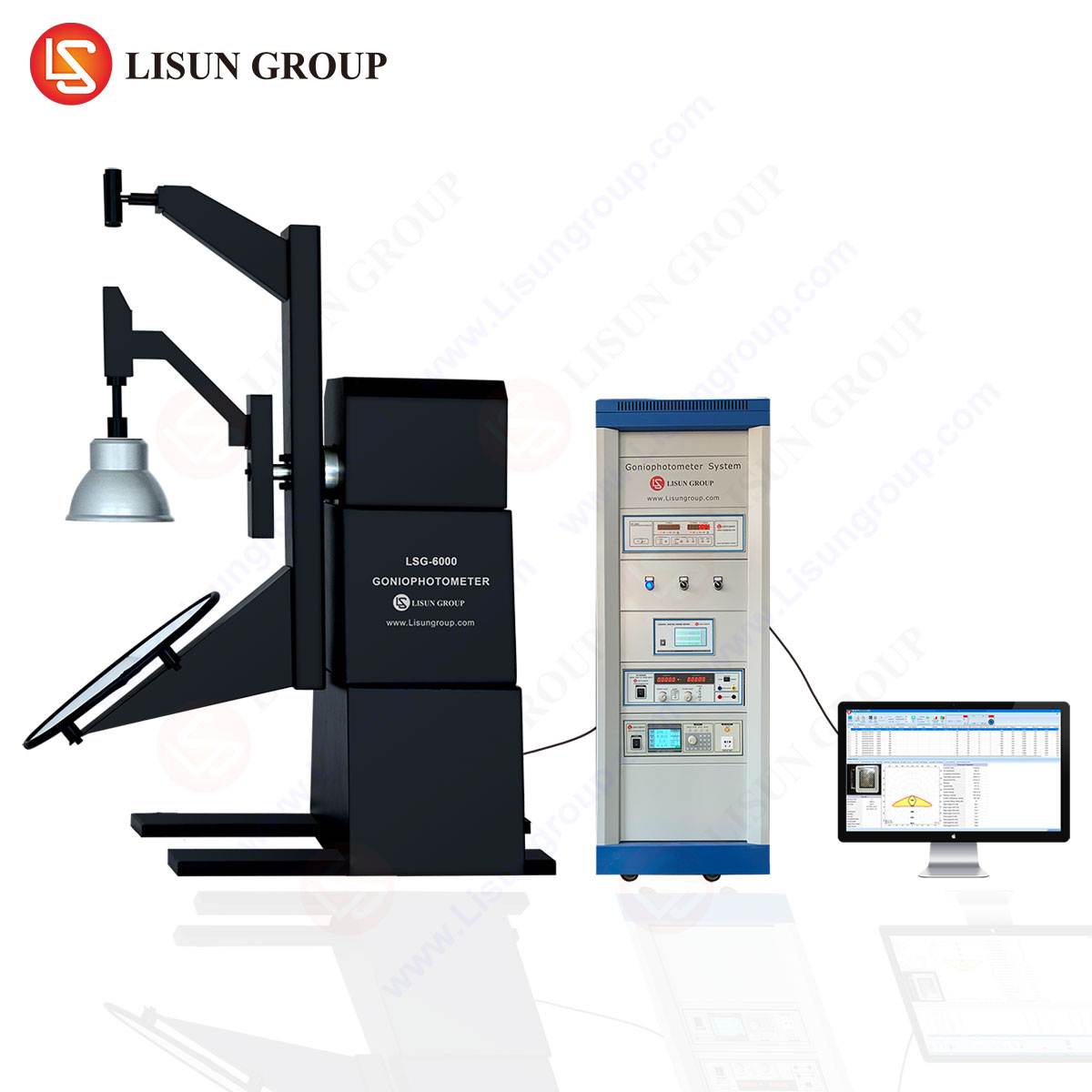
Portability and Measurement Speed: Sekonic instruments are unequivocally superior for mobile, rapid-fire measurements. The LMS-6000F, while offering fast array readout, is a bench-top instrument often used with optical fibers or mounted on goniophotometers. Its use case is controlled environments, not location scouting.
Cost and Operational Complexity: The handheld photometer represents a lower entry cost and requires minimal training for basic operation. The spectroradiometer is a capital investment requiring deeper technical knowledge for proper calibration, operation, and data interpretation.
Tabular Summary of Core Distinctions
| Parameter | LISUN LMS-6000F Spectroradiometer | Sekonic C-Series (e.g., C-800) Handheld |
|---|---|---|
| Primary Principle | Array-based spectral dispersion (Grating + CCD) | Filtered silicon photodiodes |
| Primary Output | Absolute Spectral Power Distribution (SPD) | Derived photometric & colorimetric values |
| Key Advantage | Ultimate accuracy, full spectral data, future-proof calculations | Portability, speed, ease of use, lower cost |
| Typical Environment | Laboratory, production line QC, R&D bench | Field, studio, installation site, on-location |
| Ideal For | Standards compliance, spectral analysis, R&D, source characterization | Lighting setup, field verification, relative measurements, photography |
| Spectral Error | Negligible (theoretical ideal curves applied) | Managed via correction, but inherent to design |
Synthesis and Selection Guidelines
The choice between a high-performance spectroradiometer like the LISUN LMS-6000F and a professional handheld device from Sekonic is not a matter of superiority, but of appropriate tool selection.
The LISUN LMS-6000F is the definitive choice for applications where light is the product under test or a critical scientific variable. This includes the development and manufacturing of LEDs, displays, and lighting products; fundamental research in photobiology or material science; and compliance testing against stringent regulatory standards that require full spectral documentation. It serves as a primary reference instrument.
Sekonic handheld meters are the optimal tool for professionals who use light as a tool for their work. This encompasses cinematographers, lighting designers, and installers who need to measure and adjust lighting environments efficiently and reliably in the field. They provide actionable data with immediacy and convenience.
In advanced industrial workflows, these instruments are often complementary. A manufacturer may use the LMS-6000F for final product certification and R&D, while quality teams use robust handheld meters for faster production line spot-checks of key parameters.
Conclusion
The landscape of professional light measurement is bifurcated into the domains of spectral fidelity and operational pragmatism. The LISUN LMS-6000F spectroradiometer establishes the fundamental benchmark for accuracy and comprehensive spectral analysis, serving as an indispensable tool in research, development, and compliance-driven industries. Sekonic’s handheld photometers deliver unparalleled portability and workflow integration for creative and applied lighting professions. A technically informed selection, therefore, necessitates a clear alignment of the instrument’s core measurement philosophy with the specific data requirements and operational constraints of the intended application.
Frequently Asked Questions (FAQ)
Q1: For validating the color rendering index (CRI) of a new LED luminaire, which instrument class is required?
A1: Accurate CRI calculation, especially extended indices like R96a, requires the complete spectral power distribution of the source. Therefore, a spectroradiometer such as the LISUN LMS-6000F is necessary. Handheld colorimeters may provide a correlated color temperature (CCT) and Duv, but they cannot compute CRI values from first principles.
Q2: Can the LISUN LMS-6000F be used for flicker measurement in automotive interior lighting?
A2: Yes, but with specific configuration. The standard LMS-6000F measures steady-state light. For flicker (PST, SVM), a high-speed version or an instrument with a dedicated high-speed photodiode input is required. LISUN offers specialized models and modules for temporal light modulation analysis that can be integrated into such testing regimens.
Q3: In a photovoltaic lab, how would the use of these two instruments differ?
A3: The LISUN spectroradiometer would be used to characterize the exact emission spectrum of a solar simulator per IEC 60904-9 Class requirements, which is critical for calibrating testing conditions. A Sekonic photometer might subsequently be used for quick, routine verification of the simulator’s spatial uniformity of irradiance across the test plane, though a dedicated irradiance meter is more common for this secondary task.
Q4: What is the critical calibration consideration for the LMS-6000F when measuring displays?
A4: For display luminance and color measurement, the instrument must be calibrated for spectral radiance using a traceable standard source, such as a tungsten halogen lamp calibrated by a national metrology institute. The geometric configuration—including distance, angle of measurement, and use of a limiting aperture—must be strictly controlled and documented to ensure reproducible results compliant with display testing standards.