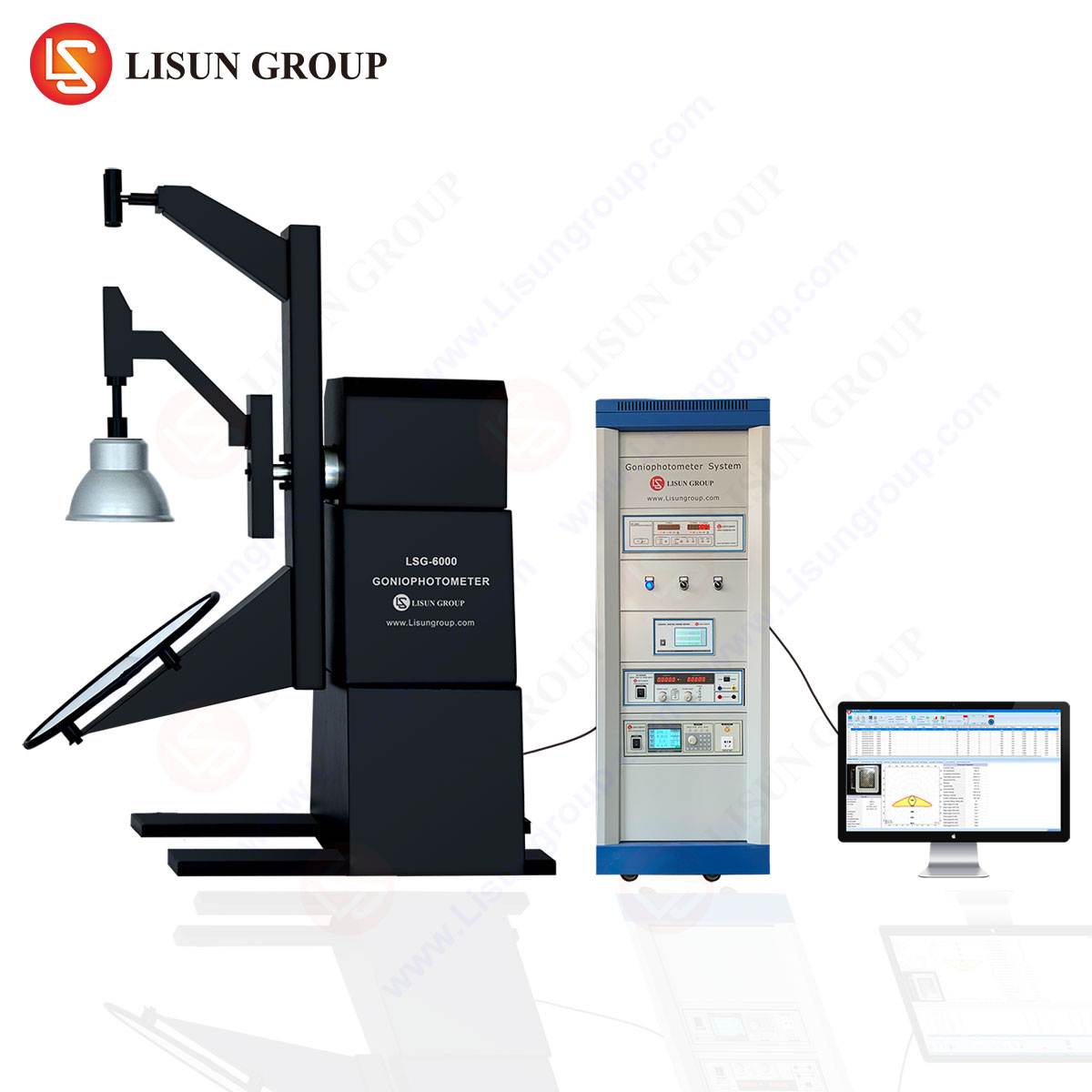



Precision Goniophotometry: Principles, Systems, and Applications in Photometric Validation
Abstract
Goniophotometry constitutes a fundamental metrological discipline within optical science, providing the complete spatial luminous intensity distribution of a light source or luminaire. The precision goniophotometer serves as the cornerstone instrument for this characterization, enabling traceable, accurate, and repeatable measurements critical for research, development, compliance, and quality assurance across diverse industries. This technical treatise examines the underlying principles of goniophotometric systems, with a detailed analysis of a representative high-performance platform, the LSG-1890B Goniophotometer Test System. The discussion encompasses its operational mechanics, technical specifications, adherence to international standards, and its pivotal role in applications ranging from solid-state lighting to medical device validation.
Fundamental Principles of Goniophotometric Measurement
The core objective of a goniophotometer is to measure the luminous intensity, or alternatively the luminous flux, of a test specimen as a function of direction. This is achieved by moving a photodetector, or the specimen itself, through a series of spherical coordinate positions (azimuth angle C and polar angle γ) relative to the photometric center. Two primary mechanical configurations are employed: the moving detector type (Type C) and the moving luminaire type (Type B). The LSG-1890B utilizes the Type C configuration, where the luminaire under test (LUT) remains stationary at the center of rotation while a high-sensitivity spectroradiometer or photometer traverses a spherical trajectory. This design minimizes gravitational effects on the LUT’s thermal and mechanical state, a critical factor for accurate testing of LED luminaires and other sensitive optical assemblies.
The measurement principle relies on the inverse square law. The detector, positioned at a fixed distance (the photometric arm length) from the LUT, measures illuminance (E). Luminous intensity (I) in a given direction is then calculated as I = E * d², where d is the measurement distance. By systematically sampling illuminance across the full 4π steradian sphere, the system constructs a complete luminous intensity distribution curve. Subsequent software integration of this data yields total luminous flux, luminaire efficacy, zonal lumen fractions, and other derived photometric quantities. The precision of the system is governed by the accuracy of angular positioning, the stability and calibration of the detector, the elimination of stray light, and the maintenance of a constant photometric distance.
Architectural Overview of the LSG-1890B Goniophotometer System
The LSG-1890B represents a fully automated, computer-controlled Type C goniophotometer designed for high-accuracy testing of luminaires up to a specified weight and dimension capacity. Its architecture integrates mechanical, optical, and electronic subsystems under unified software control.
The mechanical framework consists of a robust dual-arm structure. The primary vertical rotation axis controls the azimuthal (C-plane) movement, typically offering continuous 360-degree rotation. The secondary horizontal axis, mounted on the moving arm, controls the polar (γ-plane) movement of the detector, enabling coverage from 0° (nadir) to 180° (zenith) or beyond. Both axes are driven by high-precision stepper or servo motors coupled with optical encoders, achieving angular resolution finer than 0.1°. This ensures dense sampling of the light distribution for complex beam patterns. The system incorporates a rigid optical bench and a thermally stable environmental chamber or darkroom to negate ambient light interference and control convective thermal effects on the LUT.
The optical detection subsystem is paramount. The LSG-1890B is typically integrated with a class L (or superior) spectroradiometer, such as a model compliant with DIN 5032-7, enabling spectrally resolved measurements. This allows for the concurrent determination of photometric quantities (luminous intensity, flux) and colorimetric quantities (chromaticity coordinates, correlated color temperature, Color Rendering Index). The detector is housed in a temperature-stabilized enclosure and is positioned behind a precision aperture at the fixed end of the photometric arm. A telescopic baffle system or a dedicated stray-light absorption tunnel lines the arm to prevent reflected or scattered light from reaching the detector.
Technical Specifications and Performance Metrics
The performance envelope of a goniophotometer is defined by its specifications. Key parameters for the LSG-1890B include its measurement geometry, capacity, and accuracy metrics.
Table 1: Representative Technical Specifications of the LSG-1890B System
| Parameter | Specification |
| :— | :— |
| Goniometer Type | Type C (Moving Detector) |
| Photometric Distance | Configurable (e.g., 5m, 10m, or longer) |
| Angular Range | C-axis: 0° to 360° (continuous); γ-axis: -180° to +180° |
| Angular Resolution | ≤ 0.1° |
| Max Luminaire Size | Dependent on chamber; typical: 2000mm x 2000mm x 2000mm |
| Max Luminaire Weight | e.g., 50 kg (centered on turntable) |
| Detector | High-precision spectroradiometer or photometer head |
| Photometric Accuracy | Better than ±3% (for luminous flux, traceable to NIST/NPL) |
| Measurement Standards | IEC 60598-1, IEC 60529, IESNA LM-79, CIE 70, CIE 121, CIE 127, EN 13032-1 |
| Software Outputs | IES, LDT, EULUMDAT, CIE, XML files; 3D intensity distributions |
The specified photometric accuracy is contingent upon rigorous calibration against standard lamps traceable to national metrology institutes. The system software automates correction factors for distance, temperature, and the detector’s spectral and angular response.
Compliance with International Standards and Testing Protocols
Precision goniophotometers are validation tools for global regulatory and performance standards. The LSG-1890B is engineered to facilitate compliance testing per numerous international protocols.
In the Lighting Industry and LED & OLED Manufacturing, adherence to IESNA LM-79-19 (“Electrical and Photometric Measurements of Solid-State Lighting Products”) is essential for reporting total luminous flux, luminous intensity distribution, and efficacy. The system’s Type C configuration and controlled environment directly satisfy LM-79’s requirements for ambient temperature control and photometric distance. For safety and ingress protection, it supports testing per IEC 60598-1 (luminaire safety) and IEC 60529 (IP rating verification for sealed luminaires).
For Display Equipment Testing, particularly uniformity of backlight units and automotive displays, measurements of luminance and chromaticity uniformity at varying angles are critical. The system can be configured for conformance with standards like ISO 15008 for road vehicle displays.
In the Photovoltaic Industry, while primarily for light emission, the precision angular positioning is repurposed for measuring the angular acceptance of photovoltaic modules or the spatial emission patterns of solar simulators, referencing standards such as IEC 60904-9.
Scientific Research Laboratories and Optical Instrument R&D entities utilize such systems for characterizing novel light sources, including lasers, UV-C disinfection fixtures, and complex optical assemblies. Research often follows CIE publications: CIE 121 for LED intensity measurements, CIE 127 for LED averaged LED intensity, and CIE 70 for absolute photometry.
Industry-Specific Applications and Use Cases
The utility of a precision goniophotometer extends across a multidisciplinary spectrum.
-
Urban Lighting Design and Smart Cities: Engineers use goniophotometric data in lighting design software (e.g., Dialux, Relux) to simulate public lighting installations. The IES files generated by the LSG-1890B allow for accurate predictions of illuminance levels, uniformity, and glare indices on roadways and public spaces, ensuring compliance with standards like ANSI/IES RP-8 for roadway lighting and minimizing light pollution.
-
Stage and Studio Lighting: Theatrical and film lighting fixtures demand precise beam shaping. Goniophotometer data quantifies field angles, beam angles, and throw distances, enabling lighting designers to select fixtures based on hard numerical data for spotlight, floodlight, and washlight applications.
-
Medical Lighting Equipment: Surgical lights and examination lamps have stringent requirements for shadow reduction, color rendering, and illuminance uniformity. Standards such as IEC 60601-2-41 for surgical luminaires specify photometric performance. The LSG-1890B provides the data to validate homogeneous light fields and critical color rendering indices for accurate tissue differentiation.
-
Sensor and Optical Component Production: Manufacturers of ambient light sensors, LiDAR components, and optical lenses require precise knowledge of angular response. The goniophotometer can be used to map the responsivity of a sensor as a function of incident angle or to measure the transmission/reflection profile of a lens or filter assembly.
Competitive Advantages of a Modern Integrated System
The LSG-1890B exemplifies advancements that differentiate contemporary systems. Its Type C geometry ensures the LUT remains in its operational orientation, critical for thermal management of active LED systems. Full spectral measurement capability eliminates the need for separate colorimetric testing and enables accurate measurement of non-standard spectra, such as narrow-band LEDs used in horticulture or medical therapy. Automated, high-resolution scanning reduces measurement time from days to hours while improving data density. Integrated environmental control within the test chamber allows for testing under specified temperature conditions (e.g., 25°C ± 1°C), as mandated by LM-79, which is unattainable in open laboratory spaces. Finally, standard-compliant software that directly outputs industry-standard file formats (IES, LDT) streamlines the workflow from measurement to application in design and regulatory submission.
Conclusion
The precision goniophotometer remains an indispensable instrument in the science of light measurement. As lighting technology evolves towards greater efficiency, intelligence, and application specificity, the demand for accurate spatial photometric data intensifies. Systems like the LSG-1890B, with their rigorous adherence to international standards, high degree of automation, and versatile application potential, provide the foundational metrology required to drive innovation, ensure quality, and validate performance across the vast landscape of photonic industries. Their role is not merely one of compliance but of enabling the precise characterization that fuels advancement in optical engineering and design.
Frequently Asked Questions (FAQ)
Q1: What is the primary difference between a Type B and a Type C goniophotometer, and why is Type C often preferred for LED luminaire testing?
A Type B system rotates the luminaire itself while the detector remains fixed, whereas a Type C system rotates the detector around a stationary luminaire. Type C is generally preferred for LED and other solid-state lighting products because it maintains the luminaire in a fixed, natural orientation (e.g., base-down). This prevents changes in convective cooling and thermal junction conditions within the LED that can occur when the luminaire is tilted, leading to more stable and accurate photometric and electrical measurements during testing.
Q2: Can the LSG-1890B system measure both luminous flux and colorimetric parameters simultaneously?
Yes, when equipped with an integrated spectroradiometer as the detector, the system performs spectrally resolved measurements at each angular point. This allows for the simultaneous calculation of photometric quantities (luminous intensity, flux) and colorimetric quantities (CIE x,y or u’,v’ coordinates, Correlated Color Temperature, and Color Rendering Index) from the same dataset, ensuring spatial color consistency is captured.
Q3: How does the system account for the size of a luminaire when measuring at a fixed distance, given the inverse square law assumes a point source?
The system is designed with a sufficient photometric distance (e.g., 5m, 10m) to ensure the test distance is at least five times the maximum dimension of the luminaire. This minimizes the error introduced by the source’s finite size, adhering to the “five-times rule” stipulated in standards like IES LM-79 and CIE 70 for far-field photometry. For very large luminaires or near-field applications, specialized near-field goniophotometers are used.
Q4: What standards does the system support for generating files used in lighting design software?
The system’s software is capable of exporting photometric data files in all major industry-standard formats, including IES (Illuminating Engineering Society) LM-63, EULUMDAT (LDT), and CIE. These files contain the luminous intensity distribution table and metadata, which can be directly imported into lighting simulation software such as Dialux, Relux, and AGi32 for accurate lighting scene calculations.
Q5: Is the system suitable for testing the photobiological safety of lighting products as per IEC 62471?
While a goniophotometer provides the angular intensity distribution, full compliance testing for IEC 62471 (Photobiological Safety of Lamps and Lamp Systems) typically requires additional specialized equipment to measure spectral irradiance or radiance at specific hazard distances and conditions. However, the spatial data from the goniophotometer is a critical input for determining the exposure geometry and can be part of a comprehensive test setup when combined with a spectroradiometer for hazard-weighted spectral analysis.