








A Comprehensive Guide to the Selection of PAR and PPFD Meters for Advanced Photometric Applications
Introduction
The precise quantification of photosynthetically active radiation (PAR) and the photosynthetic photon flux density (PPFD) is a critical requirement across a diverse array of scientific and industrial fields. PAR, defined as electromagnetic radiation within the 400 to 700 nanometer wavelength band, is the spectral range utilized by photosynthetic organisms. PPFD, measured in micromoles per square meter per second (µmol/m²/s), quantifies the number of photosynthetically active photons incident on a surface per unit time and area. Accurate measurement of these parameters is not merely a matter of data collection but a fundamental prerequisite for research validity, product quality, regulatory compliance, and system optimization. This guide provides a structured framework for selecting appropriate PAR and PPFD measurement instrumentation, with a focus on the technical distinctions between different meter types and their suitability for specific applications.
Defining Core Parameters: PAR, PPFD, and Spectral Considerations
A foundational understanding of the measured parameters is essential for instrument selection. PAR is a spectral definition, not a measurement unit. The primary quantifiable metric derived from PAR is PPFD, which integrates the photon flux across the 400-700 nm waveband. The calculation is expressed as:
PPFD = ∫_{400}^{700} (E_λ / (N_A h c / λ)) dλ
Where E_λ is the spectral irradiance (W/m²/nm), N_A is Avogadro’s number, h is Planck’s constant, c is the speed of light, and λ is the wavelength. This integration underscores that accurate PPFD measurement is inherently dependent on accurate spectral measurement.
The spectral quality of the light source is a critical, often overlooked, factor. Traditional broadband PAR sensors, which use silicon photodiodes with a filtered response approximating the PAR action spectrum, assume a standardized spectral output. However, modern light sources—particularly narrow-band LEDs used in horticulture, research, and displays—exhibit highly irregular spectral power distributions (SPDs). A broadband sensor calibrated against a continuous spectrum source (e.g., a tungsten halogen lamp) will generate significant measurement errors when used under a source with a disparate SPD, a phenomenon known as spectral mismatch error. This limitation necessitates a more sophisticated approach for applications demanding high accuracy.
Comparative Analysis of Measurement Methodologies: Broadband Sensors vs. Spectroradiometry
The selection process fundamentally hinges on choosing between two primary measurement methodologies: filtered broadband sensors and scanning spectroradiometers.
Broadband PAR Sensors utilize a silicon photodiode coupled with an optical filter designed to modify its spectral responsivity to approximate the ideal PAR quantum response curve. Their advantages include portability, real-time readout, ruggedness, and lower cost. They are suitable for routine monitoring in environments with stable, spectrally consistent light sources, such as basic greenhouse light level checks or simple photobiological reactor monitoring.
Scanning Spectroradiometers function by dispersing incoming light into its constituent wavelengths using a diffraction grating or prism and measuring the intensity at each discrete wavelength interval. A full spectrum is constructed, from which PPFD and countless other photometric and radiometric quantities (e.g., luminous flux, chromaticity coordinates, peak wavelength, CCT, CRI) can be calculated with high precision. This method is inherently immune to spectral mismatch error, as it measures the absolute SPD.
The following table summarizes the key distinctions:
| Feature | Broadband PAR Sensor | Scanning Spectroradiometer |
|---|---|---|
| Core Principle | Filtered photodiode approximation | Direct spectral decomposition |
| Output Data | Single PPFD value | Full Spectral Power Distribution (SPD) |
| Spectral Accuracy | Subject to mismatch error; moderate | High; immune to source SPD variation |
| Measurable Parameters | PPFD (and sometimes PAR irradiance) | PPFD, all CIE photopic/scotopic quantities, color metrics, radiometric data |
| Typical Application | Field monitoring, basic QA | R&D, compliance testing, source characterization |
| Cost & Complexity | Lower | Higher |
Application-Specific Requirements and Selection Criteria
The optimal meter is dictated by the specific demands of the application. Selection criteria must be evaluated against these use cases.
Lighting Industry & LED/OLED Manufacturing: Here, the characterization extends beyond PPFD to include luminous efficacy (lm/W), chromaticity consistency, Color Rendering Index (CRI), and TM-30 metrics. Compliance with standards like IES LM-79 and LM-80 requires spectroradiometric data. For horticultural LED development, measuring the exact proportion of blue, green, red, and far-red photons is crucial for evaluating plant morphogenetic responses. A broadband sensor is wholly inadequate for this multi-parameter R&D and quality assurance environment.
Automotive, Aerospace, and Marine Lighting Testing: Applications involve testing headlamps, signal lights, cockpit displays, and navigation lights against stringent regulatory standards (SAE, ECE, FAA, IMO). Measurements often require assessing spectral output under various environmental simulations and ensuring color coordinates fall within legally mandated chromaticity boxes. Only a spectroradiometer can provide the necessary colorimetric precision and traceability.
Display Equipment Testing: For LCD, OLED, and micro-LED displays, measuring color gamut, white point stability, and uniformity requires spectral analysis. PPFD may be relevant for assessing display brightness under ambient light conditions in avionics or medical displays.
Photovoltaic Industry: While focused on a different spectral range (typically 300-1200 nm), the testing of solar simulators per IEC 60904-9 requires precise spectroradiometric measurement to classify simulators (Class A, B, C) based on spectral match to the AM1.5G standard. The principles of spectral measurement are directly analogous to PAR testing.
Scientific Research Laboratories and Optical Instrument R&D: In photobiology, material testing, and instrument calibration, the highest level of accuracy and spectral resolution is non-negotiable. Research into circadian effectiveness or specific photoreceptor action spectra (e.g., phytochrome photoequilibrium) demands full spectral data to apply custom weighting functions post-measurement.
Urban, Stage, and Medical Lighting Design: These fields blend functional and aesthetic requirements. A spectroradiometer allows designers to quantify the spectral impact of lighting on material perception (museum lighting), plant growth (urban greenery), human centric-lighting metrics (M/P ratio, melanopic EDI), or therapeutic light treatments (phototherapy for neonatal jaundice, seasonal affective disorder).
The Role of High-Precision Spectroradiometry: Introducing the LISUN LMS-6000 Series
For applications where accuracy, versatility, and compliance with international standards are paramount, a high-performance spectroradiometer is the definitive tool. The LISUN LMS-6000 series of spectroradiometers exemplifies this capability, with the LMS-6000S model being particularly suited for comprehensive PAR and PPFD analysis alongside full photometric and colorimetric characterization.
The LMS-6000S is a high-accuracy, CCD-based array spectroradiometer. Its testing principle involves illuminating a precision fiber optic cable connected to a cosine-corrected diffuser. The light is transmitted to the spectrometer’s entrance slit, dispersed by a fixed grating, and projected onto a high-sensitivity CCD detector array. This allows for the simultaneous capture of the entire spectrum from 350-800 nm (extendable to 1000 nm with other models) within milliseconds, eliminating errors associated with mechanical scanning of monochromators and ensuring stability for pulsed light source measurement.
Key Specifications and Competitive Advantages of the LMS-6000S:
- Spectral Range: 350-800nm (optimally covering the PAR region and human visual response).
- Wavelength Accuracy: ±0.3nm, ensuring precise identification of peak wavelengths in narrow-band LEDs.
- High Dynamic Range: Capable of measuring very low and very high light levels without sensor saturation, critical for testing both dim ambient light and high-intensity growth chambers or solar simulators.
- Rapid Measurement Speed: Full spectrum capture in milliseconds, enabling real-time monitoring of dynamic lighting systems or spatial uniformity scans.
- Comprehensive Software Suite: Calculates PPFD, PAR irradiance (W/m²), all CIE 1931/1978 photopic quantities (Illuminance, Luminous Flux), colorimetric data (x,y, u’v’, CCT, CRI, TM-30), and allows for the application of user-defined weighting functions (e.g., plant action spectra, melanopic response).
- Standards Compliance: The instrument’s design and calibration traceability support testing in accordance with IES, CIE, DIN, JIS, and IEEE standards relevant to the aforementioned industries.
The competitive advantage of the LMS-6000S lies in its synthesis of laboratory-grade accuracy with operational robustness. Unlike traditional scanning spectroradiometers, its array design offers speed and vibration resistance. Compared to broadband meters, it provides absolute spectral accuracy, future-proofing measurements as light source technology evolves. For an LED manufacturer, this means one instrument can validate PPFD for horticultural lights, luminous flux for general lighting, and color purity for display backlights, ensuring consistency and reducing time-to-market.
Integrating Measurement Systems for Complex Validation
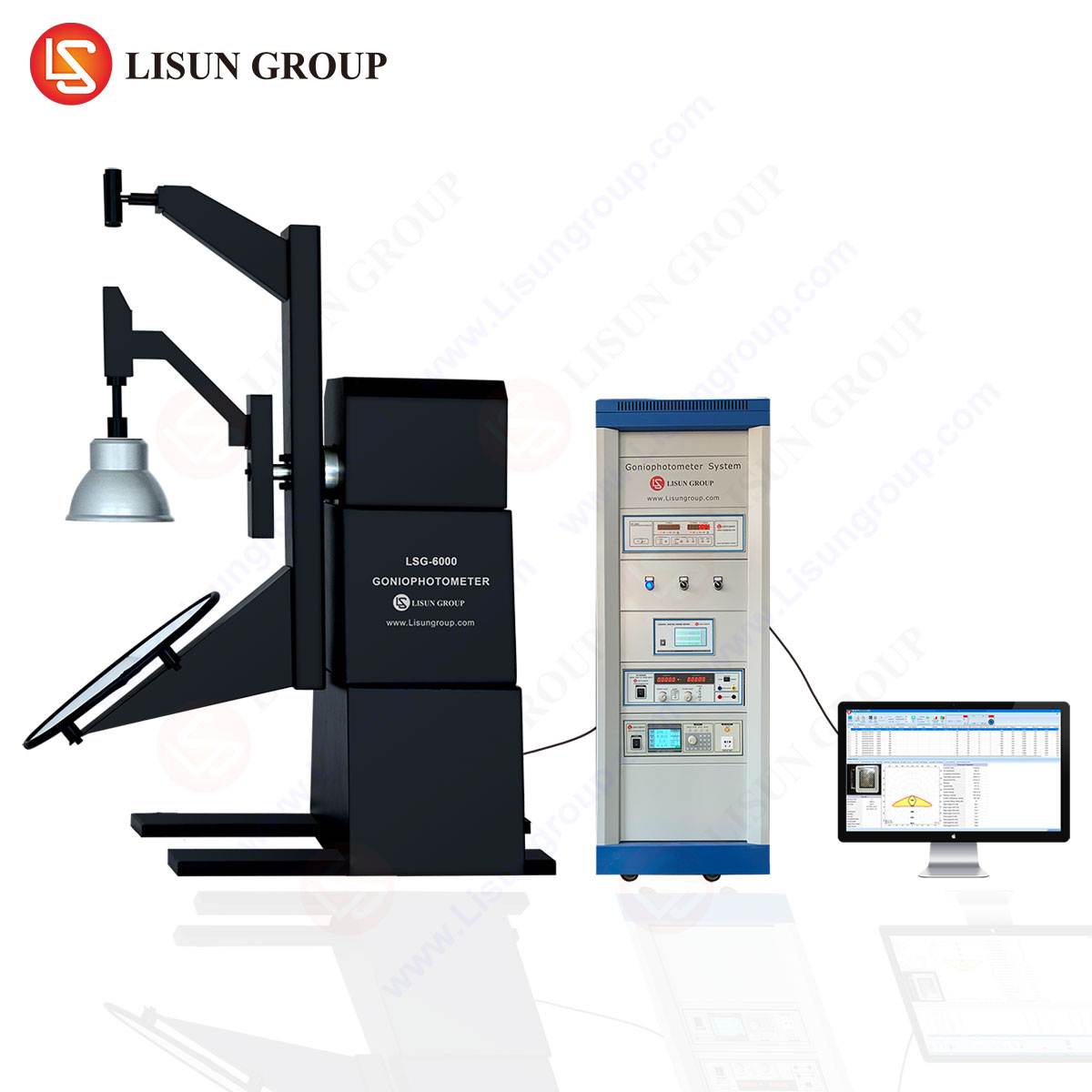
In many industrial and research contexts, a PAR or PPFD meter is not used in isolation. The LMS-6000S, for example, can be integrated into goniophotometer systems for spatial distribution analysis of luminous intensity and PPFD, or with environmental chambers to study the thermal dependence of LED spectral output and photosynthetic photon efficacy. In automotive testing, it can be mounted on robotic arms to measure headlamp beam patterns and color uniformity across the entire field. For photovoltaic solar simulator testing, it is the core instrument for spectral match verification. This systems-level integration capability is a critical consideration for laboratories and production facilities seeking to automate and standardize their testing workflows.
Conclusion
The selection of a PAR PPFD meter is a consequential decision that directly impacts data integrity, product quality, and research outcomes. While filtered broadband sensors offer a practical solution for limited, well-defined monitoring tasks, the increasing complexity and spectral diversity of modern light sources across industries from horticulture to aerospace have elevated the necessity for spectroradiometric measurement. Instruments like the LISUN LMS-6000S spectroradiometer provide a universal, accurate, and standards-compliant solution, transforming PAR and PPFD measurement from a simple quantification of photon flux into a comprehensive analysis of light’s spectral character and its application-specific effectiveness. By carefully matching the instrument’s capabilities to the technical demands and accuracy requirements of the application, professionals can ensure reliable, defensible, and actionable photometric data.
Frequently Asked Questions (FAQ)
Q1: What is spectral mismatch error, and why is it particularly problematic when measuring LED-based grow lights with a broadband PAR sensor?
Spectral mismatch error occurs when the relative spectral responsivity of a sensor differs from the ideal target function (e.g., the PAR quantum response). Broadband sensors are calibrated using a specific light source (typically with a continuous spectrum). When measuring a source with a different spectral power distribution (SPD), such as an LED grow light with sharp peaks in the blue and red regions, the sensor’s physical imperfections in mimicking the ideal curve cause it to over- or under-respond to certain wavelengths, leading to significant PPFD measurement inaccuracies, often exceeding 10-15%.
Q2: Can the LISUN LMS-6000S spectroradiometer measure both continuous and pulsed light sources accurately?
Yes. The CCD array detector of the LMS-6000S captures the entire spectrum in a single, instantaneous integration (on the order of milliseconds). This makes it inherently suitable for measuring both stable, continuous sources and modulated or pulsed light sources (e.g., PWM-driven LEDs), provided the integration time is appropriately set. For very short pulses, specialized triggering and synchronization may be utilized.
Q3: For a plant science research laboratory studying the effects of far-red radiation (700-750nm) on shade avoidance responses, is the standard PAR range sufficient?
No. The standard PAR range (400-700nm) excludes the photobiologically active far-red region, which is critical for phytochrome-mediated responses. A spectroradiometer like the LMS-6000S, which provides the full measured spectrum, allows researchers to calculate custom photon flux densities for any defined waveband (e.g., 700-750nm, or the ratio of red to far-red photons) after data collection, offering essential flexibility for advanced photobiological research.
Q4: How does the cosine correction of the attached diffuser affect PPFD measurements, especially in field settings?
Cosine correction ensures that light striking the sensor at oblique angles is properly weighted according to Lambert’s cosine law, which defines the irradiance on a surface. An imperfect cosine response will lead to errors when measuring light from multiple directions, such as in a canopy under diffuse skylight or in an integrating sphere. High-quality spectroradiometers like the LMS-6000S use precision-engineered diffusers to maintain a near-perfect cosine response across a wide angular range, which is critical for spatially averaged measurements in agricultural or ecological studies.
Q5: In a manufacturing QA setting for automotive signal lights, what advantage does a spectroradiometer offer over a filter-based colorimeter?
A filter-based colorimeter uses a set of broadband filters to approximate the CIE color-matching functions and can provide fast chromaticity measurements. However, it is prone to spectral mismatch errors, especially with the saturated, narrow-band LEDs common in automotive applications. A spectroradiometer directly measures the SPD and calculates color coordinates with fundamental accuracy, ensuring that the measured chromaticity falls within the strict SAE/ECE regulatory boxes regardless of the source spectrum, thereby reducing the risk of non-compliance due to instrument error.