


Optimizing LED Performance with Advanced Testing Solutions
Abstract
The proliferation of Light Emitting Diode (LED) technology across diverse industries has necessitated a concomitant evolution in photometric, radiometric, and colorimetric testing methodologies. Achieving optimal LED performance—encompassing luminous efficacy, color fidelity, spatial uniformity, and long-term reliability—requires precise, comprehensive, and standardized measurement systems. This article delineates the critical parameters for LED characterization, examines the limitations of conventional testing approaches, and presents the integration of spectroradiometry with integrating sphere technology as an advanced solution. A detailed analysis of a representative system, the LISUN LPCE-3 Integrating Sphere Spectroradiometer System, is provided to illustrate its operational principles, specifications, and application across multiple industrial and research domains, from automotive lighting to medical device validation.
Introduction to Comprehensive LED Metrology
The performance evaluation of LED devices and luminaires extends beyond simple luminous flux measurement. A holistic assessment mandates the simultaneous capture of spectral power distribution (SPD), from which all photometric and colorimetric quantities are derived. Key parameters include luminous flux (lumens), luminous efficacy (lm/W), correlated color temperature (CCT), color rendering index (CRI), chromaticity coordinates (CIE x, y; u’, v’), and peak/dominant wavelengths. Furthermore, industries such as automotive and aerospace require rigorous testing under varied drive currents and thermal conditions to simulate real-world operational stresses. The inherent directionality and spatial non-uniformity of LED emission also challenge traditional goniophotometric methods, which, while accurate for spatial distribution, can be time-prohibitive for rapid quality assurance. Consequently, a system capable of high-precision spectral measurement within a controlled optical environment is paramount.
The Integrating Sphere as a Foundation for Accurate Flux Measurement
An integrating sphere operates on the principle of multiple diffuse reflections, creating a spatially uniform radiance distribution across its inner surface. For LED testing, the device under test (DUT) is placed within or coupled to the sphere, often with the use of an auxiliary lamp for sphere wall correction (spectralon coating reflectance is not perfectly uniform across all wavelengths). The sphere’s design, including its diameter, port geometry, and baffle placement, is critical to minimize measurement errors. Larger spheres are generally preferred for measuring complete luminaires to reduce spatial non-uniformity errors, while smaller spheres offer higher signal throughput for low-flux single-die LEDs. The sphere functions as a spatial integrator, averaging the DUT’s angular output so that a single spectrometer, attached via a fiber optic cable to a measurement port, can capture the total spectral radiant flux. This method provides a significant efficiency advantage over full goniophotometry for routine flux and color measurement.
Spectroradiometry: Deriving the Complete Photometric Dataset
A spectroradiometer is the analytical core of the system. It disperses the collected light via a diffraction grating and measures the intensity at each wavelength interval across a defined spectrum (e.g., 380-780nm for visible light, extended for UV or IR applications). The resulting SPD is the fundamental dataset. From the SPD, all other metrics are computationally derived using standardized CIE functions:
- Luminous Flux (Φ_v): Φ_v = K_m ∫ Φ_e,λ V(λ) dλ, where K_m is the maximum luminous efficacy (683 lm/W), Φ_e,λ is the spectral radiant flux, and V(λ) is the photopic luminosity function.
- Chromaticity Coordinates: Calculated by integrating the SPD with the CIE color-matching functions.
- Correlated Color Temperature (CCT): Determined by finding the Planckian locus point nearest the measured chromaticity on a CIE diagram.
- Color Rendering Index (CRI): Calculated by comparing the appearance of 14 standard color samples under the test source versus a reference illuminant of the same CCT.
The precision of the spectrometer, defined by its wavelength accuracy, photometric linearity, stray light rejection, and signal-to-noise ratio, directly dictates the reliability of all downstream calculations.
System Integration: The LISUN LPCE-3 High-Precision Solution
The LISUN LPCE-3 Integrating Sphere Spectroradiometer System exemplifies the integration of these principles into a turnkey testing platform. It is designed to comply with international standards including IES LM-79-19, IES LM-80-20, CIE 177, CIE 13.3, CIE 15, and ANSI C78.377.
System Specifications and Configuration:
- Integrating Sphere: Available in multiple diameters (e.g., 0.5m, 1m, 1.5m, 2m). A 2m sphere is often specified for full luminaire testing, accommodating fixtures up to 600mm in length. The interior is coated with BaSO4 (Barium Sulfate) or specialized Diffuse Reflectance Material (DRM) with a reflectivity >95% across the visible spectrum.
- Spectroradiometer: A high-sensitivity CCD array spectrometer with a wavelength range typically spanning 350-800nm, a wavelength accuracy of ±0.3nm, and a high dynamic range to measure sources from low-power indicator LEDs to high-brightness automotive headlamps.
- Software Suite: Proprietary analysis software (e.g., LMS-9000) automates data collection, performs real-time calculations, and generates standardized test reports. It includes functions for temperature-controlled testing when integrated with a thermal chamber, and can apply user-defined current drive profiles via a programmable DC power supply.
Testing Principle and Workflow:
- System Calibration: The sphere-spectrometer system is first calibrated using a standard lamp of known luminous flux and SPD, traceable to national metrology institutes (NIST, NPL, etc.). This establishes the system’s absolute responsivity.
- Self-Absorption Correction: The DUT is placed inside the sphere. As the DUT itself absorbs a portion of the internally reflected light, a correction factor must be determined. This is achieved by measuring the sphere’s output first with the auxiliary lamp alone, and then with the auxiliary lamp and the unpowered DUT in place.
- DUT Measurement: The auxiliary lamp is turned off, and the DUT is powered under specified conditions (current, voltage, temperature). The spectrometer captures the SPD.
- Data Processing: The software applies the self-absorption correction to the raw SPD data, then computes all required photometric and colorimetric parameters, presenting them in both numerical and graphical formats.
Industry-Specific Applications and Use Cases
- Lighting Industry & LED Manufacturing: Routine production line testing for luminous flux binning and color consistency (MacAdam ellipse compliance) to ensure product uniformity. Lifetime projection (LM-80) testing requires stable, long-term monitoring of flux and chromaticity shift at elevated temperatures, a task for which automated systems like the LPCE-3 are essential.
- Automotive Lighting Testing: Measurement of signal lamps (tail lights, turn indicators) and forward lighting (LED headlamps, DRLs) for compliance with ECE, SAE, and FMVSS standards. Testing often involves precise angular alignment and measurement of luminous intensity (candelas) at specific points, which can be facilitated with the sphere system when used in conjunction with a collimating lens kit.
- Aerospace and Aviation Lighting: Validation of cockpit display backlights, panel illumination, and exterior navigation/strobe lights for conformance with RTCA/DO-160 environmental standards and specific color requirements for pilot dark adaptation (e.g., red instrument lighting).
- Display Equipment Testing: Characterization of LED backlight units (BLUs) for LCDs and direct-view LED video walls for uniformity, color gamut coverage (e.g., DCI-P3, Rec. 2020), and flicker percentage.
- Photovoltaic Industry: Measurement of the spectral irradiance of solar simulators used for testing PV cells, ensuring they match reference spectra (AM1.5G) as per IEC 60904-9.
- Optical Instrument R&D & Scientific Laboratories: Calibration of light sources for microscopes, spectrophotometers, and other analytical instruments. Research into novel phosphor-converted LEDs or quantum-dot materials relies on precise spectral and efficacy measurement.
- Urban Lighting Design: Evaluating the photobiological safety of high-power LED streetlights (IEC 62471) by measuring actinic UV and blue light hazard weighted irradiance, and assessing spectral effects on skyglow.
- Marine and Navigation Lighting: Ensuring maritime signal lights meet COLREGs requirements for chromaticity and luminous intensity over a defined angular spread for safe vessel identification.
- Stage and Studio Lighting: Quantifying the color rendering performance (including extended indices like R9 for saturated reds) and tunable white range of LED-based entertainment luminaires.
- Medical Lighting Equipment: Validating surgical lights for shadow reduction, color rendering (critical for tissue differentiation), and compliance with ISO 9680 standards for intensity and field uniformity.
Competitive Advantages of an Integrated Sphere-Spectrometer System
The primary advantage of a system like the LPCE-3 is the unification of multiple discrete measurement processes into a single, automated, and highly repeatable workflow. Key benefits include:
- Traceability and Compliance: Direct adherence to LM-79 and other global standards facilitates regulatory approval and international market access.
- High Throughput: Significantly faster than goniophotometry for total flux and color data, enabling 100% production testing where previously only sampling was feasible.
- Comprehensive Data Output: A single measurement yields the full suite of photometric, colorimetric, and electrical parameters.
- Thermal and Electrical Integration: Native support for controlling external temperature chambers and programmable power supplies allows for simulating real-world operating conditions and generating performance curves across drive currents (I-V-L testing).
- Reduced Operational Complexity: Automated calibration routines and intuitive software lower the skill barrier for consistent operation, minimizing human error.
Conclusion
The optimization of LED performance is inextricably linked to the precision and comprehensiveness of its measurement. As LED applications diversify into increasingly critical and demanding fields, the requirement for advanced, standardized testing solutions becomes non-negotiable. Integrated systems that combine the spatial averaging of an integrating sphere with the analytical depth of a high-performance spectroradiometer, such as the LISUN LPCE-3, represent the current state of the art. They provide the essential data fidelity, operational efficiency, and regulatory compliance necessary for manufacturers, designers, and researchers to innovate with confidence, ensure product quality, and push the boundaries of solid-state lighting technology across all sectors.
Frequently Asked Questions (FAQ)
Q1: What is the critical difference between using an integrating sphere system and a goniophotometer for LED testing?
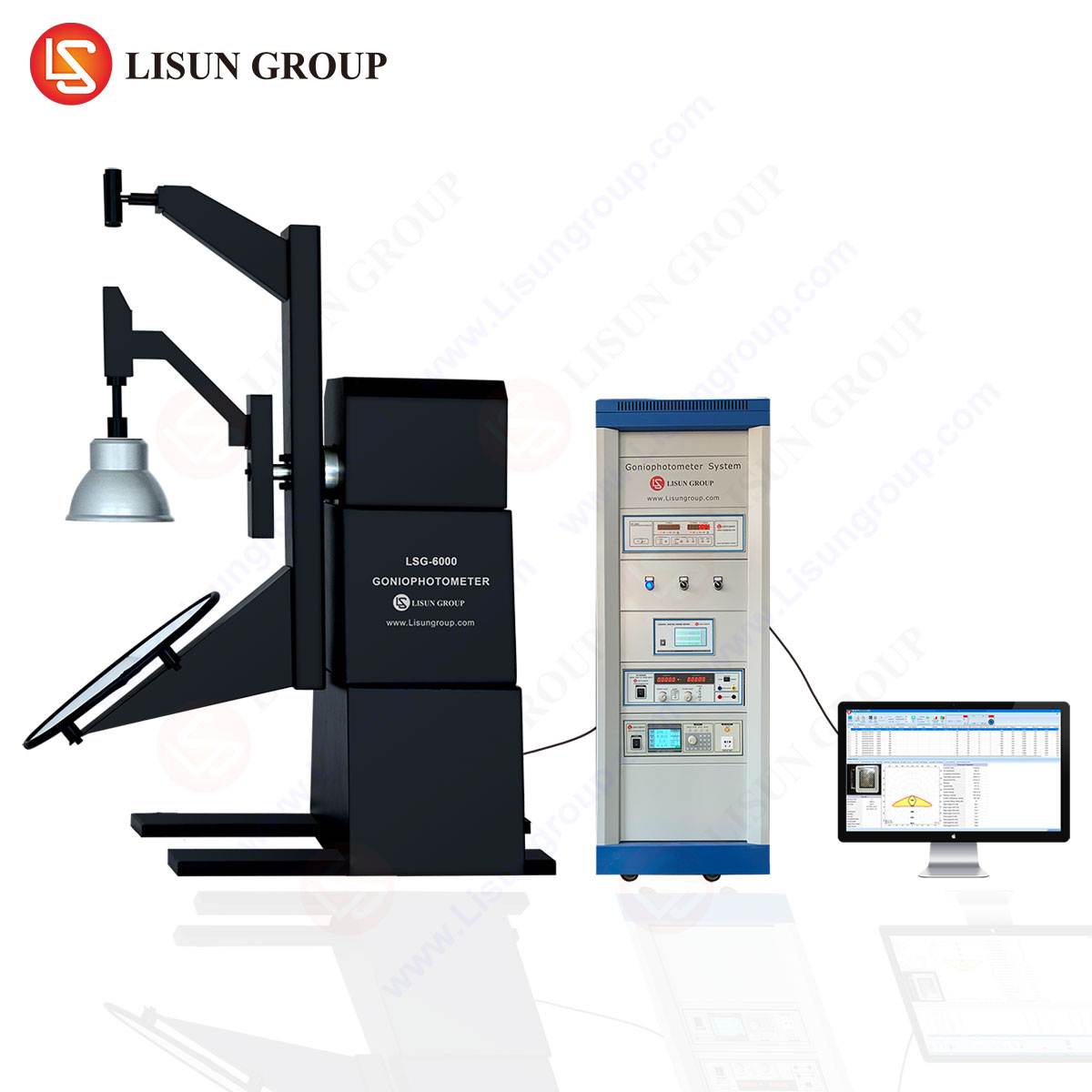
A goniophotometer measures luminous intensity distribution by rotating the detector or source, providing detailed angular intensity data (candelas) essential for luminaire beam pattern analysis. An integrating sphere system measures total luminous flux (lumens) and averaged color characteristics by spatially integrating all light emitted from the source. For total flux and color consistency testing, the sphere system is vastly faster. For applications requiring beam shape, glare analysis, or intensity at specific angles, a goniophotometer is necessary. The two systems are often complementary.
Q2: Why is a “self-absorption correction” or “substitution method” required when using an integrating sphere?
When a light source is placed inside the sphere, its physical structure (housing, heatsink, base) absorbs a portion of the light reflected from the sphere wall. This changes the sphere’s overall efficiency compared to its calibrated state with the standard lamp. The self-absorption correction quantifies this loss by comparing measurements with and without the unpowered DUT present alongside the auxiliary lamp. This correction factor is then applied to the measurement of the powered DUT to obtain an accurate absolute flux value.
Q3: Can the LPCE-3 system measure the flicker or temporal light modulation of LED sources?
While the core spectroradiometer in systems like the LPCE-3 is optimized for high spectral resolution, flicker measurement (percent flicker, flicker index) typically requires a high-speed photodetector with a temporal response in the kilohertz range. Some advanced configurations of such systems may integrate a dedicated flicker measurement module or photometer head to capture these time-dependent characteristics in addition to the spectral data, as flicker is a critical performance parameter in many applications, including automotive and display lighting.
Q4: How does the system maintain accuracy when testing LEDs with very different spectral power distributions, such as a deep blue LED versus a warm white phosphor-converted LED?
The system’s accuracy relies on the calibration traceable to a standard lamp (typically an incandescent source with a continuous blackbody-like spectrum). The linearity and stray light performance of the spectrometer are crucial. High-quality spectrometers are characterized for photometric linearity across their dynamic range and possess excellent stray light rejection specifications. This ensures that the measured SPD of a narrow-band blue LED is not contaminated by stray light from other wavelengths, and that the detector responds linearly to both the weak emission in the deep red of a white LED and its strong blue pump peak. Regular calibration verification using sources of known but differing SPDs is a standard maintenance practice.