





Optimizing LED and HID Luminaire Performance with Advanced Spectroradiometric Testing Solutions
Abstract
The transition to solid-state lighting and the continued evolution of high-intensity discharge (HID) technologies have fundamentally altered the landscape of illumination. Performance optimization of these luminaires extends beyond simple luminous efficacy to encompass a complex matrix of photometric, colorimetric, and radiometric parameters. Precise, reliable, and comprehensive testing is no longer a secondary consideration but a primary engineering imperative. This article delineates the critical performance parameters for modern LED and HID luminaires, examines the methodologies for their accurate quantification, and presents the role of high-precision spectroradiometry, as exemplified by the LISUN LMS-6000SF Spectroradiometer, in ensuring compliance, fostering innovation, and guaranteeing performance across diverse industrial applications.
The Multidimensional Performance Matrix of Modern Luminaires
Historically, luminaire evaluation was predominantly focused on photometric quantities such as luminous flux (lumens) and intensity distribution (candelas). While these remain essential, the spectral characteristics of LED and HID sources introduce additional, critical dimensions to performance assessment. The optimization matrix now integrally includes chromaticity coordinates (CIE x, y; u’, v’), Correlated Color Temperature (CCT), Color Rendering Index (CRI), and its more nuanced successors like TM-30-18 (Rf, Rg). For specialized applications, radiometric measurements including spectral power distribution (SPD), peak wavelengths, and full width at half maximum (FWHM) are paramount. Furthermore, parameters such as flicker percentage, stroboscopic effects (SVM, Pst LM), and spatial color uniformity have emerged as vital indicators of visual comfort, safety, and quality. Each industry sector imposes a unique weighting on these parameters, governed by international standards from bodies like IEC, CIE, IES, SAE, FAA, and DIN.
Foundations of Accurate Measurement: The Spectroradiometric Principle
At the core of precise luminaire characterization lies spectroradiometry. A spectroradiometer functions by dispersing incident optical radiation into its constituent wavelengths and measuring the absolute power at each discrete interval. This fundamental measurement of the Spectral Power Distribution (SPD) serves as the primary data from which all other photometric, colorimetric, and radiometric quantities are derived through mathematical integration against standardized human visual response functions (e.g., the V(λ) photopic luminosity function) or other weighting functions. The fidelity of these derived parameters is entirely contingent upon the accuracy, resolution, and stability of the underlying spectral measurement. Key instrument specifications that dictate this fidelity include wavelength range, optical bandwidth (FWHM), wavelength accuracy, stray light rejection, dynamic range, and signal-to-noise ratio (SNR). The calibration traceability to national metrology institutes (NMIs) ensures measurement integrity across global supply chains and regulatory frameworks.
Introducing the LISUN LMS-6000SF High-Precision Spectroradiometer
To meet the exacting demands of contemporary lighting testing, instruments must offer laboratory-grade performance with operational robustness. The LISUN LMS-6000SF Spectroradiometer represents a synthesis of these requirements. It is a high-performance, CCD-based array spectroradiometer designed for the comprehensive analysis of light sources and displays.
Core Specifications and Technical Advantages:
- Wavelength Range: 200-1100nm, encompassing ultraviolet, visible, and near-infrared spectra. This broad range is critical for applications beyond visible light, such as UV curing validation, photovoltaic cell response testing, and horticultural lighting analysis.
- Optical Bandwidth: ≤ 2.0nm. This high spectral resolution enables the accurate characterization of narrow-band LED emissions, precise identification of peak wavelengths, and detailed analysis of SPD shape, which directly impacts color rendering calculations.
- Wavelength Accuracy: ± 0.3nm. Exceptional wavelength precision ensures the repeatability and comparability of measurements, essential for quality control and research where subtle spectral shifts are significant.
- Stray Light Level: ≤ 0.05%. Superior stray light rejection minimizes measurement error, particularly when assessing LEDs with deep spectral valleys or when measuring weak spectral signals adjacent to strong emissions.
- Dynamic Range & SNR: A high dynamic range and superior signal-to-noise ratio allow for accurate measurement of very dim and very bright sources without saturating the detector, ensuring data validity across the full intensity curve of a luminaire.
The LMS-6000SF employs a symmetric Czerny-Turner optical system with a holographic grating and a back-thinned, thermoelectrically cooled CCD detector. This configuration maximizes light throughput and stability while minimizing thermal noise. Its competitive advantage lies in this balance of high-end specifications, calibration traceability, and integration within LISUN’s ecosystem of goniophotometers, integrating spheres, and control software, enabling automated, end-to-end testing workflows.
Industry-Specific Applications and Optimization Use Cases
Lighting Industry and LED/OLED Manufacturing: In mass production, the LMS-6000SF is deployed for binning LEDs based on chromaticity and flux, ensuring color consistency within tight MacAdam ellipses. It verifies compliance with ENERGY STAR, DLC, and IEC 62612 standards, measuring efficacy (lm/W), CCT, CRI, and R9. For OLED panels, it assesses spatial color uniformity and angular color shift, critical for quality acceptance.
Automotive Lighting Testing: Automotive standards (SAE J578, ECE R112, R128) mandate precise color coordinates for signal lamps (e.g., red, amber) and headlamps. The LMS-6000SF measures the chromaticity of LED headlamps, adaptive driving beams (ADB), and interior ambient lighting with the accuracy required for type approval. It is also used to characterize the SPD of sources used in LiDAR and in-cabin sensing systems.
Aerospace and Aviation Lighting: Navigation lights, cockpit displays, and emergency lighting must comply with stringent FAA and RTCA/DO-160 specifications. The spectroradiometer validates the specific chromaticity regions for aviation red, green, and white lights, and tests for susceptibility to flicker induced by variable frequency power systems.
Display Equipment Testing: For LCD, OLED, and micro-LED displays, the instrument measures white point, color gamut (covering standards like DCI-P3, Rec.2020), grayscale tracking, and flicker. In R&D for next-generation displays, it analyzes the SPD of quantum-dot enhancement films and color converters.
Photovoltaic Industry: The device characterizes the spectral irradiance of solar simulators per IEC 60904-9 standards (Class A, B, C), ensuring the simulator’s spectrum matches the reference solar spectrum (AM1.5G). This is vital for accurate rating of PV cell efficiency.
Urban Lighting Design: Beyond compliance, the tool aids in selecting luminaires for human-centric lighting. It measures melanopic content of SPDs to evaluate non-visual biological impacts and assesses spectral glare for public safety and comfort in roadway and architectural lighting projects.
Marine and Navigation Lighting: Compliance with International Association of Marine Aids to Navigation and Lighthouse Authorities (IALA) and COLREGs requires precise chromaticity and luminous intensity. The LMS-6000SF certifies the color of buoys, beacons, and ship navigation lights.
Stage, Studio, and Medical Lighting: In entertainment lighting, it profiles the color output of LED fixtures for accurate color mixing and matching. For medical lighting, it verifies the color rendering properties and shadow dilution performance of surgical luminaires per IEC 60601-2-41, and validates the SPD of phototherapy equipment for dermatology and neonatal care.
Integrating Spectroradiometry into a Comprehensive Testing Regime
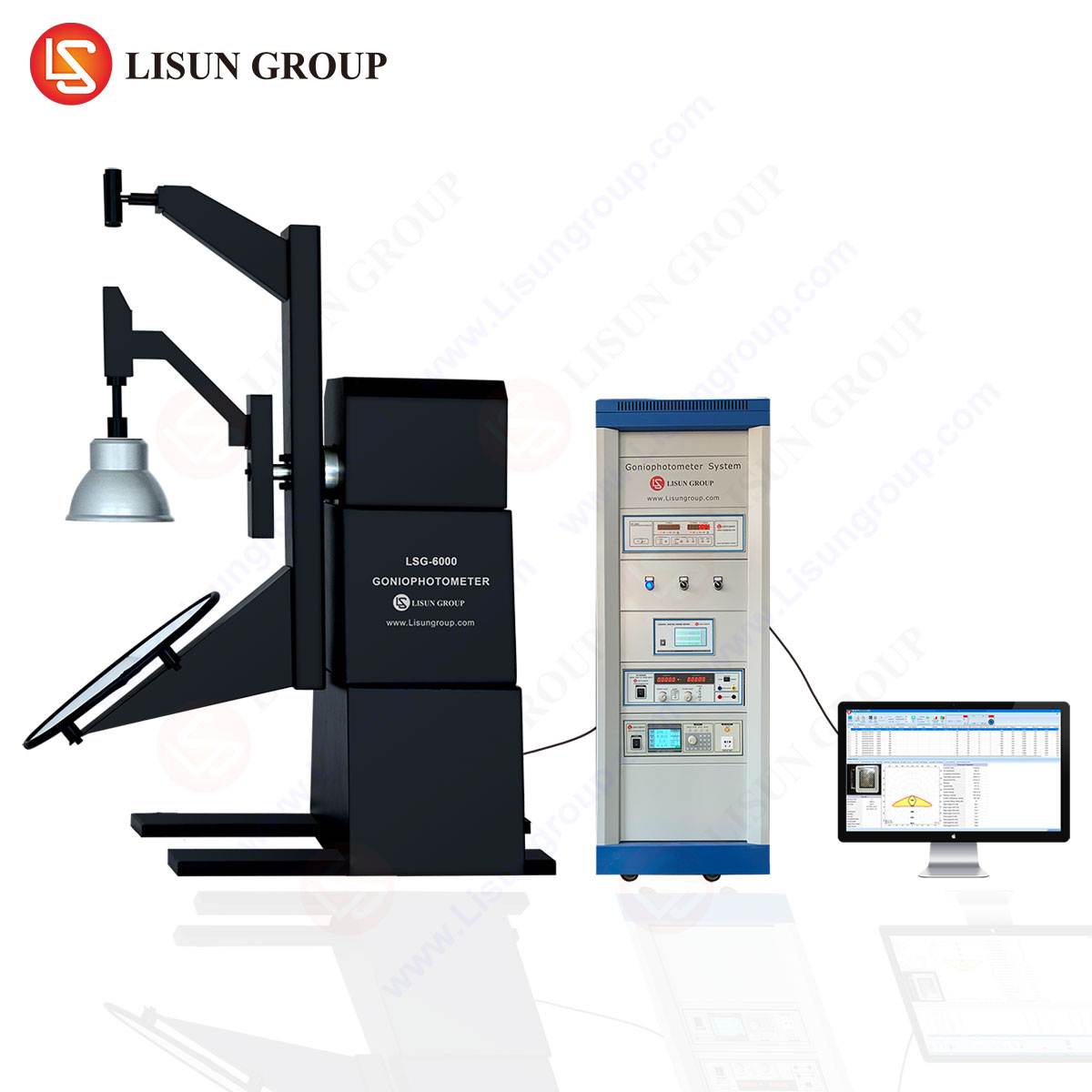
The LMS-6000SF achieves its full potential when integrated into holistic test systems. Coupled with a goniophotometer, it enables spatially resolved spectral measurements, mapping CCT and CRI across a light beam—a key metric for automotive headlamps and projector optics. Within an integrating sphere, it becomes the engine for total spectral flux measurement. When paired with a flicker analyzer, it can decompose the SPD at different phases of the AC waveform to diagnose color shift during dimming or flicker events. This systems approach, controlled by unified software, allows for the automated generation of comprehensive test reports that satisfy both engineering analysis and regulatory submission requirements.
Data-Driven Optimization and Standards Compliance
The quantitative data generated by the LMS-6000SF feeds directly into the design feedback loop. Engineers can correlate spectral data with thermal management performance, driver current characteristics, and phosphor formulation adjustments. Compliance with standards such as IES LM-79, LM-80, IEC/PAS 62717 for LEDs, and ANSI C78.43 for HID lamps is streamlined. The instrument’s ability to calculate extended metrics like TM-30-20 (Rf, Rg) and IES MOVE (for flicker) provides a competitive edge in markets increasingly focused on lighting quality and human physiological response.
Conclusion
The performance optimization of LED and HID luminaires is an intrinsically data-centric endeavor. In an era defined by spectral specificity, human-centric design, and cross-industry standardization, advanced spectroradiometric measurement forms the indispensable foundation for objective evaluation. Instruments like the LISUN LMS-6000SF Spectroradiometer, with their rigorous metrological performance and adaptability, provide the essential toolkit for manufacturers, designers, and testing laboratories to innovate with confidence, validate performance claims, and ensure their products meet the sophisticated demands of the global lighting market.
Frequently Asked Questions (FAQ)
Q1: Why is a wavelength range extending to 1100nm (NIR) important for testing visible lighting products?
While human vision ends around 780nm, many photodetectors, sensors, and materials have sensitivity in the near-infrared (NIR). For applications like automotive LiDAR, IR remote controls, or security lighting with integrated cameras, characterizing NIR emission is essential. Furthermore, the broad range ensures superior stray light performance in the visible region and allows a single instrument to be used for photovoltaic and horticultural testing, where NIR radiation is a key parameter.
Q2: How does optical bandwidth (FWHM) impact the accuracy of color rendering calculations?
The Color Rendering Index (CRI) and TM-30 metrics are calculated by comparing the SPD of the test source to a reference source. A narrow optical bandwidth (e.g., ≤2.0nm) allows the spectroradiometer to capture fine spectral features, especially the narrow emission peaks of phosphor-converted LEDs and the sharp spectral lines of HID sources. An insufficient bandwidth can artificially smooth these features, leading to significant errors in calculated color fidelity and gamut scores.
Q3: Can the LMS-6000SF measure the flicker of pulse-width modulated (PWM) dimmed LEDs?
While the LMS-6000SF itself captures instantaneous SPD, comprehensive flicker analysis (percent flicker, flicker index, SVM, Pst LM) typically requires a dedicated high-speed photodetector or flicker analyzer module. However, the spectroradiometer system can be integrated with or used alongside such modules. Its value in flicker analysis lies in characterizing whether the SPD—and thus the color—shifts at different dimming levels or phases of the PWM cycle, a phenomenon known as chromatic flicker.
Q4: What is the significance of stray light specification in spectroradiometry?
Stray light refers to spurious signal detected at a wavelength where no genuine radiation from the source is present, caused by internal scattering within the instrument. A high stray light level (e.g., >0.1%) can cause significant measurement error, particularly when measuring a source with a very strong emission peak (like a blue LED pump) and trying to accurately measure a very weak signal in a distant spectral region (like deep red phosphor emission). A low stray light level (≤0.05%) is critical for high dynamic range measurements and accurate SPD characterization.
Q5: How often does a spectroradiometer like the LMS-6000SF require calibration, and what does it entail?
Recommended calibration intervals are typically annual to maintain traceability to national standards. The calibration process involves exposing the instrument to known standard sources, such as a NIST-traceable tungsten halogen lamp for spectral irradiance/responsivity and a set of spectral line sources (e.g., mercury-argon) for wavelength accuracy verification. Regular performance validation with stable reference LEDs is advised between formal calibrations.