


The Metrological Foundation of Spectral Radiant Flux Measurement
Accurate quantification of the total optical radiation emitted by a source, known as spectral radiant flux, is a cornerstone of photometric and colorimetric science. This measurement, expressed in watts per nanometer (W/nm), describes the absolute power a light source emits as a function of wavelength across the electromagnetic spectrum. It is the fundamental building block from which all other photometric (e.g., lumens, lux) and colorimetric (e.g., chromaticity coordinates, Correlated Color Temperature) quantities are derived. The precision of these derived values is entirely contingent upon the fidelity of the initial spectral radiant flux measurement. The process requires an integrating sphere to collect light omnidirectionally and a high-performance spectroradiometer to resolve the spectrum with high wavelength accuracy and low stray light. Instruments like the LISUN LMS-6000 series of spectroradiometers are engineered specifically for this primary measurement task, providing the metrological foundation necessary for rigorous color accuracy across diverse applications.
Integrating Sphere Theory and Configurations for Total Luminous Flux
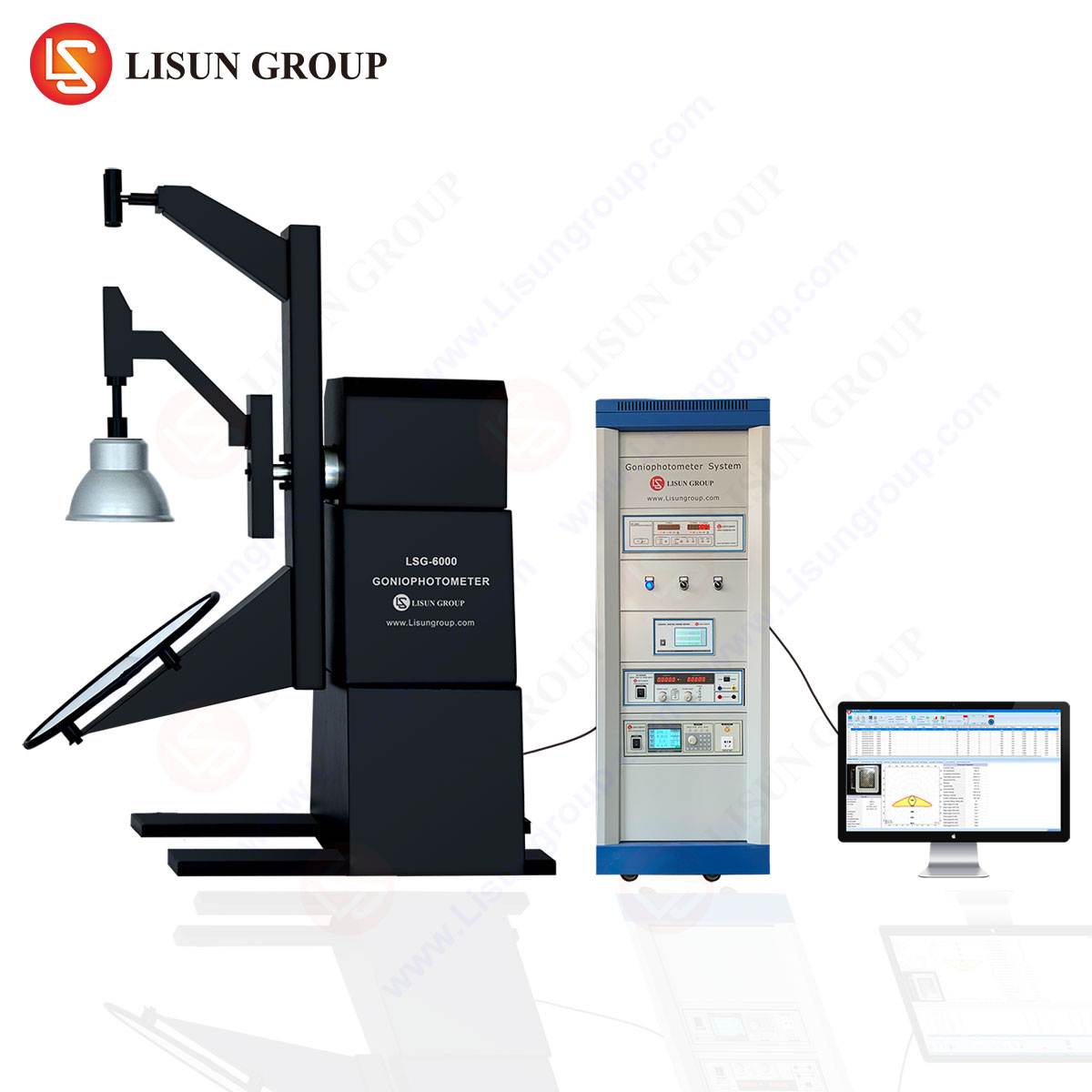
The integrating sphere, a hollow spherical cavity with a highly reflective and diffuse inner coating, serves as the primary tool for measuring total luminous flux. Its operation is based on the principle of multiple diffuse reflections. Light entering the sphere through an input port undergoes numerous reflections, resulting in a uniform spatial distribution of radiance across the sphere’s inner surface. This spatial averaging effectively scrambles the directional characteristics of the source, allowing a detector, such as a spectroradiometer attached to a second port, to measure a signal proportional to the total flux, independent of the source’s original emission pattern. The accuracy of this system is governed by several factors, including sphere diameter, port geometry, and the reflectance properties of the coating. Baffles are strategically placed within the sphere to prevent first-reflection light from the source from directly striking the detector port, which would compromise the spatial uniformity. For absolute flux measurements, the system must be calibrated using a standard lamp of known total luminous flux, traceable to a national metrology institute. The LISUN LMS-6000 series spectroradiometers, when coupled with an appropriately sized integrating sphere, form a complete goniophotometer-replacement system capable of delivering highly accurate spectral flux data for sources ranging from miniature LEDs to large-area luminaires.
Critical Performance Parameters of High-Fidelity Spectroradiometers
The performance of a spectroradiometer in color accuracy applications is defined by a set of critical technical parameters. Wavelength accuracy, typically required to be within ±0.2 nm, ensures that spectral features are correctly identified, which is paramount for calculating color rendering indices and identifying narrow-band emissions. Spectral bandwidth, the width of the wavelength interval passed by the monochromator, determines the instrument’s ability to resolve fine spectral lines; a bandwidth of 2.0 nm or less is often necessary for LED and laser diode characterization. Stray light, the spurious signal detected at wavelengths where no source emission exists, is a primary source of error, particularly when measuring narrow-band sources like blue LEDs with long-wavelength phosphors. A high stray light rejection ratio, often achieved through double-grating monochromators in instruments like the LISUN LMS-6000S, is essential for maintaining accuracy. Dynamic range and signal-to-noise ratio dictate the instrument’s ability to measure both very dim and very bright sources without saturation or excessive noise. Finally, linearity across this dynamic range ensures that the measured signal is directly proportional to the incident radiant flux, a prerequisite for any absolute measurement. The LISUN LMS-6000F, for instance, is optimized for fluorescence measurement, requiring exceptional sensitivity and low noise across a broad spectrum to accurately characterize the interaction between excitation light and phosphor materials.
Table 1: Key Performance Metrics for Spectroradiometric Color Accuracy
| Parameter | Typical Requirement | Impact on Color Accuracy |
| :— | :— | :— |
| Wavelength Accuracy | ≤ ±0.2 nm | Directly affects calculation of chromaticity coordinates (CIE x, y) and peak wavelength. |
| Stray Light Level | < 0.05% | Prevents artificial inflation of spectral power in non-emitting regions, critical for CCT and CRI. |
| Spectral Bandwidth | ≤ 2.0 nm (FWHM) | Determines ability to resolve narrow emission peaks, essential for laser and multi-phosphor LED analysis. |
| Photometric Linearity | > 99.5% | Ensures proportional response across intensity levels, fundamental for all derived photometric quantities. |
| Scanning Speed | Variable | Enables rapid production-line testing and characterization of transient lighting phenomena. |
Derivation of Photometric and Colorimetric Quantities from Spectral Data
Once a high-fidelity spectral power distribution (SPD) is acquired, a suite of photometric and colorimetric values can be computed through standardized mathematical procedures. Photometric quantities are weighted by the CIE standard photopic luminosity function, V(λ), which models the spectral sensitivity of the human eye under typical lighting conditions. Total luminous flux (lumens) is calculated by integrating the product of the SPD and the V(λ) function across the visible spectrum. Luminous efficacy (lumens per watt) is then derived by dividing the total luminous flux by the electrical input power.
Colorimetric analysis begins with the calculation of CIE tristimulus values (X, Y, Z) by integrating the product of the SPD, the CIE color-matching functions (x̄, ȳ, z̄), and a normalization factor. From these tristimulus values, the chromaticity coordinates (x, y) on the CIE 1931 chromaticity diagram are determined. The Correlated Color Temperature (CCT) is found by identifying the temperature of the Planckian locus closest to the source’s chromaticity point on this diagram. For a more complete assessment of color quality, the Color Rendering Index (CRI) and its modern successor, the IES TM-30-20 method (which provides Rf and Rg values), are computed. These metrics evaluate a light source’s ability to faithfully render the colors of various test samples compared to a reference illuminant of the same CCT. The computational engine within the LISUN software suite automates these complex derivations, ensuring compliance with CIE, IES, and other international standards.
Industry-Specific Applications and Compliance Standards
The demand for mastering color accuracy through precise spectroradiometry permeates numerous high-technology industries, each with its own set of stringent requirements and standards.
In LED & OLED Manufacturing, the LISUN LMS-6000 is integral for binning processes, ensuring LEDs with nearly identical chromaticity and flux are grouped together. This is critical for producing consistent lighting products and display backlights. The instrument’s high speed and accuracy allow for 100% testing on production lines, minimizing color deviation in the final assembly. For Automotive Lighting Testing, compliance with regulations such as ECE and SAE is non-negotiable. The LMS-6000 is used to verify the color of signal lamps (e.g., turn signals, brake lights) and headlamps, ensuring they fall within the legally defined chromaticity boundaries for safety and visibility.
The Aerospace and Aviation Lighting industry relies on spectroradiometers to test cockpit displays, panel lighting, and external navigation lights. Standards like DO-160 define requirements for luminance and color to ensure readability under all lighting conditions and to prevent misinterpretation of critical information. In Display Equipment Testing, the characterization of LCD, OLED, and microLED screens for color gamut, white point accuracy, and uniformity requires instruments with high spatial resolution and spectral precision. The LMS-6000SF, with its fiber-optic input, can be coupled with telescopic optics for spot measurements on displays.
Within the Photovoltaic Industry, spectroradiometers are used to measure the spectral irradiance of solar simulators. The mismatch between the simulator’s spectrum and the standard AM1.5G solar spectrum can introduce significant error in cell efficiency measurements; the LMS-6000 enables precise correction factors to be applied. For Medical Lighting Equipment, such as surgical and diagnostic lights, color rendering and CCT are vital. A high CRI and specific CCT are required to ensure accurate tissue differentiation and color perception during medical procedures, adhering to standards like IEC 60601-2-41.
In Urban Lighting Design, the spectral content of street and architectural lighting is measured to assess its impact on the nocturnal environment, human circadian rhythms, and skyglow. Precise data is needed to select luminaires that meet dark-sky friendly specifications. Similarly, in Marine and Navigation Lighting, the precise color of buoys, lighthouses, and ship navigation lights is legally mandated by the International Association of Lighthouse Authorities (IALA) to ensure unambiguous marine signaling.
The LISUN LMS-6000 Series: A Technical Overview for Demanding Metrological Applications
The LISUN LMS-6000 series represents a family of high-precision spectroradiometers designed to meet the rigorous demands of the industries previously discussed. The core platform utilizes a high-resolution diffraction grating and a high-sensitivity CCD detector to deliver the performance metrics essential for mastering color accuracy. A key feature across the series is the programmable synchronous receiver and automatic attenuator, which work in concert to achieve an exceptionally wide dynamic range, allowing for the measurement of sources from micro-LEDs to high-intensity searchlights without hardware reconfiguration.
Specific models are tailored for distinct application domains. The base LMS-6000 provides a robust platform for general lighting testing. The LMS-6000F is engineered with enhanced sensitivity in the red and near-infrared regions, making it ideal for measuring phosphor-converted LEDs and other fluorescent materials. For applications involving lasers or sources with very narrow spectral features, the LMS-6000S incorporates a double-grating monochromator, offering a stray light level of less than 0.01% to eliminate spurious signal artifacts. The LMS-6000P is optimized for the photovoltaic industry, with a focus on the precise characterization of solar simulator spectra against the AM1.5G standard. The LMS-6000UV extends the spectral range into the ultraviolet, catering to UV LED, curing, and sterilization light source testing. Finally, the LMS-6000SF utilizes a fiber-optic input, providing flexibility for integrating with complex optical setups, microscope adapters, or remote sensing probes used in display testing and scientific research.
Table 2: LISUN LMS-6000 Series Model Differentiation
| Model | Key Feature | Primary Application Focus |
| :— | :— | :— |
| LMS-6000 | Balanced Performance | General lighting, LED manufacturing, quality control. |
| LMS-6000F | Enhanced Red/NIR Sensitivity | Phosphor-converted LEDs, fluorescence analysis, horticultural lighting. |
| LMS-6000S | Double-Grating, Ultra-Low Stray Light | Laser diodes, narrow-band LEDs, high-color-purity source testing. |
| LMS-6000P | PV Industry Calibration | Solar simulator spectral matching, photovoltaic research. |
| LMS-6000UV | Extended UV Range (200-400nm) | UV-A/B/C LED testing, curing, sterilization, forensic analysis. |
| LMS-6000SF | Fiber-Optic Input | Display spot measurement, R&D setups, remote sensing. |
Advanced Calibration and Traceability Protocols
The validity of any spectroradiometric measurement is fundamentally dependent on a rigorous and documented calibration chain. The LISUN LMS-6000 series is calibrated against NIST-traceable standard lamps, which have known spectral irradiance or spectral radiance profiles certified by a national metrology institute. This process establishes a direct metrological link to the International System of Units (SI). The calibration procedure involves measuring the standard source with the spectroradiometer to generate a set of correction coefficients that account for the instrument’s specific wavelength response, optical throughput, and detector sensitivity. These coefficients are stored within the instrument and applied automatically during subsequent measurements. Regular recalibration, typically on an annual basis, is mandatory to account for any drift in the instrument’s performance over time due to aging of optical components or the detector. For absolute luminous flux measurements using an integrating sphere, a separate calibration is performed using a standard lamp of known total luminous flux to determine the sphere’s geometric correction factor, or “sphere constant.” This end-to-end traceability is a non-negotiable requirement for laboratories operating under quality management systems such as ISO/IEC 17025.
Addressing Measurement Uncertainty in Complex Optical Systems
A comprehensive understanding of measurement uncertainty is critical for interpreting spectroradiometric data. The total uncertainty budget in a color accuracy measurement is a combination of contributions from multiple components. Type A uncertainties, evaluated by statistical methods, include the repeatability of the source and the instrument’s signal noise. Type B uncertainties, evaluated by other means, are often more significant and include the uncertainty of the calibration standard, wavelength inaccuracy, stray light effects, nonlinearity of the detector, and imperfections in the integrating sphere (e.g., spatial non-uniformity, port losses, and coating degradation). For instance, when measuring a deep red LED, a small wavelength error can lead to a significant shift in the calculated chromaticity y-coordinate due to the steep slope of the CIE color-matching function in that region. Similarly, stray light from a dominant blue pump LED can artificially raise the measured signal in the red phosphor region, leading to an overestimation of CRI R9 values. A professional report of colorimetric data must always be accompanied by a statement of the expanded uncertainty, calculated by combining the individual uncertainty components with a coverage factor (typically k=2 for a 95% confidence level). The robust design of the LISUN LMS-6000 series, with its high linearity and low stray light, is intended to minimize these core instrumental contributions to the overall uncertainty budget.
Frequently Asked Questions
Q1: What is the primary difference between the LMS-6000S and other models in the series, and when is it absolutely necessary?
The LMS-6000S incorporates a double-grating monochromator, which provides an ultra-low stray light specification of less than 0.01%. It is absolutely necessary when measuring sources with high spectral contrast, such as laser diodes or narrow-band LEDs, where even minute stray light from a dominant peak can severely corrupt the measurement of adjacent, lower-intensity spectral regions. For broad-spectrum sources like incandescent or most white LEDs, a standard single-grating model may be sufficient.
Q2: How does the instrument maintain photometric linearity across its wide dynamic range, and why is this critical?
The LMS-6000 series employs a combination of a programmable synchronous receiver, which adjusts the integration time and signal amplification, and an automatic attenuator wheel that introduces neutral density filters into the optical path. This system ensures the CCD detector operates within its linear response region regardless of input intensity. Linearity is critical because non-linearity would mean that a doubling of the source’s flux does not result in a doubling of the measured signal, invalidating all absolute photometric and colorimetric calculations derived from the spectrum.
Q3: In an integrating sphere measurement, how is self-absorption of the light source accounted for?
Self-absorption occurs when a light source absorbs a portion of its own emitted light that is reflected within the sphere, leading to an underestimation of total flux. This is particularly significant for large, non-transparent luminaires or sources with high internal temperatures. The correction is performed using an auxiliary lamp method, as defined in standards like CIE 84. A known, stable auxiliary lamp is used to measure the sphere’s response with and without the test source present. The change in response is used to calculate a correction factor that is applied to the raw measurement of the test source.
Q4: For display testing, can the LMS-6000SF measure the absolute luminance of a single pixel?
While the LMS-6000SF with a fiber-optic input provides flexibility, measuring the absolute luminance of a single pixel requires coupling the fiber to a telescopic lens system with a very small measurement spot size. The feasibility depends on the pixel pitch and the minimum spot size achievable by the optical system. For microLED displays with very small pixels, a microscope adapter may be required. The instrument’s sensitivity and low-noise performance are crucial for obtaining a reliable signal from such a small, low-luminance area.
Q5: What is the recommended calibration interval for the LMS-6000 in a production quality control environment?
In a high-usage production environment, the recommended calibration interval is typically one year to ensure ongoing traceability and accuracy. However, it is a best practice to perform regular interim checks using a stable, internal reference source to monitor for any significant performance drift. If the instrument is subjected to harsh conditions or its measurements are critical for regulatory compliance, a shorter calibration cycle of six months may be warranted.