


Foundations of Luminous Flux and Luminous Intensity in Solid-State Lighting
The ascendancy of Light Emitting Diodes (LEDs) as the dominant illumination technology across a multitude of industries has necessitated a paradigm shift in photometric measurement methodologies. Unlike incandescent sources, which approximate a point source and exhibit near-Lambertian emission, LEDs are characterized by highly directional output, non-uniform spatial intensity distributions, and spectral power distributions that are dependent on drive current and junction temperature. Consequently, the accurate quantification of luminous intensity, a fundamental photometric quantity, requires a rigorous, standardized approach. Luminous intensity (Iv), measured in candela (cd), is defined as the luminous flux per unit solid angle in a specified direction. Its precise measurement is not merely a regulatory formality but a critical determinant of product performance, efficacy, safety, and compliance in applications ranging from automotive forward lighting to medical diagnostic equipment.
The Geometrical and Spectroradiometric Complexities of LED Measurement
The directional nature of LED emission presents the primary challenge in quantifying luminous intensity. The conventional definition of the candela relies on the source being a point source, an condition rarely met by high-power LED packages. The inverse square law, fundamental to photometry, is only valid when the distance from the source to the detector is sufficiently large. This minimum distance is governed by the “five-times rule” stipulated in standards such as CIE 127:2007, which defines specific measurement conditions (Condition A and B) for LEDs to ensure reproducible, if not strictly fundamental, luminous intensity values. Furthermore, the spectral mismatch between the LED source and the standardized V(λ) photopic luminosity function requires sophisticated color correction. A simple photodiode with a V(λ) filter will yield significant errors if the correction is not properly applied, a problem exacerbated by the narrow-band emission of certain LED colors. These complexities underscore the necessity for an integrated measurement system that combines precise geometrical conditioning with full spectroradiometric analysis.
Integrating Sphere Systems as a Foundation for Total Luminous Flux
Before directional intensity can be derived, the total luminous flux (Φv), measured in lumens (lm), of an LED is often a required parameter. The integrating sphere, a classic tool in photometry, remains the preferred apparatus for this measurement. The principle of operation relies on multiple diffuse reflections within a spherical cavity coated with a highly reflective, spectrally neutral material, such as BaSO4 or PTFE. This process creates a uniform radiance distribution across the sphere’s inner wall, whereby the illuminance measured at a specific port by a detector is directly proportional to the total luminous flux entering the sphere. For LED measurement, specific configurations are mandated to account for self-absorption effects. An auxiliary lamp is used to calibrate the sphere and determine its system efficiency, while the placement of the LED sample and the use of baffles to shield the detector from direct irradiation are critical to measurement accuracy.
The LPCE-2 Integrating Sphere Spectroradiometer System: Architecture and Specifications
The LISUN LPCE-2 Integrating Sphere Spectroradiometer System represents a turnkey solution designed to address the precise demands of LED photometric and colorimetric testing. The system is engineered as a synergistic combination of a high-stability integrating sphere and a high-precision CCD spectroradiometer. The sphere is constructed with a molded design and coated with a proprietary, highly reflective diffuse material, ensuring excellent spatial integration and long-term stability. The integrated spectroradiometer, typically the LMS-6000 or equivalent, utilizes a CCD detector with a wavelength range of 380nm to 780nm, providing the spectral data necessary to calculate photopic quantities with high fidelity, eliminating the errors associated with filter-based photometers.
Key specifications of the LPCE-2 system include:
- Luminous Flux Measurement Range: 0.001 to 200,000 lm
- Luminous Intensity Measurement: Capable via derived calculation from spatial scans or dedicated jigs.
- Color Parameters: Accurately measures Correlated Color Temperature (CCT), Color Rendering Index (CRI), Chromaticity Coordinates (x, y, u’, v’), and Peak Wavelength.
- Electrical Parameters: Integrated power supply and test bench for forward voltage, current, and power factor measurement.
- Compliance: The system’s software is designed to automate testing procedures in accordance with CIE 127:2007, CIE 13.3-1995, IESNA LM-79, and other international standards.
Methodology for Deriving Luminous Intensity from Spectroradiometric Data
The LPCE-2 system does not measure luminous intensity directly in the manner of a goniophotometer. Instead, it provides a highly accurate and traceable method for its derivation. The process begins with the measurement of the LED’s total spectral power distribution (SPD) within the integrating sphere. Once the total luminous flux (Φv) is calculated by weighting the SPD against the V(λ) function and integrating over the visible spectrum, assumptions or complementary data regarding the spatial distribution of the LED can be applied. For LEDs with a known, consistent radiation pattern—often characterized by the half-intensity angle—the average luminous intensity (I_v) can be calculated. The relationship is given by I_v = Φv / Ω, where Ω is the solid angle of the emission cone. For a Lambertian source, the solid angle is π steradians. The LPCE-2 software can be configured to perform this calculation automatically based on user-inputted spatial distribution data, providing a reliable and rapid assessment of average luminous intensity that is fully compliant with CIE 127 Condition A or B geometries when the appropriate baffles and apertures are used.
Industrial Applications of Precision LED Photometry
The requirement for stringent luminous intensity control permeates numerous high-stakes industries.
- Automotive Lighting Testing: The photometric performance of LED headlamps, daytime running lights (DRLs), and signal lamps is strictly regulated by standards such as ECE and SAE. The intensity of a high-beam hotspot or the specific candela value of a turn signal must be certified for road safety and homologation. The LPCE-2 system provides the necessary data for design validation and production quality control.
- Aerospace and Aviation Lighting: Navigation lights, anti-collision beacons, and cabin lighting in aircraft have zero tolerance for performance deviation. Intensity values are critical for ensuring visibility over vast distances and under all weather conditions. The system’s reliability and traceability are essential for meeting FAA and EASA regulations.
- Marine and Navigation Lighting: Similar to aviation, maritime navigation lights must conform to COLREGs specifications, which dictate precise ranges of luminous intensity and arc of visibility. The LPCE-2 ensures that LED-based marine lanterns meet these critical safety-of-life standards.
- Medical Lighting Equipment: Surgical lights and diagnostic illuminators require not only high color rendering but also precisely controlled and homogenous intensity to prevent shadows and eye strain for medical professionals. Accurate photometric data is vital for patient safety and procedural efficacy.
- Display Equipment Testing: The intensity and color uniformity of LED backlight units (BLUs) for LCDs and micro-LED displays directly impact image quality. The spectroradiometric capabilities of the LPCE-2 allow for simultaneous measurement of luminance and chromaticity, essential for calibration and binning processes in manufacturing.
Comparative Analysis with Goniophotometric Methods
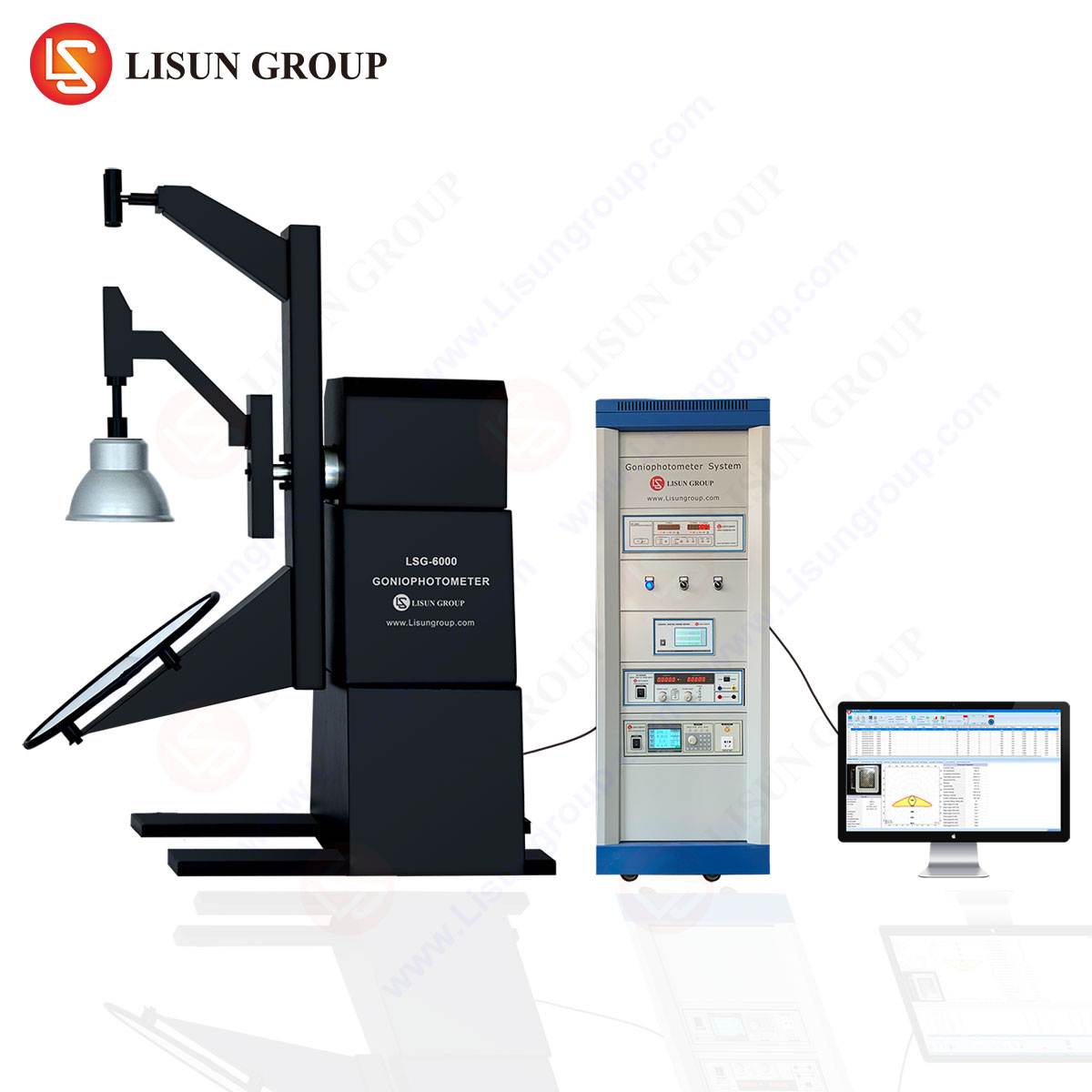
While goniophotometry is the definitive technique for measuring the complete spatial distribution of luminous intensity, it is a time-consuming process requiring a large, darkroom environment and complex, expensive machinery. The LPCE-2 system offers a compelling alternative for a wide range of quality control and R&D applications. Its primary advantages lie in its speed, compact footprint, and operational simplicity. For characterizing the total flux and average intensity of LED packages, modules, and complete luminaires, the integrating sphere method is significantly faster. The system provides a complete spectral and photometric profile in a single measurement, whereas a goniophotometer would require a lengthy rotational scan. The LPCE-2 is therefore ideally suited for high-throughput production environments where rapid, reliable, and standardized testing is paramount.
Ensuring Metrological Traceability and Standards Compliance
The validity of any photometric measurement is contingent upon its traceability to national metrology institutes. The calibration of the LPCE-2 system is performed using standard lamps of known luminous intensity and spectral power distribution, which are themselves traceable to primary standards. This establishes an unbroken chain of calibration, ensuring that measurements are accurate, repeatable, and internationally recognized. The system’s design and accompanying software are explicitly engineered to facilitate compliance with key international standards, including:
- IES LM-79: Approved Method for the Electrical and Photometric Testing of Solid-State Lighting Devices.
- CIE 127:2007: Measurement of LEDs.
- CIE 13.3-1995: Method of Measuring and Specifying Colour Rendering Properties of Light Sources.
- ENERGY STAR® Program Requirements for Lamps (Light Bulbs).
This built-in compliance framework makes the LPCE-2 an indispensable tool for manufacturers seeking to certify their products for global markets.
Advanced Configurations for Specialized Testing Scenarios
The modular design of systems like the LPCE-2 allows for adaptation to specialized industrial needs. For instance, in the photovoltaic industry, the system can be configured with a pulsed power supply to measure the output of LEDs used in solar simulators, ensuring conformity with Class A spectrum and intensity uniformity requirements as per IEC 60904-9. In scientific research laboratories, the high-resolution spectroradiometer enables detailed study of LED degradation mechanisms by tracking subtle shifts in spectral power distribution and luminous flux depreciation over accelerated lifetime tests. For stage and studio lighting, the system can verify the claims of LED-based fixtures regarding their output in lumens per watt (efficacy) and their Television Lighting Consistency Index (TLCI), a critical metric for broadcast applications.
Frequently Asked Questions
Q1: How does the LPCE-2 system account for the self-absorption effect of LEDs within the integrating sphere?
The system employs the auxiliary lamp method as prescribed by CIE 84-1989. A calibrated standard lamp is used to determine the sphere’s initial system constant. The LED under test is then powered, and its signal is measured. Subsequently, the auxiliary lamp is operated with the LED placed inside the sphere but unpowered (acting as an absorber). The difference in the detector reading between the two auxiliary lamp measurements (with and without the unpowered LED) is used to calculate a spectral self-absorption correction factor, which is then applied to the raw measurement data of the powered LED.
Q2: Can the LPCE-2 measure the luminous intensity distribution (LID) of an LED luminaire?
No, the LPCE-2 is designed for measuring total luminous flux and deriving average luminous intensity. To obtain the full 3D luminous intensity distribution (the candela curve), a goniophotometer is required. The LPCE-2 is best utilized for characterizing the total light output and color properties, which are then used as input or validation data for goniophotometric analysis.
Q3: What is the significance of using a spectroradiometer instead of a photometer head for LED testing?
A photometer head uses a silicon photodiode and a fixed V(λ) correction filter. This filter is never a perfect match to the human eye response, leading to significant measurement errors, especially for narrow-band LED sources like royal blue or red. A spectroradiometer measures the complete spectral power distribution. The photopic calculation is then performed mathematically by software, applying a perfect digital V(λ) filter. This method, known as spectroradiometric photometry, provides far greater accuracy for solid-state light sources.
Q4: Is the system suitable for measuring pulsed LEDs, such as those used in automotive or communication applications?
Yes, but this requires a specific configuration. The standard LPCE-2 uses a DC power supply. For pulsed LEDs, it must be equipped with a synchronized pulsed power source and a spectroradiometer capable of high-speed triggering and data acquisition to capture the instantaneous photometric and colorimetric characteristics during the pulse. This is a common advanced application in automotive lighting testing.