


Title: LM-79 vs. LM-80: A Guide to LED Photometric and Lumen Maintenance Testing
Abstract: The proliferation of solid-state lighting across diverse industries necessitates rigorous, standardized testing to quantify performance and longevity. Two foundational standards established by the Illuminating Engineering Society (IES), LM-79 and LM-80, form the cornerstone of LED characterization. This article delineates the distinct purposes, methodologies, and applications of these standards, providing a framework for their implementation in product development and validation. Furthermore, it examines the role of advanced integrating sphere spectroradiometer systems, such as the LISUN LPCE-3, in executing these tests with the precision required for global market compliance and high-stakes applications.
Foundational Standards: Defining the Scope of LM-79 and LM-80
The IESNA LM-79-19, “Approved Method: Optical and Electrical Measurements of Solid-State Lighting Products,” and the IESNA LM-80-20, “Approved Method: Measuring Lumen Maintenance of LED Light Sources,” serve complementary but non-interchangeable functions. LM-79 is a characterization standard, providing a snapshot of a complete, integrated lighting product’s performance under specific conditions at a given time. It measures total luminous flux (lumens), luminous efficacy (lumens per watt), chromaticity coordinates (CIE x, y, u’, v’), Correlated Color Temperature (CCT), Color Rendering Index (CRI), and spatial distribution of light (intensity). Crucially, LM-79 tests the luminaire or integrated lamp as an end-user would operate it, including its driver, heat sink, and optical components.
In contrast, LM-80 is a reliability and longevity standard focused exclusively on the LED package, array, or module’s lumen depreciation over time. It does not test complete luminaires. The primary deliverable of an LM-80 test is a dataset describing the lumen output of the LED source at prescribed intervals (e.g., every 1,000 hours) while maintained at constant case temperature (Ts) and in controlled ambient conditions. This data is the essential input for extrapolation models, such as those in IES TM-21, which project long-term lumen maintenance (e.g., L70, the time to 70% of initial lumens).
Methodological Distinctions: Instantaneous Characterization vs. Longitudinal Degradation
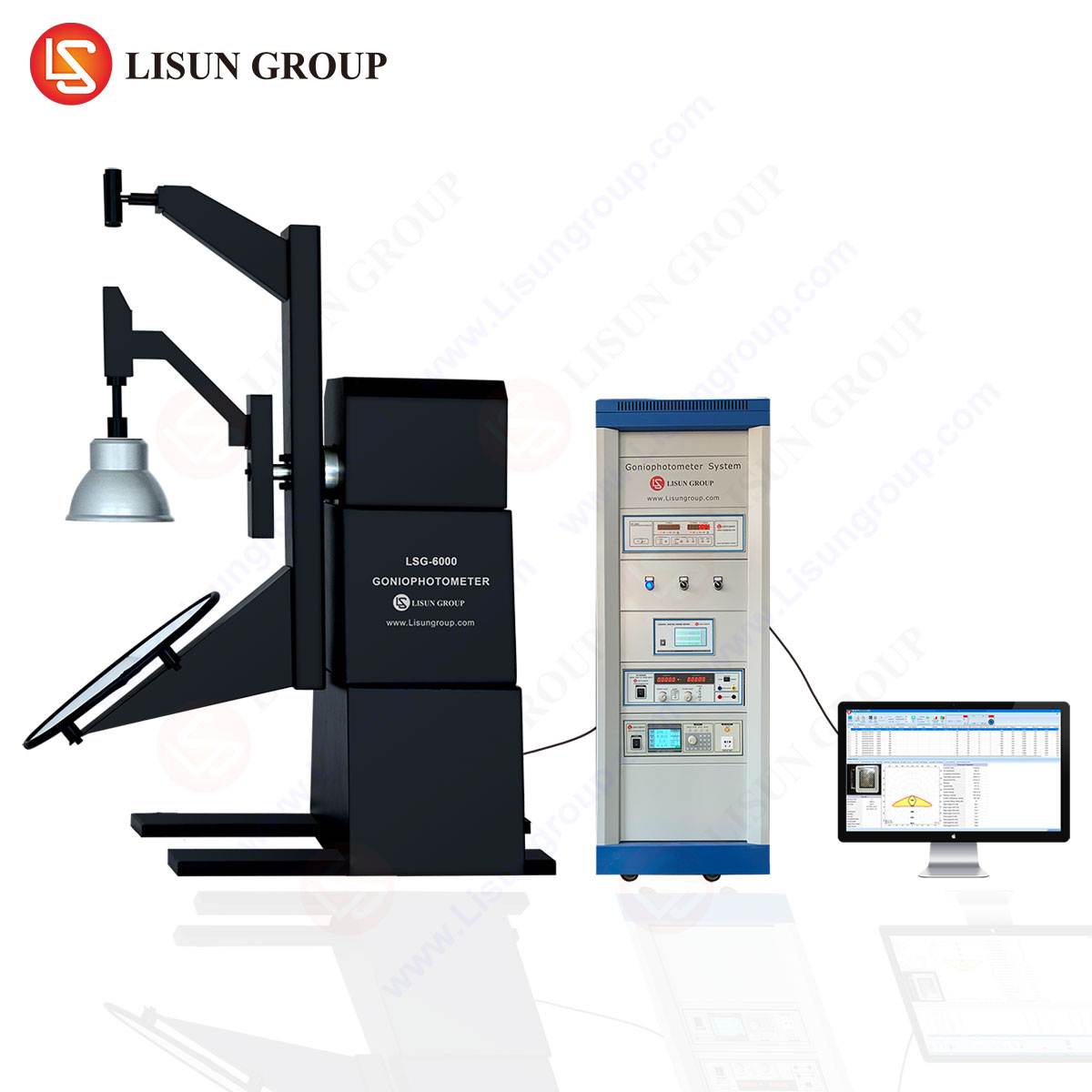
The execution of LM-79 and LM-80 tests diverges significantly in setup, duration, and instrumentation. An LM-79 test is typically conducted once, under controlled thermal and electrical conditions (25°C ambient, unless otherwise specified). The device under test (DUT) is stabilized prior to measurement. The core optical measurement requires a photometric sensor or, for spectral data, a spectroradiometer integrated with a goniophotometer for spatial distribution or an integrating sphere for total flux. The sphere collects and spatially integrates the total radiant flux from the DUT, which the spectroradiometer then analyzes to derive all photometric and colorimetric quantities.
LM-80 mandates a longitudinal study. Multiple LED samples are driven at specified currents and maintained at set case temperatures (typically a minimum of three temperatures, e.g., 55°C, 85°C, and a third chosen by the manufacturer) within environmental chambers. Their luminous flux is measured at regular intervals over a minimum test duration of 6,000 hours, with 10,000 hours being the industry benchmark for robust data. Measurements are comparative, using a fixed reference sensor to track the output of each sample relative to its initial reading. The test apparatus is designed for long-term stability and periodic sampling, not for full spatial or spectral characterization at each interval.
The Critical Role of Integrating Sphere Spectroradiometer Systems
Accurate LM-79 testing, and the initial characterization for LM-80, demands instrumentation capable of high-precision spectral and photometric measurement. An integrating sphere, coated with a highly reflective, spectrally neutral diffuse material (e.g., BaSO₄ or PTFE), functions as an optical averaging chamber. It creates a uniform radiance distribution on its inner wall, ensuring the detector’s response is proportional to the total luminous flux of the DUT, independent of its beam angle or spatial characteristics. When coupled with a high-resolution array spectroradiometer, the system transcends simple photometry, enabling the simultaneous capture of all spectral power distribution (SPD)-dependent metrics.
The LISUN LPCE-3 Integrating Sphere Spectroradiometer System exemplifies this integrated approach. It consists of a high-reflectance integrating sphere, a CCD-based fast spectrometer, a precision constant current/voltage power supply, and dedicated analysis software. For LM-79 testing, the LPCE-3 system directly measures the SPD of the DUT. From the SPD, it computes all required parameters: luminous flux, CIE chromaticity, CCT, CRI (Ra), peak wavelength, dominant wavelength, purity, and luminous efficacy. Its design mitigates common errors such as spatial non-uniformity of response and spectral mismatch, which can plague filter-based photometers, especially with non-traditional LED spectra.
Specifications and Competitive Advantages: The LPCE-3 system typically features a sphere diameter tailored to the DUT’s size and flux output (e.g., 2m for high-power luminaires), ensuring compliance with the 5:1 sphere-to-DUT size ratio recommendation. Its spectrometer often covers a 380-780nm wavelength range with a FWHM of ≤2nm, exceeding the precision required by standards. The integrated software automates stabilization monitoring, multi-point measurement, and report generation per LM-79-19, CIE 177, CIE-13.3, and ANSI C78.377 formats. Key competitive advantages include its turnkey compliance with major global standards, the elimination of spectral mismatch error inherent to traditional photometers, and software capable of handling the complex, multi-peak SPDs of phosphor-converted and RGB LEDs—a critical requirement for industries like display testing and stage lighting where color fidelity is paramount.
Industry-Specific Applications and Compliance Imperatives
The application of LM-79 and LM-80 data varies profoundly across sectors, driven by unique performance, safety, and regulatory requirements.
- Lighting Industry & LED Manufacturing: These are the core users. Manufacturers rely on LM-79 data for product datasheets and Energy Star or DLC certification. LM-80 data from LED suppliers is used for lumen maintenance warranties and TM-21 projections, forming the basis of product lifetime claims.
- Automotive Lighting Testing: Beyond flux and color, automotive standards (SAE, ECE) impose stringent requirements on luminous intensity distribution for headlamps and signal lights. While LM-79 provides foundational color and flux data, automotive testing more heavily employs goniophotometry. However, the spectral accuracy of systems like the LPCE-3 is vital for measuring the color of LED taillights and interior ambient lighting.
- Aerospace, Aviation, and Marine Navigation Lighting: These fields prioritize absolute reliability and compliance with international regulatory bodies (FAA, ICAO, IMO). LM-80 testing at extreme temperatures validates performance in harsh environments. LM-79 testing ensures precise chromaticity of navigation lights (e.g., aviation red, marine green) where color is legally defined for safety.
- Display Equipment Testing and Stage/Studio Lighting: Color consistency and gamut are critical. LM-79 spectral measurements are used to bin LEDs for uniform backlighting in displays. In theatrical lighting, measurements of CRI, extended color indices (R1-R15), and metrics like TM-30 (Rf, Rg) are essential for evaluating color rendering under cameras and for artistic intent.
- Photovoltaic Industry and Scientific Research: PV cell testing uses high-intensity, spectrally tunable LED-based solar simulators. Precise characterization of these LED arrays’ spectral irradiance per IEC 60904-9 requires spectroradiometer systems. In optical R&D, these systems measure the efficacy of novel phosphors or micro-LED structures.
- Medical Lighting Equipment and Urban Lighting Design: Surgical and diagnostic lighting requires specific spectral power distributions and high CRI for accurate tissue differentiation (ISO 9680). LM-79 verifies these parameters. Urban lighting designers use LM-79 data to model the photometric and colorimetric impact of LED streetlights, considering factors like mesopic vision and skyglow.
Integrating Test Data into Product Lifecycle Projections
The true commercial and engineering value of LM-80 data is realized through extrapolation. The IES TM-21-11 project provides a standardized method for using LM-80 data to estimate long-term lumen maintenance. It fits an exponential decay model to the last 5,000 hours of collected data (or the full dataset if under 10,000 hours) and provides guidelines for projecting forward, with a maximum projection limit of six times the total test duration. An LM-80 report showing less than 1% depreciation at 6,000 hours is insufficient; it is the modeled projection to L70 or L90 that informs lifetime ratings. This projection, combined with the LM-79 performance snapshot, provides a comprehensive picture of a product’s initial performance and its degradation trajectory, enabling accurate lifecycle cost analysis and sustainability reporting.
Advanced Considerations: Spectral Maintenance and TM-28
While LM-80 tracks luminous flux depreciation, chromaticity shift over time is equally important. Some LED systems may maintain flux but experience a perceptible color shift. The IES TM-28-20 standard, “Projecting Long-Term Chromaticity Coordinate Shift of LED Packages, Arrays, and Modules,” addresses this. It uses LM-80 test data to model shifts in CIE chromaticity coordinates. For applications where color consistency is critical—museum lighting, retail display, or multi-fixture architectural installations—both lumen and chromaticity maintenance projections are necessary for a complete reliability assessment. Advanced testing systems capable of high-precision, repeatable spectral measurements at each LM-80 interval are prerequisites for generating TM-28 data.
FAQ Section
Q1: Can the LISUN LPCE-3 system be used for both LM-79 testing and the periodic measurements required in an LM-80 test?
A1: Yes, the LPCE-3 is ideally suited for both applications. For LM-79, it provides complete photometric and colorimetric characterization of a luminaire. For LM-80, it is used to obtain the initial, time-zero spectral measurement of the LED package/array, and can subsequently be used for the periodic spectral measurements at defined intervals, providing superior data richness compared to simple photometric readings.
Q2: How does an integrating sphere system account for the self-absorption error when testing luminaires with different sizes or beam angles?
A2: The LPCE-3 system employs an auxiliary lamp correction method. The sphere’s spectral throughput is characterized with and without a reference lamp of known flux. A correction factor is computed and applied by the software to compensate for the DUT’s physical presence and its absorption/scattering properties within the sphere, ensuring accurate absolute flux measurement regardless of the DUT’s form factor.
Q3: What is the significance of the spectrometer’s wavelength resolution in LED testing?
A3: High resolution (≤2nm FWHM) is critical for accurately capturing the narrow peak emissions of blue pump LEDs and the finer spectral features of phosphor-converted white LEDs. This precision directly impacts the calculation of derived metrics like CCT and CRI, where errors in SPD measurement can lead to significant misclassification, particularly for LEDs with discontinuous spectra common in RGB blends or violet-pump systems.
Q4: For an LM-80 test, why are multiple temperature points required?
A4: LED degradation kinetics are strongly temperature-dependent. Testing at multiple case temperatures (e.g., 55°C, 85°C, 105°C) allows for the modeling of the Arrhenius relationship between temperature and depreciation rate. This enables more accurate projection of performance at real-world operating temperatures that may differ from the test points, providing a robust lifetime model across a range of application thermal environments.
Q5: In the context of TM-21 projections, what is meant by the “6x multiplier” rule?
A5: IES TM-21-11 stipulates that the projected lifetime derived from LM-80 data should not exceed six times the total duration of the collected test data. For example, if an LED has 10,000 hours of LM-80 data, the maximum allowable projection is to 60,000 hours. This conservative rule acknowledges the uncertainty inherent in extrapolating accelerated test data and prevents unrealistic lifetime claims.