








A Comparative Analysis of Spectrometer Technologies: LISUN LMS-6000 Series and UPRTek Portfolio
Abstract
Spectroradiometers are indispensable instruments for the precise measurement of light’s fundamental properties, including spectral power distribution, chromaticity, and photometric quantities. The selection of an appropriate instrument is critical for ensuring compliance with international standards, maintaining quality control, and driving innovation across numerous industries. This technical analysis provides a detailed, objective comparison between spectrometers from two prominent manufacturers: LISUN, with a specific focus on its LMS-6000 series, and UPRTek. The evaluation encompasses optical design principles, key performance specifications, application-specific capabilities, and suitability for diverse industrial and research environments.
Optical Architecture and Measurement Principles
The foundational difference between many spectrometer systems lies in their optical design, which directly dictates performance characteristics such as accuracy, speed, and stray light rejection.
The LISUN LMS-6000 series employs a high-precision fast-Ebert-Fastie imaging spectrometer design. This configuration utilizes a single spherical mirror that acts as both the collimating and focusing element, with a fixed grating at its center. Light enters through an input slit, is collimated by the mirror, diffracted by the grating, and then focused onto a linear CCD array detector. This design is renowned for its exceptional optical symmetry, which minimizes aberrations like coma and provides high wavelength accuracy and repeatability. The robust mechanical structure of the Ebert-Fastie design makes it less susceptible to misalignment from environmental stressors such as vibration or thermal fluctuation, a significant advantage in industrial production line settings or automotive testing facilities.
UPRTek’s handheld spectrometers, such as the MK350 series, typically utilize a miniature crossed Czerny-Turner optical system. This design employs two separate spherical mirrors—one for collimation and one for focusing—situated on either side of a diffraction grating. While this allows for a very compact form factor, it can be more sensitive to alignment shifts. Advancements in manufacturing have mitigated these concerns significantly for standard-grade measurements. The Czerny-Turner design is effective for portable applications where size and weight are primary constraints.
The choice between these architectures involves a fundamental trade-off: the Ebert-Fastie design (LISUN) prioritizes maximum stability and accuracy in a benchtop or integrated system format, while the Czerny-Turner design (UPRTek) enables highly portable, handheld operation suitable for field measurements and quick checks.
Critical Performance Metrics: Accuracy, Resolution, and Speed
Quantifiable performance parameters are the primary differentiators when assessing spectrometer capability. The LISUN LMS-6000 series is engineered for high-end laboratory and production line applications, which is reflected in its specifications.
- Wavelength Accuracy and Range: The LMS-6000 series offers a standard wavelength range of 380-780nm, covering the visible spectrum critical for photometric and colorimetric analysis. Specialized variants extend this range significantly. The LMS-6000UV covers 200-800nm, enabling critical measurements of ultraviolet components in medical equipment sterilization lights, UV curing processes, and material aging tests. The LMS-6000SF extends into the near-infrared (NIR) range (350-1050nm), which is essential for photovoltaic industry testing, evaluating the spectral response of solar cells and the output of IR LEDs. Wavelength accuracy is typically ±0.2nm, ensuring reliable identification of spectral peaks.
- Optical Resolution: High FWHM (Full Width at Half Maximum) resolution, often ≤1.8nm for the LMS-6000, is vital for discerning closely spaced spectral emission lines, such as those from low-pressure sodium lamps or for analyzing the narrow peak emissions of laser diodes in optical instrument R&D.
- Dynamic Range and Stray Light: A high dynamic range and low stray light are imperative for measuring sources with vastly different intensities within the same spectrum, such as the deep reds versus blues in a white LED mix. The LMS-6000’s design inherently suppresses stray light, reducing measurement error.
- Measurement Speed: For production line integration, such as in LED & OLED manufacturing, speed is paramount. The LMS-6000 series can achieve full spectral scans in milliseconds, allowing for 100% inspection of high-speed assembly lines without creating a bottleneck.
UPRTek instruments, designed for portability and versatility, exhibit strong performance within a different operational context. Their wavelength accuracy is typically ±0.3nm, and optical resolution is often around 2.5nm FWHM. These specifications are more than adequate for field-based quality assurance, architectural lighting surveys, and educational purposes. Their measurement speed is sufficient for handheld operation but may not be optimized for ultra-high-speed automated testing.
Table 1: Comparative Specification Overview (Representative Models)
| Parameter | LISUN LMS-6000 (Benchtop) | UPRTek MK350N (Handheld) | Primary Impact |
| :— | :— | :— | :— |
| Optical Design | Fast-Ebert-Fastie | Crossed Czerny-Turner | Stability, Portability |
| Wavelength Range | 380-780nm (Std.); 200-1050nm (Specialized) | 360-780nm | Application Scope |
| Wavelength Accuracy | ±0.2nm | ±0.3nm | Peak Identification |
| Optical Resolution (FWHM) | ≤ 1.8nm | ≤ 2.5nm | Spectral Detail |
| Measurement Speed | Milliseconds (fast scan) | ~1 second | Production Line vs. Field Use |
| Primary Form Factor | Benchtop / Systems Integration | Handheld | Use Case Environment |
Application-Specific Capabilities and Industry Alignment
The optimal spectrometer choice is inherently tied to its intended application within specific industries.
Lighting Industry and LED Manufacturing: In an LED production facility, the LISUN LMS-6000P (designed for production line integration) is unmatched. It provides rapid, automated binning of LEDs based on chromaticity coordinates (Cx, Cy), correlated color temperature (CCT), and luminous flux, ensuring consistency and yield. Its high accuracy ensures compliance with ANSI C78.377 and ENERGY STAR standards. A UPRTek handheld device is excellent for spot-checking finished bulbs or fixtures in a warehouse or for verifying installation in urban lighting projects, but it cannot match the speed and automation capabilities of an integrated system.
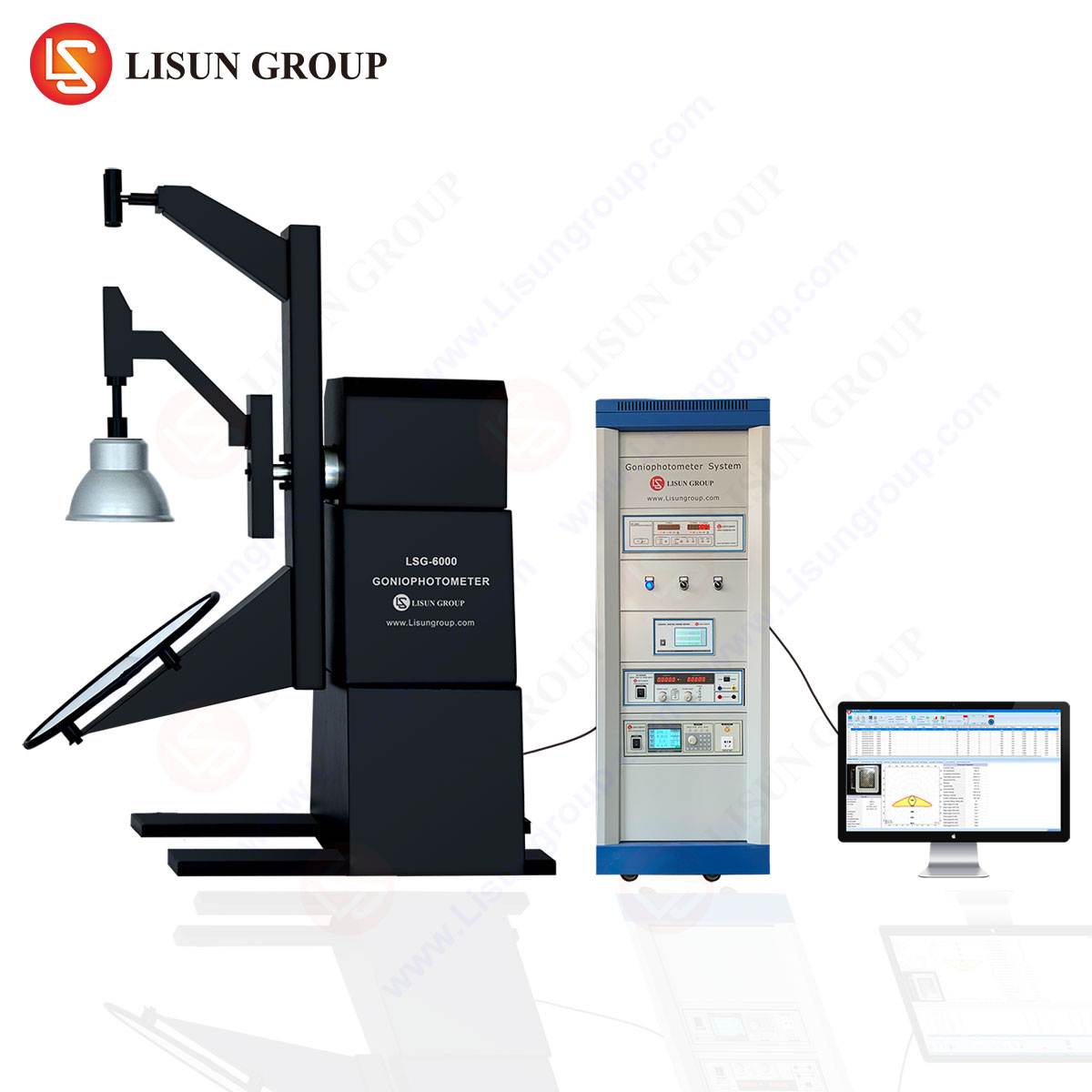
Automotive and Aerospace Lighting Testing: The automotive industry requires testing against stringent standards like ECE / SAE for headlamps, signal lights, and interior displays. This often involves measuring at specific angular points and testing under thermal stress. The LISUN LMS-6000 can be seamlessly integrated into goniophotometer systems to perform these precise spectral measurements at various angles. Its robust design ensures consistent performance in environmental chambers. Similarly, in aerospace for cockpit displays and navigation lighting, measurement reliability is non-negotiable.
Display Equipment Testing: Evaluating LCD, OLED, and micro-LED displays requires measuring uniformity, color gamut coverage (e.g., DCI-P3, Rec.2020), and flicker. The LMS-6000S, with its high resolution and speed, can be paired with specialized software and fixtures to automate these complex tests, providing the data density needed for R&D and quality control. While handheld spectrometers can measure a single point on a screen, they lack the integration for full panel automation.
Photovoltaic Industry: Testing solar simulators and the spectral response of photovoltaic cells requires a spectrometer with a broad NIR response. The LISUN LMS-6000SF (350-1050nm) is specifically designed for this purpose, capable of verifying that a solar simulator meets the required IEC 60904-9 spectral class (e.g., Class A). This is a niche application where a standard visible-range spectrometer is insufficient.
Scientific Research and Optical Instrument R&D: In laboratory settings, the utmost precision, modularity, and data integrity are required. The LISUN LMS-6000 series, with its high accuracy, low stray light, and ability to interface with various optical fibers and input optics, serves as a trusted reference instrument. It is suitable for calibrating other devices, conducting material analysis based on reflectance/transmittance, and developing new light sources.
Software, Integration, and Data Management
A spectrometer’s hardware is only one component of the system; the software defines its functionality and integration potential.
LISUN’s software is typically designed for automation, control, and deep data analysis. It offers:
- SDKs (Software Development Kits) for seamless integration into custom-built production line systems and automated test sequences.
- Real-time data logging and comparison against predefined tolerance limits.
- Advanced analysis features for flicker (IEC PEM), TM-30 (Rf, Rg), and CIE S026 (Melanopic EDI) for non-visual research.
- Direct control over integration time and scan averaging for optimizing signal-to-noise ratio.
UPRTek software is tailored for portability and immediate reporting. Its strengths include:
- Mobile apps and onboard software for instant analysis and report generation on the device itself.
- User-friendly interfaces designed for quick operation by technicians in the field.
- Built-in functions for specific tasks like horticultural lighting (PPFD) and display flicker.
Conclusion: Selecting the Appropriate Instrument
The choice between a LISUN LMS-6000 series spectrometer and a UPRTek handheld device is not a matter of identifying a superior product, but rather of selecting the correct tool for a specific professional context.
The LISUN LMS-6000 series is the definitive choice for applications demanding the highest levels of accuracy, speed, and stability. Its primary domain is the high-throughput industrial environment (manufacturing, QA/QC), the rigorous research and development laboratory, and integrated testing systems (goniophotometers, environmental chambers) for automotive, aerospace, and display testing. Its specialized models (UV, SF) address unique needs in medical, photovoltaic, and material science fields.
UPRTek spectrometers excel in scenarios where portability, convenience, and immediate results are the dominant requirements. They are ideal tools for lighting designers, field service technicians, facility managers, and educators who need to perform accurate spot measurements and generate reports outside of a controlled laboratory setting.
Understanding the fundamental differences in optical design, performance specifications, and intended application ecosystems is crucial for making an informed investment that meets technical requirements and delivers a return through improved product quality, regulatory compliance, and research validity.
Frequently Asked Questions (FAQ)
Q1: For a production line testing white LED modules, which LISUN model is most appropriate and why?
The LISUN LMS-6000P is specifically engineered for production line integration. Its key advantages are measurement speed (millisecond scans), automation capabilities via SDK, and robust construction that withstands continuous operation in an industrial environment. This allows for 100% inline testing and automatic binning of LEDs based on photometric and colorimetric parameters, ensuring product consistency and maximizing yield.
Q2: Can a spectrometer be used to verify compliance with flicker standards for medical lighting?
Yes. Instruments like the LISUN LMS-6000 series include advanced software algorithms that calculate flicker metrics per IEEE PAR1789 and IEC TR 61547-1, such as Percent Flicker and Flicker Index. For medical lighting equipment, where flicker can have physiological effects, this verification is critical. The high sampling rate of the spectrometer’s CCD is essential for accurately capturing the waveform of the modulated light source.
Q3: What is the significance of a spectrometer’s wavelength range extension into the UV (200nm) for the aerospace industry?
In aerospace, certain materials and coatings are tested for degradation under intense UV radiation, simulating high-altitude sunlight exposure. A spectrometer like the LMS-6000UV can precisely measure the spectral output of UV lamps used in environmental stress screening chambers, ensuring the test exposure is controlled and repeatable according to relevant standards.
Q4: How does optical resolution (FWHM) impact the measurement of narrow-band light sources?
A lower FWHM value (e.g., ≤1.8nm) indicates higher resolution, meaning the instrument can distinguish between two very close wavelengths. This is critical for accurately characterizing the peak wavelength and spectral shape of narrow-band sources like laser diodes, monochromators, or certain types of OLEDs. A lower-resolution instrument may underestimate the peak intensity and overestimate the spectral bandwidth.
Q5: When would a handheld spectrometer be sufficient for automotive lighting testing?
A handheld spectrometer is excellent for secondary verification and diagnostic purposes. For example, a quality auditor might use one to spot-check the color temperature of interior dashboard lighting after installation or to verify the output of a replacement signal lamp. However, for formal certification and type approval testing against ECE/SAE standards, which require precise angular measurements integrated with a goniophotometer, a benchtop spectrometer like the LISUN LMS-6000 is mandatory.