


The LISUN Photoelectric Meter: Precision Testing for LED and Lighting Products
Introduction to Photometric and Radiometric Quantification in Modern Lighting
The evolution of lighting technology, particularly the ascendancy of solid-state lighting (SSL) such as Light Emitting Diodes (LEDs) and Organic LEDs (OLEDs), has fundamentally transformed the metrics of performance evaluation. Unlike traditional incandescent sources, LEDs are characterized by their spectral specificity, directional output, and sensitivity to thermal and electrical operating conditions. This complexity necessitates a paradigm shift from simple electrical parameter checks to comprehensive photometric, radiometric, and colorimetric analysis. Precision testing is no longer a supplementary quality assurance step but a core requirement embedded in research, design, manufacturing, and compliance verification across diverse industries. The LISUN Photoelectric Meter, particularly when configured as a complete integrating sphere spectroradiometer system, represents a sophisticated instrumentation solution engineered to meet these rigorous demands. This article details the technical principles, implementation, and critical applications of such systems, with a specific focus on the LISUN LPCE-3 Integrated Sphere Spectroradiometer System as a representative archetype for high-accuracy testing.
Architectural Overview of an Integrating Sphere Spectroradiometer System
A photoelectric meter for comprehensive lighting assessment is typically not a single device but a system of coordinated components. The LISUN LPCE-3 system exemplifies this integrated architecture. Its core consists of a high-reflectance integrating sphere, a precision spectroradiometer, a digital power meter, and a computer running dedicated analytical software. The integrating sphere, internally coated with a stable, diffuse reflective material (e.g., Spectralon or BaSO₄), functions as an optical averaging chamber. Light from the device under test (DUT) placed within the sphere undergoes multiple diffuse reflections, creating a uniform radiance distribution across the sphere’s inner wall. This spatial integration negates the effects of the DUT’s directional emission profile, allowing for accurate measurement of total luminous flux (in lumens) and radiant flux (in watts).
A precisely positioned baffle within the sphere prevents first-reflection light from the DUT from directly striking the detector port. At this port, a fiber-optic cable couples the integrated light to the spectroradiometer. The spectroradiometer is the analytical heart of the system, dispersing the incoming light via a diffraction grating and measuring its intensity across the electromagnetic spectrum, typically from 380nm to 780nm for visible light applications, with extended ranges available for ultraviolet (UV) or near-infrared (NIR) analysis. This spectral power distribution (SPD) is the fundamental data set from which all other photometric and colorimetric parameters are derived computationally by the system software.
Derivation of Key Photometric and Colorimetric Parameters from Spectral Data
The primary advantage of a spectroradiometer-based system over a filter-based photometer is its ability to calculate any photopic, scotopic, or colorimetric quantity defined by the CIE (International Commission on Illumination) standards from the measured SPD. The software integrates the SPD with standardized weighting functions. For instance, total luminous flux (Φ_v) is calculated using the formula:
Φ_v = K_m ∫ Φ_e,λ V(λ) dλ
where Φ_e,λ is the spectral radiant flux, V(λ) is the CIE standard photopic luminous efficiency function, and K_m is the maximum spectral luminous efficacy (683 lm/W). Similarly, colorimetric values are computed directly from the SPD. Chromaticity coordinates (x, y) on the CIE 1931 chromaticity diagram are derived from the tristimulus values (X, Y, Z), which are integrals of the SPD multiplied by the CIE color-matching functions. Correlated Color Temperature (CCT) and Duv (distance from the Planckian locus) are then calculated from these coordinates. Color Rendering Index (CRI, Ra) and the more modern TM-30 metrics (Rf, Rg) are evaluated by comparing how the test source renders a set of standard color samples relative to a reference illuminant of the same CCT. This spectral methodology ensures high accuracy and future-proofing against evolving metrics.
Technical Specifications and Calibration of the LPCE-3 System
The measurement credibility of any photoelectric system is anchored in its specifications and traceable calibration. The LISUN LPCE-3 system is designed for high-precision applications. A typical configuration may feature a 2-meter diameter integrating sphere (other sizes are available), offering a large enough volume to minimize self-absorption errors for larger luminaires. The spectroradiometer often boasts a wavelength accuracy of ±0.3nm and a high signal-to-noise ratio for low-light measurement. The system’s overall accuracy for luminous flux can achieve within ±3% (conforming to the requirements of standards like LM-79 and EN 13032-1) when calibrated using a standard lamp traceable to national metrology institutes (e.g., NIST, PTB).
Calibration is a two-part process. First, the system’s absolute responsivity is established using a known luminous flux standard lamp. Second, spectral correction is performed to account for the sphere’s spectral reflectance and the detector’s spectral response, ensuring the measured SPD is accurate. The integrated digital power meter simultaneously measures the DUT’s input voltage, current, power (in watts), and power factor, allowing for the direct calculation of luminous efficacy (lm/W), a critical figure of merit for energy efficiency.
Industry-Specific Applications and Use Cases
The versatility of a full spectroradiometer system like the LPCE-3 makes it indispensable across a broad industrial and research landscape.
- LED & OLED Manufacturing: In production lines and R&D labs, the system is used for binning LEDs by flux, chromaticity, and forward voltage. It validates the performance of OLED panels for uniform surface luminance and color consistency, ensuring they meet design specifications before integration into displays or lighting panels.
- Automotive Lighting Testing: The system qualifies all vehicle lighting, from low-beam/high-beam headlamps to daytime running lights (DRLs), signal lights, and interior ambient lighting. It measures not only flux and color but also verifies compliance with stringent regional regulations (SAE, ECE, GB standards) for chromaticity boundaries and intensity.
- Aerospace and Aviation Lighting: Testing cockpit displays, panel backlighting, and external navigation/strobe lights requires extreme reliability. The system assesses performance under simulated environmental conditions (vibration, temperature) and ensures colors meet aviation-specific standards for unambiguous recognition.
- Display Equipment Testing: For LCD, OLED, and micro-LED displays, the sphere can measure the full-screen luminous flux and color uniformity. When paired with a conoscope or goniometer, it can characterize angular color shift—a critical parameter for display viewing angles.
- Photovoltaic Industry: While primarily for visible light, systems with extended spectral range can characterize the spectral irradiance of solar simulators used to test photovoltaic cells, ensuring the simulator’s spectrum matches the AM1.5G standard for accurate cell efficiency ratings.
- Scientific Research Laboratories: In material science, the system measures the quantum efficiency and emission spectra of novel phosphors or quantum dots. In plant physiology, it characterizes horticultural lighting spectra (PPFD, PFD) to study plant growth responses.
- Urban Lighting Design: It is used to evaluate the photometric and colorimetric performance of streetlights, architectural facade lighting, and public space luminaires, aiding in designs that balance energy efficiency, visual comfort, and spectral impact on the nocturnal environment.
- Marine and Navigation Lighting: Testing buoy lights, ship navigation lights, and lighthouse beacons for precise luminous intensity, color as per IALA (International Association of Marine Aids to Navigation and Lighthouse Authorities) standards, and ruggedness.
- Stage and Studio Lighting: For LED-based theatrical and film lighting fixtures, the system measures parameters like CCT tunability, Color Rendering Index (CRI), and Television Lighting Consistency Index (TLCI) to ensure cameras reproduce colors accurately under the lights.
- Medical Lighting Equipment: It validates the spectral output of surgical lights (ensuring high CRI and shadow reduction), dermatology treatment lamps, and phototherapy devices for neonatal jaundice, where specific spectral bands are medically critical.
Competitive Advantages in Precision Measurement
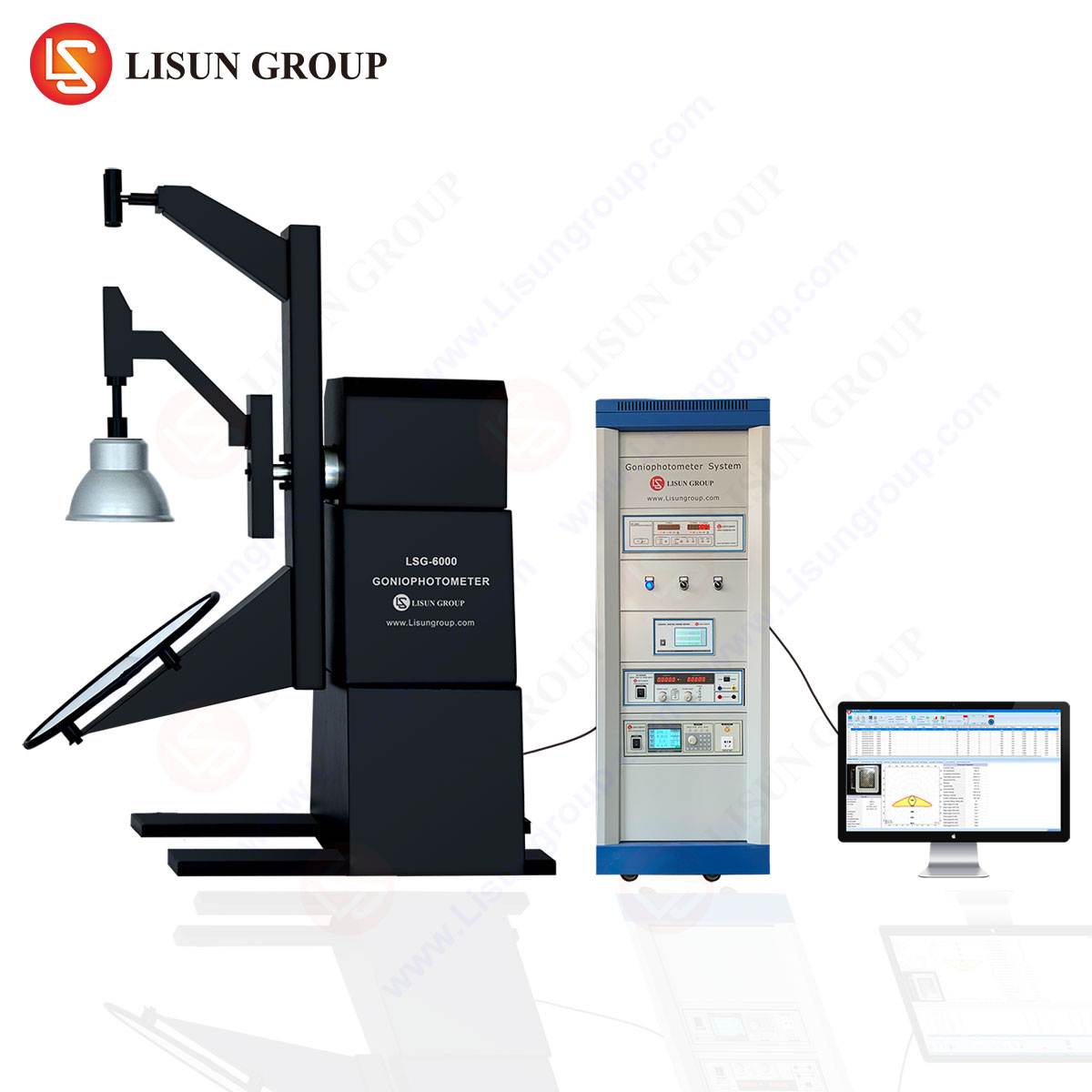
The LISUN LPCE-3 system’s design confers several distinct advantages in a competitive landscape. Its fully integrated design—from sphere to spectrometer to software—ensures seamless communication and optimized data workflow, reducing integration complexity for the end-user. The reliance on fundamental spectral measurement rather than filtered approximations guarantees that data is aligned with the latest CIE definitions and can be re-analyzed as new metrics (like TM-30) gain adoption. The system’s software typically offers extensive reporting functions, allowing for automatic generation of test reports compliant with industry standards, complete with pass/fail analysis against user-defined limits. Furthermore, the modular nature of such systems allows for expansion, such as adding a goniophotometer for spatial intensity distribution (far-field) measurements, creating a complete laboratory for total luminous flux and intensity distribution.
Adherence to International Standards and Methodologies
Compliance with published testing standards is non-negotiable for credible data. The LPCE-3 system is engineered to facilitate testing in accordance with a comprehensive suite of international standards, including:
- IESNA LM-79: Approved Method for the Electrical and Photometric Testing of Solid-State Lighting Products.
- CIE 84: Measurement of Luminous Flux.
- CIE 13.3: Method of Measuring and Specifying Colour Rendering Properties of Light Sources.
- IES TM-30-18: Method for Evaluating Light Source Color Rendition.
- ANSI/IES RP-16: Nomenclature and Definitions for Illuminating Engineering.
- EN 13032-1: Light and lighting – Measurement and presentation of photometric data of lamps and luminaires.
- ISO 23539: Photometry – The CIE System of Physical Photometry.
The system’s software often incorporates these standard calculation methods directly, ensuring that reported parameters are computed correctly and consistently.
Conclusion
The transition to advanced solid-state and specialized lighting technologies has elevated the role of precision photoelectric measurement from a final checkpoint to a continuous process integrated throughout the product lifecycle. Systems like the LISUN LPCE-3 Integrating Sphere Spectroradiometer System provide the necessary technical foundation for this rigorous analysis. By employing a first-principles spectral measurement approach within a spatially integrating environment, they deliver the accurate, reproducible, and comprehensive data set required for innovation, quality control, regulatory compliance, and fundamental research. As lighting applications continue to diversify and performance expectations escalate, the capability to precisely quantify light in all its dimensions remains a cornerstone of technological progress across virtually every sector of industry and science.
Frequently Asked Questions (FAQ)
Q1: What is the primary difference between a spectroradiometer-based system and a traditional photometer with an integrating sphere?
A traditional photometer uses a filtered silicon photodetector that mimics the CIE V(λ) curve to measure luminous flux directly. While fast, its accuracy is limited by the quality of the V(λ) filter match and it cannot provide spectral data for colorimetric calculations. A spectroradiometer measures the complete spectral power distribution (SPD). All photometric and colorimetric values (flux, CCT, CRI, etc.) are then calculated digitally from this SPD, ensuring higher accuracy, flexibility, and adherence to standard definitions.
Q2: For testing large luminaires, how does the size of the integrating sphere impact measurement accuracy?
Sphere size is critical. A sphere that is too small relative to the DUT leads to increased errors from self-absorption (where the DUT blocks its own reflected light) and thermal management issues. Standards like LM-79 recommend a sphere diameter at least 5 times the largest dimension of the DUT. Larger spheres, such as a 2m diameter sphere, reduce these errors and provide a more uniform spatial response, leading to higher accuracy for commercial and industrial luminaires.
Q3: How often does the LPCE-3 system require calibration, and what does the process entail?
Calibration frequency depends on usage intensity and required measurement uncertainty. For high-precision labs, annual calibration is typical. The process involves using a NIST-traceable standard lamp of known luminous flux and spectral distribution. The system measures this lamp, and calibration factors are generated to correct the sphere/spectrometer’s absolute responsivity and spectral response, ensuring traceability to international standards.
Q4: Can the system measure the flicker percentage of an LED light source?
Yes, provided the spectroradiometer within the system is equipped with a high-speed detector and appropriate software. By operating the spectrometer in a fast-scanning or triggered acquisition mode, it can capture rapid changes in spectral output over time. From this temporal SPD data, metrics like percent flicker, flicker index, and modulation depth across different wavelengths can be calculated.
Q5: Is the system suitable for measuring ultraviolet (UV) or infrared (IR) light sources?
The standard configuration is optimized for the visible spectrum (380-780nm). However, the system can often be specified with an extended-range spectroradiometer and a sphere coating suitable for UV or NIR measurements. This allows characterization of sources like UV curing lamps, germicidal lights, IR heat lamps, or the non-visible components of broad-spectrum sources.