


An Analytical Framework for Luminous Flux Measurement Using Integrating Sphere Systems
Abstract
The accurate quantification of luminous flux, measured in lumens, is a foundational requirement across numerous scientific and industrial domains. The integrating sphere, a core instrument in photometric laboratories, provides the primary method for this measurement. This guide delineates the principles, methodologies, and applications of high-precision luminous flux measurement, with a specific technical examination of the LISUN LPCE-2 Integrating Sphere Spectroradiometer System. The discourse encompasses metrological standards, system calibration, spectral analysis, and the system’s deployment in sectors ranging from LED manufacturing to aerospace lighting validation.
Fundamental Principles of Integrating Sphere Photometry
The operational principle of an integrating sphere is rooted in its ability to create a spatially uniform radiance field through multiple, diffuse reflections from a highly reflective, spectrally neutral interior coating. When a light source is placed within the sphere, the light emitted in all directions (4π geometry) is integrated. A baffle, strategically positioned between the source and the detector port, prevents the first incidence of light from reaching the detector directly. This ensures that the detector measures only the spatially averaged, diffuse illumination of the sphere’s interior.
The luminous flux (Φv) is derived from the photometer’s reading (V) and the sphere’s calibration constant (K), established using a standard lamp of known luminous flux (Φstd): Φv = K × V. The calibration constant accounts for the sphere’s geometry, surface reflectance, and the spectral responsivity of the detector. For modern systems utilizing spectroradiometers, the luminous flux is computed by integrating the full spectral power distribution (SPD) of the source, weighted by the CIE standard photopic luminosity function V(λ). This method, known as spectroradiometric integration, is superior for measuring sources with non-standard spectral distributions, such as narrow-band LEDs.
Architectural Overview of the LPCE-2 Integrated Measurement System
The LISUN LPCE-2 system represents a holistic solution for comprehensive photometric and colorimetric testing. Its architecture is designed to meet the stringent requirements of international testing standards, including CIE, IEC, and IESNA. The system integrates several key components into a single, cohesive apparatus.
The primary element is the integrating sphere itself, available in multiple diameters (e.g., 0.5m, 1m, 1.5m, 2m) to accommodate various source sizes and luminous intensities. The interior is coated with a stable, high-reflectance (>95%) Spectraflect or BaSO4-based material, ensuring minimal spectral absorption and optimal spatial integration. A molded baffle, coated with the same material, is fixed inside the sphere to occlude the direct light path from the source under test to the detector port.
The core analytical instrument is a high-precision CCD array spectroradiometer. This device captures the full spectral power distribution of the light within the sphere across the visible spectrum (typically 380nm to 780nm). Coupled with the sphere, it enables the simultaneous calculation of photometric and colorimetric parameters. The system is controlled by specialized software that automates the measurement sequence, data acquisition, and report generation.
Table 1: Representative Specifications of the LISUN LPCE-2 System
| Parameter | Specification |
| :— | :— |
| Integrating Sphere Diameter | 0.5 m, 1.0 m, 1.5 m, or 2.0 m |
| Sphere Coating Reflectance | >95% (Spectralon/BaSO4) |
| Spectroradiometer Wavelength Range | 380 nm – 780 nm |
| Photometric Parameter Accuracy | Luminous Flux: ±3% (for standard lamps) |
| Colorimetric Parameter Accuracy | Chromaticity (x,y): ±0.0015 (for standard lamps) |
| Compliance Standards | CIE 84, CIE 121, IES LM-79, ENERGY STAR |
Calibration Protocols and Traceability to National Standards
Metrological traceability is the cornerstone of reliable photometric data. The calibration of the LPCE-2 system is a multi-stage process that establishes a direct, unbroken chain of comparison to national metrology institute (NMI) standards. The primary procedure involves the use of a tungsten filament standard lamp, whose total luminous flux has been certified by an NMI.
The standard lamp is operated at its specified current and voltage within the sphere. The system’s spectroradiometer measures the resulting spectral radiance. The software then calculates a calibration coefficient that correlates the measured signal to the known flux value of the standard. This calibration accounts for the sphere’s multiplicative factor (the “sphere constant”) and the spectral responsivity of the entire system. For the highest accuracy, especially when measuring sources with SPDs vastly different from the incandescent standard (e.g., blue-pump LEDs), an auxiliary lamp with a known spectral power distribution may be used to correct for the sphere’s imperfect spectral neutrality.
Advanced Applications in Industrial and Scientific Domains
LED and OLED Manufacturing: In mass production, the LPCE-2 system performs binning of LEDs based on luminous flux and chromaticity coordinates. Its high-speed spectral acquisition allows for rapid, 100% testing of production batches, ensuring consistency and adherence to datasheet specifications. For OLED panels, the system can be configured to measure the angular dependency of color and luminance by integrating a goniophotometer, though this is an advanced accessory.
Automotive Lighting Testing: The system is employed to validate the total luminous output of vehicle signal lamps (tail lights, turn indicators), interior lighting, and headlamps (in conjunction with a goniometer). Compliance with regulations such as ECE and SAE standards requires precise measurement of flux and color to ensure safety and visibility.
Aerospace and Aviation Lighting: Cockpit displays, panel backlighting, and external navigation lights must function reliably under extreme environmental conditions. The LPCE-2 provides the baseline photometric and colorimetric data required for qualification testing, ensuring that lighting remains legible and compliant with FAA and EASA regulations.
Display Equipment Testing: For LCD, OLED, and micro-LED displays, the uniformity of the backlight is critical. A spectrometer-equipped integrating sphere can be used to measure the output of backlight units (BLUs), characterizing parameters like correlated color temperature (CCT) and color rendering index (CRI), which directly impact image quality.
Photovoltaic Industry: While not for light emission, the principles are reversed. The spectral responsivity of solar cells and modules is measured using a similar sphere-based setup, where the sphere becomes a uniform light source, and the cell’s current output is measured under different monochromatic illuminations.
Scientific Research Laboratories: In optical R&D, the system is used to characterize novel light-emitting materials, such as quantum dots or perovskites. The ability to capture the full SPD allows researchers to calculate not only efficiency (lumens per watt) but also advanced metrics like the Melanopic Equivalent Daylight Illuminance (EDI), which is gaining importance in lighting for human centricity.
Comparative Analysis: Spectroradiometric versus Filter Photometer Systems
A critical distinction in integrating sphere systems lies in the detector technology. Traditional systems use a V(λ)-corrected photometer head, which employs a silicon photodiode and a complex optical filter designed to mimic the human eye’s spectral sensitivity. While cost-effective, these systems can exhibit significant “spectral mismatch error” when measuring non-incandescent sources.
The LPCE-2’s spectroradiometric approach fundamentally eliminates this error. By measuring the complete SPD and mathematically applying the V(λ) function, it ensures accuracy regardless of the source’s spectral characteristics. This provides a distinct competitive advantage, as it future-proofs the investment against the development of new light source technologies with exotic spectra. Furthermore, it yields a wealth of additional data—CCT, CRI, peak wavelength, dominant wavelength, and purity—from a single measurement, which a simple photometer cannot provide.
Methodological Considerations for Accurate Luminous Flux Measurement
Achieving laboratory-grade accuracy requires meticulous attention to several factors. Self-absorption is a primary concern: the test source absorbs a different amount of light from the sphere wall than the standard lamp used for calibration, due to differences in their physical size, shape, and temperature. Correction methods, either through computational models or auxiliary measurements, are often necessary.
Spatial non-uniformity of the source’s emission can introduce error if the sphere’s baffling is insufficient. Thermal management is crucial for LED testing, as junction temperature directly affects luminous flux and chromaticity. The use of a temperature-controlled socket and adequate stabilization time is mandatory. Finally, the stability and linearity of the spectroradiometer must be regularly verified to ensure long-term measurement integrity.
Frequently Asked Questions
Q1: What is the primary advantage of using a spectroradiometer inside the integrating sphere instead of a simple photometer head?
The primary advantage is the elimination of spectral mismatch error. A photometer head’s V(λ) filter is an approximation and can lead to significant inaccuracies when measuring modern solid-state lighting sources like LEDs. A spectroradiometer measures the true spectral power distribution, allowing for a mathematically perfect application of the V(λ) function and simultaneous derivation of all colorimetric data.
Q2: How do I select the appropriate sphere size for my application?
Sphere size selection is a balance of dynamic range and practical considerations. A larger sphere (e.g., 2m) is necessary for high-power, high-luminance sources (e.g., stadium lights, automotive HID headlamps) to avoid detector saturation and minimize self-absorption error. A smaller sphere (e.g., 0.5m) is suitable for low-flux single LEDs and provides a higher signal-to-noise ratio for such sources. The general rule is that the total area of the test source should not exceed 5% of the sphere’s internal surface area.
Q3: Can the LPCE-2 system measure the luminous flux of a light source in a specific direction, rather than the total output?
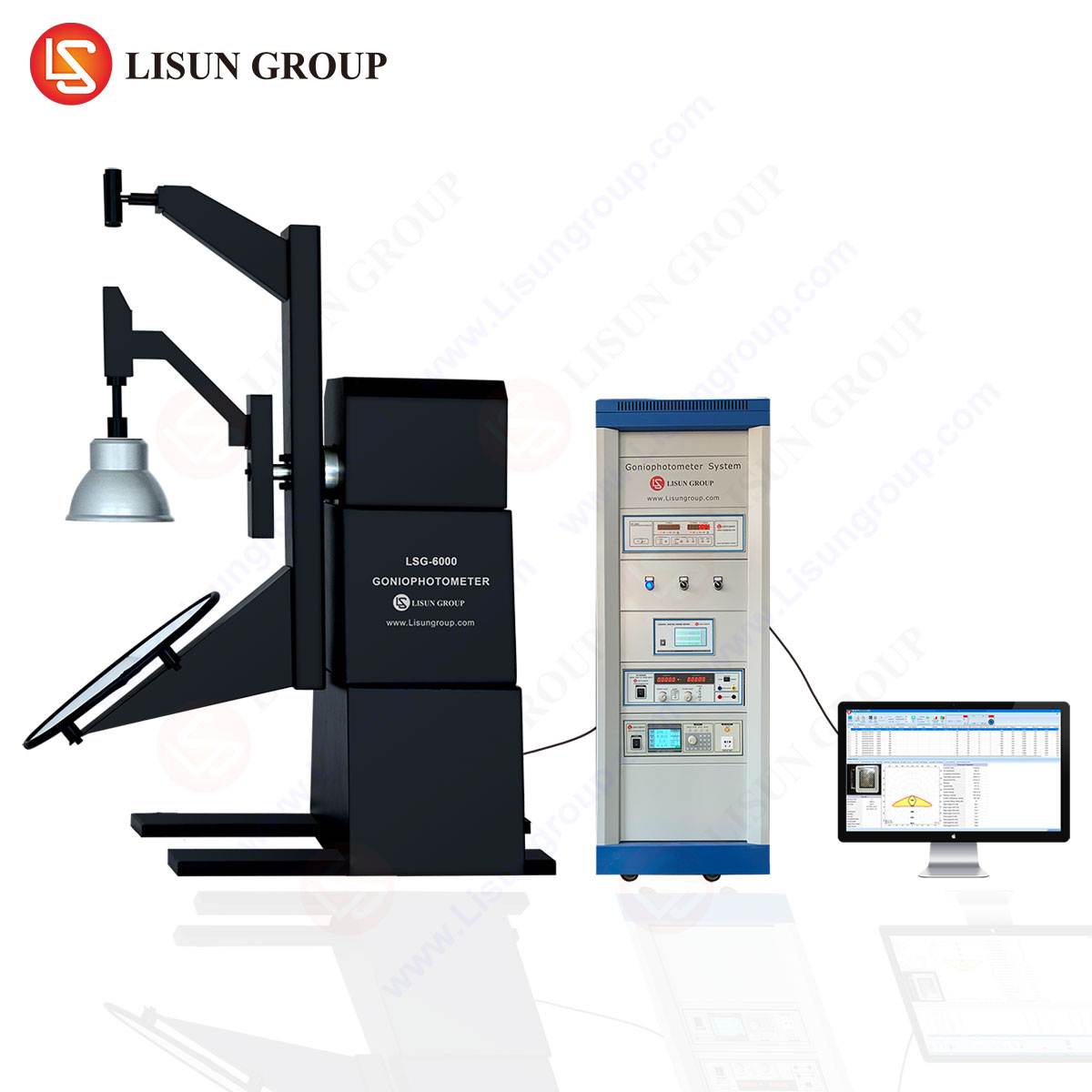
No, a standalone integrating sphere is designed exclusively for 4π (total spherical) flux measurement. To measure directional intensity (candelas) or angular distribution, the system must be coupled with a goniophotometer. The LPCE-2 system can be integrated as the detector for a goniophotometer system, but this is a distinct configuration.
Q4: What is the significance of the sphere’s interior coating material?
The coating material must have a high, Lambertian (perfectly diffuse), and spectrally flat reflectance across the visible spectrum. Materials like Spectraflect or BaSO4 are used because they exhibit these properties, ensuring that light of all wavelengths is integrated equally and that the spatial distribution of light inside the sphere is uniform, which is a fundamental assumption of the measurement principle.
Q5: How often should the system be recalibrated?
Recalibration frequency depends on usage intensity, environmental conditions, and required measurement uncertainty. For high-accuracy laboratories, an annual calibration is typical. A routine performance verification using a stable, internal reference source should be conducted weekly or before critical measurements to monitor system stability. Any physical damage to the sphere interior or major component replacement necessitates immediate recalibration.