





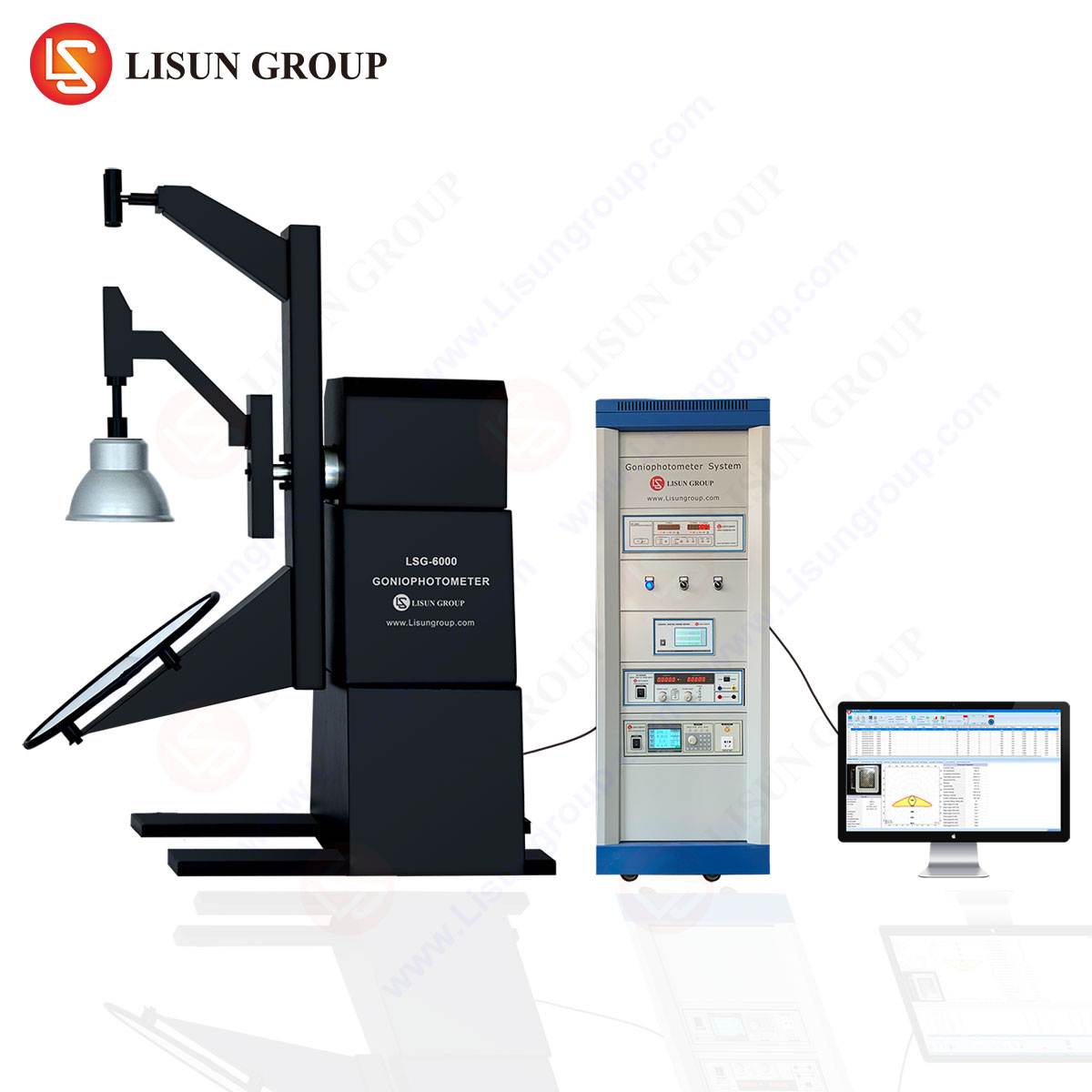



An Advanced Goniophotometric Analysis of the LISUN LMS-6000 System for Precision Photometric Characterization
Introduction to Spatially Resolved Light Measurement
The accurate characterization of a light source’s performance extends far beyond a simple measurement of luminous flux or illuminance at a single point. The spatial distribution of light—its intensity as a function of direction—is a fundamental property that defines its application efficacy, visual comfort, and compliance with stringent international standards. Goniophotometry, the science of measuring the angular distribution of light from a source, is the cornerstone of this advanced analysis. The LISUN LMS-6000 Goniophotometer System represents a state-of-the-art platform engineered to deliver comprehensive and precise spatial photometric data across a diverse spectrum of industries, from fundamental research to high-volume manufacturing quality control.
Architectural Overview of the LMS-6000 Goniophotometer System
The LMS-6000 is a Type C, variable geometry goniophotometer, a design characterized by a moving photometer head (or spectroradiometer) that traces a spherical path around a fixed light source under test (LUT). This configuration is optimal for testing luminaires where maintaining a fixed burning position is critical for optical integrity, such as those containing complex reflectors, lenses, or gaseous discharge elements. The system’s architecture comprises several integrated subsystems: a robust mechanical frame constructed from precision-machined, black-anodized aluminum to minimize stray light reflections; a high-torque, brushless servo motor system driving the photometer arm with exceptional angular accuracy and repeatability; and a centralized motion control unit. The LUT is mounted on a platform whose height is adjustable to align the photometric center of the luminaire with the center of rotation of the goniometer, a critical step for measurement accuracy. All mechanical components are designed for minimal thermal expansion and long-term structural stability, ensuring consistent performance over extended operational periods.
Integration of the LMS-6000 Spectroradiometer for Full Spectral Data Acquisition
The core of the measurement system is the integrated LISUN LMS-6000 spectroradiometer. This specific model is a high-performance array-based instrument designed for rapid and accurate spectral analysis across the visible spectrum and beyond. Unlike a simple photometer head that measures only photopic quantities (e.g., luminous intensity in candelas), the LMS-6000 spectroradiometer captures the full spectral power distribution (SPD) at each angular step. This capability unlocks a far richer dataset, enabling the derivation of not just photometric quantities (luminous intensity, flux), but also colorimetric and radiometric parameters, including chromaticity coordinates (CIE x,y, u’v’), correlated color temperature (CCT), color rendering index (CRI), peak wavelength, dominant wavelength, and spectral purity.
The technical specifications of the LMS-6000 spectroradiometer are pivotal to its performance:
- Wavelength Range: 380nm to 780nm (standard), with options to extend into the UV (LMS-6000UV) or near-infrared (NIR) ranges.
- Wavelength Accuracy: ±0.3nm.
- Photometric Linearity: ±0.3%.
- Dynamic Range: Exceeds 1:10,000, allowing it to accurately measure both the intense peak of a narrow-beam spotlight and the low-level stray light from a wide-angle fixture.
- Integration Time: Programmable from 1ms to 10s, enabling optimization for both high-speed scanning and low-light measurement scenarios.
The Measurement Principle: Spectrogoniophotometry
The operational principle of the LMS-6000 system is spectrogoniophotometry—the fusion of goniophotometry and spectrometry. The measurement sequence is automated through proprietary software. The LUT is secured at the goniometer’s center. The software defines a measurement grid, typically in the C-γ coordinate system (azimuth C, elevation γ), specifying the angular resolution (e.g., 5° or 15° increments). For each angular position (C,γ) in the grid, the goniometer’s arm moves the spectroradiometer to the precise location. The spectroradiometer then captures the SPD of the light incident upon its cosine-corrected diffuser. This process repeats until the entire spherical or hemispherical field around the LUT has been scanned.
The resulting four-dimensional dataset (intensity vs. wavelength vs. azimuth angle vs. elevation angle) is processed to generate a comprehensive set of photometric and colorimetric reports. The total luminous flux (in lumens) is calculated by numerically integrating the luminous intensity over the entire 4π steradian sphere. The software constructs 2D and 3D luminous intensity distribution curves (LIDC), isocandela plots, and far-field illuminance diagrams. Crucially, it can also generate spatial color distribution maps, visualizing how CCT and CRI shift across different viewing angles, a critical factor for LED-based luminaires.
Adherence to International Photometric Standards
The design, calibration, and operational methodology of the LMS-6000 system are rigorously aligned with the requirements of key international standards. This ensures that test data is accurate, repeatable, and recognized for regulatory compliance and certification purposes. The primary standards governing its application include:
- CIE 70, CIE 121: Documents from the International Commission on Illumination that define the measurement of total luminous flux and goniophotometry of luminaires.
- IESNA LM-79-19: Approved Method for the Electrical and Photometric Testing of Solid-State Lighting Devices. The LMS-6000 is explicitly designed to meet the stringent requirements of this standard for SSL product testing.
- EN 13032-1: Light and lighting – Measurement and presentation of photometric data of lamps and luminaires.
- IESNA LM-63: Standard file format for the electronic transfer of photometric data (IES files), which the system software generates automatically.
- DIN 5032-6: Photometric measurements – Part 6: Goniophotometry of luminaires.
Industry-Specific Applications and Use Cases
The versatility of the LMS-6000 system makes it an indispensable tool across numerous sectors.
-
LED & OLED Manufacturing: For SSL manufacturers, the system is vital for quality assurance and R&D. It verifies lumen output claims, analyzes spatial color uniformity to identify color over angle (CoA) issues, and validates beam patterns for downlights, street lights, and high-bay fixtures. In OLED testing, it characterizes the unique Lambertian-like emission profile and ensures color consistency across the panel’s surface from different viewpoints.
-
Automotive Lighting Testing: The system is used to validate the compliance of headlamps, signal lights (turn indicators, stop lamps), and interior lighting with UNECE, SAE, and FMVSS regulations. It measures the precise cut-off lines of low-beam headlamps, the intensity distribution of high-beams, and the photometric performance of complex LED taillight clusters.
-
Aerospace and Aviation Lighting: Navigation lights, anti-collision beacons, and cabin lighting on aircraft must adhere to strict technical standard orders (TSOs) from bodies like the FAA and EASA. The LMS-6000 provides the certified data needed to prove these lights meet mandated angular intensity distributions for safety-critical visibility.
-
Display Equipment Testing: The system characterizes the angular performance of backlight units (BLUs) for LCDs and the emission profiles of micro-LED arrays. It measures the contrast ratio, color shift, and luminance uniformity as a function of viewing angle, which are key parameters for display quality.
-
Urban Lighting Design: Lighting designers and municipal engineers use goniophotometric data in lighting simulation software (e.g., DIALux) to model and optimize lighting schemes for roads, public spaces, and architectural facades, predicting illuminance levels, uniformity, and glare before installation.
-
Stage and Studio Lighting: For entertainment lighting, the beam shape, field angle, and intensity gradient are artistic tools. The LMS-6000 provides manufacturers like ARRI and Robe with precise data sheets for their spotlights, wash lights, and profile fixtures, enabling lighting designers to select the perfect tool for a creative vision.
Comparative Advantages in System Performance and Usability
The LMS-6000 system offers several distinct advantages that position it as a leader in its class. Its integration of a high-end spectroradiometer, rather than a simple photometer, is its primary differentiator, providing a future-proof platform for both photometric and colorimetric analysis. The system’s software is a significant asset, offering an intuitive user interface for defining complex measurement sequences, real-time data visualization, and comprehensive reporting modules that automatically generate standardized formats like IES and EULUMDAT. The system’s robust construction and use of high-precision components ensure exceptional measurement repeatability (<1%), which is more critical than absolute accuracy for manufacturing quality control where comparing products against a golden sample is the primary goal. Furthermore, its modular design allows for customization, including different spectroradiometer models (e.g., UV or NIR versions), larger goniometer radii for big luminaires, and environmental chambers for temperature-controlled testing.
Conclusion
The LISUN LMS-6000 Goniophotometer System, with its integrated LMS-6000 spectroradiometer, embodies a complete solution for the most demanding applications in spatial photometry. By mastering the angular and spectral dimensions of light, it provides the depth of data required to drive innovation, ensure quality, and guarantee compliance across the global lighting industry. Its rigorous adherence to international standards, coupled with its advanced technical capabilities and operational robustness, makes it an essential instrument for any organization committed to precision light measurement.
Frequently Asked Questions (FAQ)
Q1: What is the primary difference between using the LMS-6000 spectroradiometer and a standard photometer head within the goniophotometer system?
A standard photometer head, equipped with a V(λ) filter, measures only photopic (human-eye-response) quantities like luminous intensity. The LMS-6000 spectroradiometer captures the full spectral power distribution at every angle. This allows for the simultaneous measurement of all photometric, colorimetric (CCT, CRI, chromaticity), and radiometric data, providing a far more comprehensive characterization of the light source, especially critical for LED and OLED technologies.
Q2: Can the LMS-6000 system test very large or heavy luminaires, such as those used in high-bay industrial lighting or sports stadiums?
Yes, the system can be engineered to accommodate large and heavy luminaires. The standard frame is robust, but LISUN offers custom solutions with larger goniometer radii and reinforced structural components. The critical factor is aligning the photometric center of the luminaire with the center of rotation of the goniometer. The adjustable mounting platform and customizable fixturing are designed to handle a wide range of sizes and weights.
Q3: How does the system account for the self-heating of a luminaire during a measurement sequence that can take minutes to hours?
The photometric characteristics of many light sources, particularly LEDs, are sensitive to junction temperature. For the most accurate measurement of total luminous flux, it is recommended to use an AC power source that stabilizes the input voltage and to allow the luminaire to reach thermal steady-state before beginning the goniophotometric scan. For advanced R&D, the system can be integrated with an environmental chamber that surrounds the goniometer to control ambient temperature throughout the test.
Q4: What is the typical measurement time for a full 4π spherical scan?
The measurement time is not fixed and depends on several configurable factors: the angular resolution (e.g., 5° vs. 15° increments), the number of wavelengths scanned by the spectroradiometer (full resolution vs. binned), the required signal-to-noise ratio (which dictates integration time per point), and the speed of the goniometer movement. A high-resolution, full-spectral scan is more time-consuming than a lower-resolution, photopic-only scan. The system software allows users to optimize these parameters for the required balance between speed, resolution, and accuracy.
Q5: Does the system software provide the necessary data for submitting products to regulatory bodies like ENERGY STAR or DLC?
Yes. The software processes the raw spectral and angular data to calculate all parameters required by major certification programs, including Total Luminous Flux, Luminous Efficacy (lm/W), and spatial color uniformity metrics. It generates standardized test reports that can be submitted directly as part of a certification application. The system’s compliance with IES LM-79 ensures the data is obtained using an approved methodology.