


Comprehensive Performance Evaluation of LED Products Utilizing the LISUN LPCE-3 Integrated Sphere Spectroradiometer System
Introduction to Photometric and Radiometric Testing for Solid-State Lighting
The global transition to solid-state lighting (SSL) technologies, primarily Light Emitting Diodes (LEDs) and Organic Light Emitting Diodes (OLEDs), has necessitated a paradigm shift in performance evaluation methodologies. Unlike traditional incandescent or fluorescent sources, LEDs are characterized by their spectral nature, directional output, and sensitivity to thermal and electrical operating conditions. Consequently, accurate and reliable testing is fundamental to ensuring product quality, regulatory compliance, and end-user satisfaction. The LISUN LPCE-3 Integrated Sphere Spectroradiometer System represents a sophisticated solution engineered to address the complex demands of modern light source characterization. This system integrates a high-precision spectroradiometer with an optical integrating sphere, forming a cornerstone instrument for the objective quantification of photometric, colorimetric, and radiometric parameters. Its application is critical across a diverse range of fields, from fundamental research and development to high-volume manufacturing and quality assurance in sectors including automotive lighting, aerospace illumination, and medical device validation.
Fundamental Principles of Integrating Sphere Spectroradiometry
The operational efficacy of the LPCE-3 system is predicated on the synergistic function of its two core components: the integrating sphere and the spectroradiometer. The integrating sphere, internally coated with a highly reflective and spectrally neutral material such as barium sulfate (BaSO4), functions as an optical averaging chamber. When a light source is placed within the sphere, its luminous flux undergoes multiple diffuse reflections, resulting in a spatially uniform radiance distribution across the sphere’s inner surface. This process effectively scrambles the spatial and angular characteristics of the source, allowing for the measurement of total flux without dependence on the source’s geometry.
A fiber-optic cable, connected to a cosine-corrected input optic, is then positioned at a specific port on the sphere to sample this uniform radiance. This signal is transmitted to the spectroradiometer, which acts as a high-resolution optical analyzer. The spectroradiometer disperses the incoming light via a diffraction grating and projects it onto a CCD or photodiode array detector. This enables the simultaneous measurement of the source’s spectral power distribution (SPD) across the human visual range (typically 380-780nm) and beyond. The SPD serves as the foundational dataset from which all other photometric and colorimetric quantities are mathematically derived through convolution with standardized human response functions, as defined by the International Commission on Illumination (CIE).
Architectural Overview and Technical Specifications of the LPCE-3 System
The LISUN LPCE-3 system is architected for high accuracy, repeatability, and operational efficiency. Its specifications are tailored to meet and exceed the requirements of international testing standards, including IES LM-79, CIE 84, CIE S-012, and EN13032-1 clause 6.1.1. The system’s key technical attributes are detailed below.
| Component | Specification | Significance |
|---|---|---|
| Integrating Sphere | Diameter: 2m (or 1.5m/1m options). Coating: Spectraflect® or equivalent BaSO4. Auxiliary Lamp: For self-calibration and spatial non-uniformity correction. | A larger sphere diameter minimizes self-absorption errors for large or high-power luminaires. The auxiliary lamp enables system self-calibration via the substitution method, ensuring long-term measurement stability. |
| Spectroradiometer | Wavelength Range: 380-780nm (extendable to 200-800nm). Wavelength Accuracy: ±0.2nm. Wavelength Half-Width: 2nm. Dynamic Range: > 1:10,000. | High wavelength accuracy is critical for precise color coordinate calculation (CIE x, y, u’, v’). A low stray light level and high dynamic range ensure accurate measurement of narrow-band and broad-spectrum sources alike. |
| Software Analysis Suite | Compliant with CIE, IES, and DIN standards. Calculates: Luminous Flux (lm), Luminous Efficacy (lm/W), CCT (K), CRI (Ra), CRI R1-R15, Chromaticity Coordinates, Peak Wavelength, Dominant Wavelength, FWHM, SDCM, and more. | The software automates the entire testing workflow, from data acquisition to report generation. It provides both graphical (SPD, Chromaticity Diagram) and tabular data outputs, essential for comprehensive analysis. |
Application in LED and OLED Manufacturing Quality Control
In the high-volume manufacturing environment of LEDs and OLEDs, the LPCE-3 system is deployed for 100% final inspection or high-frequency batch sampling. It verifies conformance to datasheet specifications, including luminous flux bins and chromaticity quadrangles as defined by the ANSI C78.377 standard. For OLED panels, which are Lambertian surface emitters, the system’s ability to measure total luminous flux and color uniformity is paramount. The detection of subtle color shifts or efficacy drops can identify process variations in epitaxy, phosphor deposition, or encapsulation, enabling real-time corrective actions and minimizing production yield loss.
Validation of Automotive Lighting Systems
Automotive lighting, encompassing forward lighting (headlamps), signal lighting, and interior ambient lighting, is subject to stringent international regulations (ECE, SAE, FMVSS). The LPCE-3 system is instrumental in validating the photometric and colorimetric performance of LED modules used in these applications. For instance, it certifies that signal lamps (stop, turn) meet the minimum luminous intensity and specific chromaticity boundaries mandated by law. In the development of adaptive driving beam (ADB) headlamps, the system characterizes the individual LED chips that form the pixelated light source, ensuring consistent color temperature and output across the entire array, which is critical for optical system performance and safety.
Precision Testing for Aerospace and Aviation Lighting
The aerospace industry demands unparalleled reliability and performance from its lighting components. Cockpit displays, cabin mood lighting, and external navigation lights must perform flawlessly under extreme environmental conditions. The LPCE-3 provides the baseline performance data against which accelerated life testing and environmental stress testing (thermal cycling, vibration) are compared. The system’s high precision is essential for measuring the very low luminance levels used in night-vision-compatible cockpit lighting, ensuring they do not interfere with pilots’ night vision imaging systems (NVIS).
Ensuring Fidelity in Display and Medical Equipment Testing
For display equipment manufacturers, the color performance of LCD backlight units (BLUs) or micro-LED displays is a key differentiator. The LPCE-3 system measures the SPD of these backlights to calculate color gamut coverage (e.g., sRGB, DCI-P3, Rec. 2020). In the medical field, diagnostic and surgical lighting requires precise color rendering to ensure accurate tissue differentiation. The system’s ability to report the full set of CRI values (R1-R15), including the special indices R9 (saturated red) crucial for medical observation, makes it an indispensable tool for certifying medical lighting equipment to standards such as IEC 60601-1.
Advanced Applications in Photovoltaic and Scientific Research
Beyond visible light, the LPCE-3’s extended wavelength range facilitates applications in the photovoltaic (PV) industry. The system can measure the absolute spectral irradiance of solar simulators, which is used to simulate sunlight for testing solar cells. The accuracy of these measurements directly impacts the calculated efficiency of PV cells. In scientific research laboratories, the system is used to characterize novel luminescent materials, such as quantum dots or perovskites, by providing precise data on their quantum yield and emission spectra under controlled excitation conditions.
Comparative Advantages in System Design and Data Integrity
The competitive advantage of the LPCE-3 system lies in its integrated design and commitment to metrological traceability. Unlike systems that pair a spectrometer with a simple cosine corrector for goniometric measurements, the sphere-based approach provides a direct and absolute measurement of total luminous flux. The inclusion of a temperature-controlled detector housing within the spectroradiometer minimizes thermal drift, a common source of error in long-duration tests. Furthermore, the software’s implementation of real-time dark noise subtraction and automatic calibration using NIST-traceable standard lamps ensures that the generated data is not only precise but also internationally recognized and defensible in audit and certification scenarios.
Generating a Conformant LISUN LED Test Report
A typical test report generated by the LPCE-3 software is a comprehensive document that provides a complete performance snapshot of the device under test (DUT). It includes a header with DUT identification (model, serial number), test conditions (input voltage, current, ambient temperature), and a reference to the applied standard. The body of the report presents both numerical data and graphical plots. The numerical section tabulates all key parameters, while the graphical section typically features the Spectral Power Distribution curve and the location of the DUT’s chromaticity coordinates on the CIE 1931 or 1976 diagram, often with an overlay of the relevant ANSI quadrangles or Planckian locus. This structured presentation allows engineers, designers, and quality managers to quickly verify compliance and identify any performance anomalies.
Conclusion: The Role of Precision Metrology in Lighting Technology Advancement
As lighting technology continues to evolve, converging with IoT, human-centric lighting, and advanced materials, the role of precise and reliable measurement systems becomes increasingly critical. The LISUN LPCE-3 Integrated Sphere Spectroradiometer System provides the foundational metrology required to drive innovation, ensure quality, and maintain safety across a vast spectrum of industries. By delivering traceable, accurate, and comprehensive data on the performance of solid-state light sources, it empowers organizations to push the boundaries of what is possible while adhering to the rigorous demands of the global market.
Frequently Asked Questions (FAQ)
Q1: What is the critical difference between using an integrating sphere system like the LPCE-3 and a goniophotometer for LED testing?
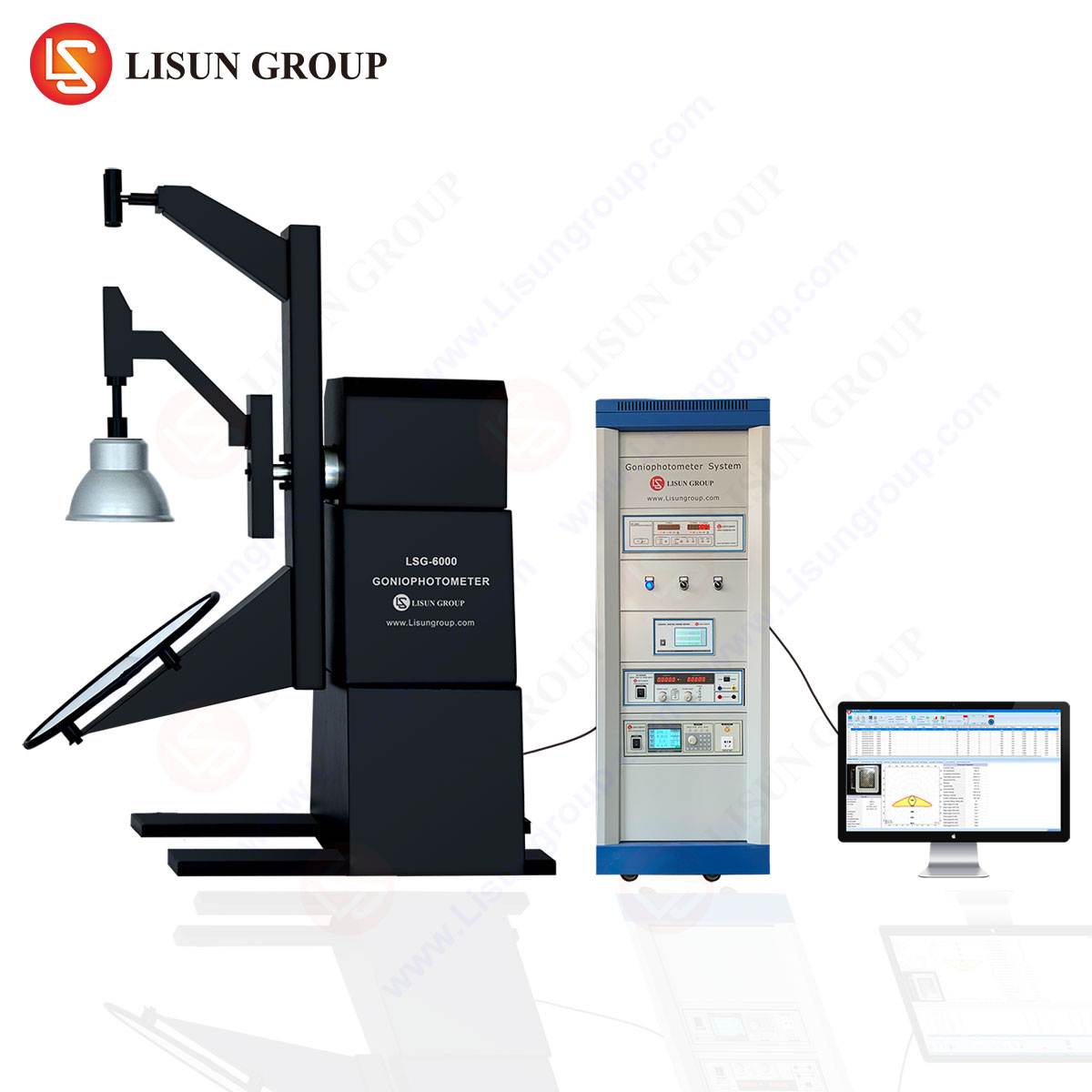
An integrating sphere system measures the total luminous flux (lumens) and spectral characteristics of a light source directly and is highly efficient for testing a large volume of individual LEDs or small modules. A goniophotometer measures the intensity distribution of a luminaire in space and can derive total flux through mathematical integration, which is essential for understanding the beam pattern of a complete lighting fixture. The two systems are complementary; the LPCE-3 excels in rapid, high-precision color and flux measurement, while a goniophotometer defines the spatial distribution of light.
Q2: How does the LPCE-3 system account for the self-absorption of light within the sphere, particularly for large or high-power LED luminaires?
The LPCE-3 system utilizes the substitution method with an auxiliary lamp for calibration. First, the system is calibrated using a standard lamp of known luminous flux. The DUT is then measured. For large or high-power sources that absorb a significant amount of light, a self-absorption correction is applied. This involves measuring the sphere’s response with and without the unpowered DUT present while the auxiliary lamp is illuminated. The difference in these readings is used to correct the final measurement of the powered DUT, ensuring an accurate flux reading.
Q3: Why is the measurement of the full CRI spectrum (R1-R15) important, beyond just the general Color Rendering Index (Ra)?
The general CRI (Ra) is an average of only the first eight test color samples (R1-R8), which are pastel colors. This average can mask poor performance in rendering specific saturated colors. For example, R9 is a deep red, which is critical for applications like retail lighting (meat, produce), medical lighting (blood oxygenation), and museum lighting. A high Ra with a low R9 would indicate that red objects appear dull or washed out. Reporting the full spectrum provides a complete picture of a light source’s color rendering properties.
Q4: Can the LPCE-3 system be used to test the flicker performance of LED drivers and luminaires?
While the primary function of the LPCE-3 is spectroradiometric analysis, flicker measurement typically requires a high-speed photodetector with a temporal response far exceeding that of a scanning spectroradiometer. Flicker parameters (percent flicker, flicker index) are generally measured using a dedicated photometer or a high-speed oscilloscope with a calibrated photodiode. The LPCE-3 system is focused on the spectral, photometric, and colorimetric characteristics of the steady-state light output.
Q5: What is the significance of the Correlated Color Temperature (CCT) and Duv value reported in the test results?
CCT describes the color appearance of a white light source, relating it to the color of a theoretical black body radiator at a given temperature in Kelvin. However, many modern LED sources do not lie directly on the Planckian locus (the path of black body colors). The Duv value quantifies the distance from this locus. A positive Duv indicates a greenish shift, while a negative Duv indicates a pinkish/magenta shift. For high-quality lighting, a Duv value as close to zero as possible is desired, and industry standards often specify tight tolerances for both CCT and Duv to ensure color consistency.