


A Comprehensive Guide to LED Lumen Measurement Utilizing Integrating Sphere Spectroradiometry
Fundamentals of Luminous Flux Measurement
Luminous flux, measured in lumens (lm), quantifies the total perceived power of light emitted by a source, weighted by the human eye’s spectral sensitivity as defined by the CIE photopic luminosity function V(λ). For traditional incandescent sources, measurement was relatively straightforward. However, the advent of Light Emitting Diodes (LEDs) and Organic Light Emitting Diodes (OLEDs) has introduced significant complexities. These solid-state lighting (SSL) technologies exhibit highly directional emission patterns, non-uniform spatial intensity distributions, and narrow-band spectral power distributions (SPD) that can deviate substantially from the black-body radiator locus. Consequently, accurate lumen measurement requires a system capable of capturing the complete spatial and spectral characteristics of the light source. The integrating sphere, coupled with a high-precision spectroradiometer, represents the definitive solution for this metrological challenge, forming the basis of systems like the LISUN LPCE-3 Integrated Sphere Spectroradiometer System.
The core principle of an integrating sphere is spatial integration. Light entering the sphere undergoes multiple diffuse reflections off a highly reflective, spectrally neutral coating on its interior surface. This process homogenizes the spatial distribution of the light, creating a uniform radiance across the sphere’s inner wall. A baffle, strategically positioned between the light source port and the detector port, prevents first-reflection light from reaching the detector directly, ensuring that only fully integrated light is measured. This spatial averaging is critical for obtaining an accurate total luminous flux value, as it negates the influence of the source’s directionality. The detector in this context is not a simple photodiode but a spectroradiometer, which measures the spectral power distribution of the integrated light. The luminous flux is then calculated by integrating this measured SPD with the V(λ) function across the visible wavelength range (typically 380nm to 780nm).
Architectural Overview of the LPCE-3 Integrating Sphere System
The LISUN LPCE-3 system embodies a complete laboratory-grade solution for the photometric and colorimetric testing of LED luminaries and modules. Its architecture is designed to conform to the stringent requirements of international standards such as CIE 84, CIE 13.3, IESNA LM-79, and EN13032-1. The system is comprised of several synergistic components that function as a unified metrological instrument.
The primary element is the integrating sphere itself. The LPCE-3 typically employs a sphere with a diameter optimized for the intended class of light sources, such as 2 meters for large luminaries or smaller diameters for LED modules and bulbs. The interior is coated with a stable, highly reflective BaSO4 (barium sulfate) or Spectraflect® diffuse coating, which maintains a reflectance of >95% across the visible spectrum. This high reflectance ensures efficient light integration and a strong signal for the detector. The sphere features precision-engineered ports for the sample, the spectroradiometer, and an auxiliary lamp used for system self-calibration.
The second critical component is the imaging spectroradiometer. This device disperses the incoming light into its constituent wavelengths and measures the intensity at each wavelength interval. Key specifications of the LPCE-3’s spectroradiometer include a wide wavelength range (e.g., 380-780nm), a narrow optical bandwidth (e.g., <2nm FWHM), and high linearity across its dynamic range. This allows for the simultaneous calculation of photometric quantities (luminous flux, CCT, CRI) and colorimetric quantities (chromaticity coordinates x,y and u,v). The system is controlled by dedicated software that automates the testing sequence, manages data acquisition, performs necessary calculations, and generates comprehensive test reports.
Table 1: Representative Specifications of an LPCE-3 System
| Parameter | Specification | Note |
| :— | :— | :— |
| Integrating Sphere Diameter | 2m / 1.5m / 1m | Selectable based on application |
| Sphere Coating | BaSO4 (Barium Sulfate) | Reflectance >95%, 400-1500nm |
| Spectroradiometer Wavelength Range | 380nm – 780nm | Extendable to 1000nm for IR analysis |
| Optical Bandwidth (FWHM) | ≤ 2.0 nm | Ensures high spectral resolution |
| Luminous Flux Accuracy | ±3% (for standard LEDs) | Dependent on calibration and standard lamps |
| Correlated Color Temperature (CCT) Range | 1,000K – 100,000K | Covers all practical lighting conditions |
| Color Rendering Index (CRI) Accuracy | ±1.5% (when Ra>80) | Critical for quality lighting assessment |
| Compliant Standards | CIE, IESNA LM-79, LM-80, ENERGY STAR, IEC | Meets global regulatory and testing norms |
The Spectroradiometric Method for Photometric Quantification
The LPCE-3’s methodology represents a significant advancement over traditional photometer-based sphere systems. In a traditional system, a V(λ)-corrected photodiode measures the integrated light. However, achieving a perfect match to the V(λ) function is impossible, leading to spectral mismatch errors that are particularly pronounced for narrow-band LED sources. The spectroradiometric method circumvents this fundamental limitation.
The process begins with the system calibration using a standard lamp of known luminous flux and SPD, traceable to a national metrology institute (NMI). Once calibrated, the device under test (DUT) is powered on and stabilized at its operating temperature and electrical parameters. The light from the DUT is integrated within the sphere and sampled by the spectroradiometer, which captures the full SPD, S(λ). The software then performs the following calculation for luminous flux (Φ_v):
Φ_v = Km * ∫{380}^{780} S(λ) V(λ) dλ
Where K_m is the maximum spectral luminous efficacy (683 lm/W), S(λ) is the measured spectral power distribution, and V(λ) is the CIE photopic luminosity function. Because the V(λ) weighting is applied mathematically in software, the spectral mismatch error is eliminated. This same SPD data set is simultaneously used to derive a comprehensive suite of other optical parameters, including chromaticity coordinates, CCT, CRI (R1-R15), peak wavelength, dominant wavelength, and purity. This multi-parameter output from a single measurement is a key advantage of the spectroradiometric approach.
Industry-Specific Applications and Use Cases
The precision and versatility of the LPCE-3 system make it indispensable across a wide spectrum of industries where accurate light measurement is critical.
In LED & OLED Manufacturing, the system is used for binning and quality control. Manufacturers must sort LEDs into tight bins based on luminous flux and chromaticity to ensure consistency in final products. The LPCE-3 provides the high-throughput, high-accuracy data required for this process, directly impacting product yield and performance.
For Automotive Lighting Testing, the system validates the performance of LED headlamps, daytime running lights (DRLs), and interior lighting. It measures not only total flux but also color consistency, which is a safety-critical factor for signal lighting. The ability to test under various thermal and electrical conditions simulates real-world operating environments.
In the Aerospace and Aviation Lighting sector, reliability and compliance are paramount. The LPCE-3 is used to certify cockpit displays, cabin mood lighting, and external navigation lights against rigorous standards like DO-160, ensuring they perform within specified photometric and colorimetric tolerances under all conditions.
Display Equipment Testing laboratories utilize the system to measure the luminous flux and color gamut of backlight units (BLUs) for LCDs and the uniform luminance of OLED panels. The data is crucial for achieving target brightness, contrast ratios, and color fidelity in consumer televisions, monitors, and smartphones.
Within the Photovoltaic Industry, the system is adapted for testing the performance of photovoltaic cells and modules. While not measuring lumens, the integrating sphere and spectroradiometer can be used to characterize the spectral responsivity of PV devices by using a known light source, a critical parameter for determining conversion efficiency.
In Scientific Research Laboratories, the LPCE-3 serves as a foundational instrument for studying novel materials, such as perovskites for next-generation LEDs, or for investigating the non-visual effects of light (melopicopic ratio) through precise spectral analysis.
Urban Lighting Design projects rely on accurate manufacturer data for LED streetlights and architectural luminaires. The LPCE-3 provides the trustworthy photometric files needed for lighting simulation software, enabling designers to predict and optimize illuminance levels, uniformity, and visual comfort before installation.
For Marine and Navigation Lighting, compliance with international maritime standards (e.g., COLREGs) for the range and color of signal lights is non-negotiable. The system provides the certifiable data needed to ensure that buoys, ship navigation lights, and lighthouse beacons meet their mandated photometric requirements.
In Stage and Studio Lighting, the color-rendering properties of LED-based fixtures are critical. The LPCE-3’s accurate measurement of CRI (including the extended R96a indices) and Television Lighting Consistency Index (TLCI) allows manufacturers to develop products that reproduce skin tones and set colors faithfully for film, broadcast, and live events.
Finally, in the field of Medical Lighting Equipment, the precise spectral measurement is vital for surgical lights, dermatology treatment devices, and light therapy systems. The LPCE-3 can verify that these devices emit light of the correct intensity, color temperature, and spectral composition to ensure both efficacy and patient safety.
Comparative Analysis with Alternative Measurement Methodologies
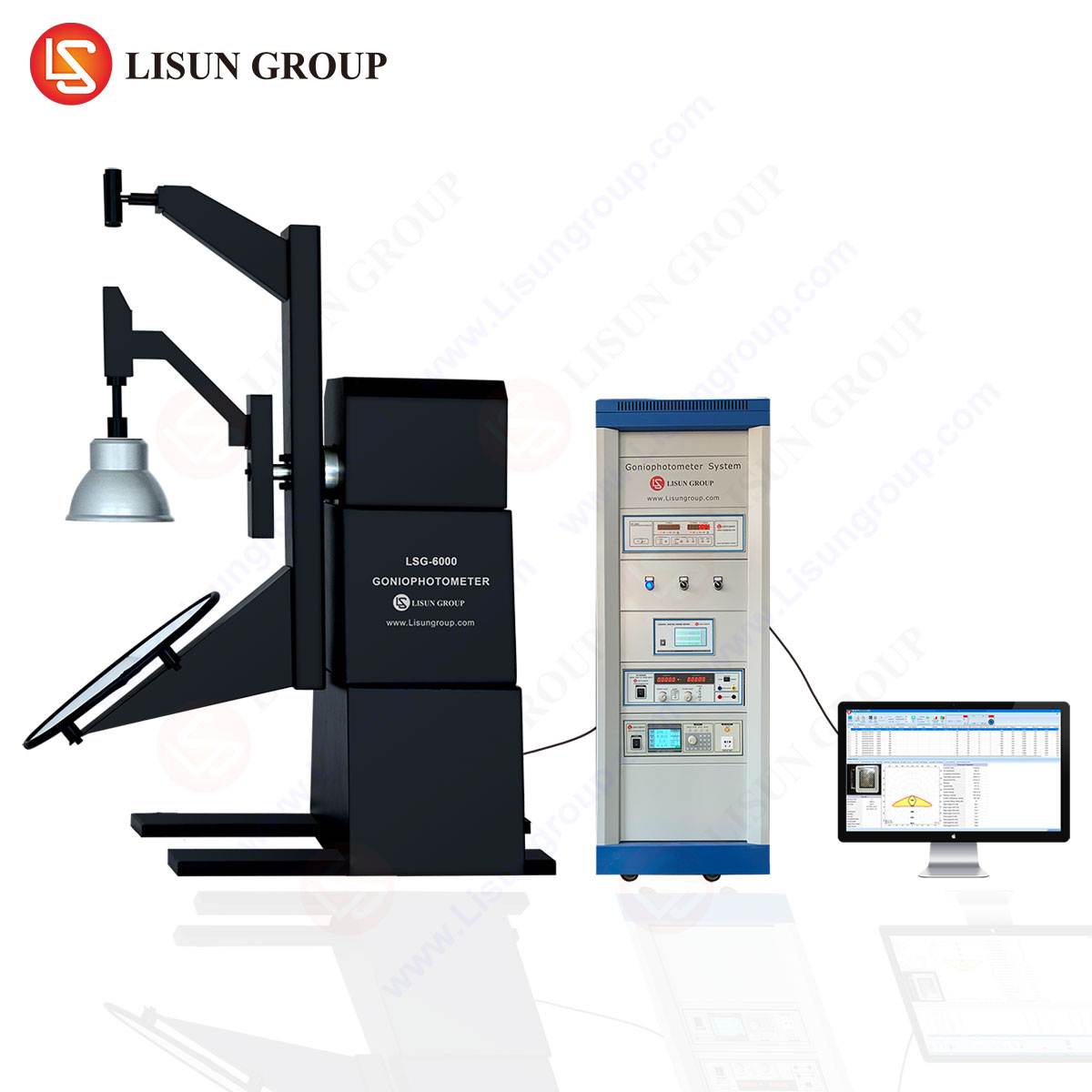
While goniophotometers represent another primary method for measuring total luminous flux, the two techniques offer complementary advantages. A goniophotometer measures the angular distribution of light intensity from a source and computationally integrates it to find total flux. It provides detailed information on the far-field distribution but is typically a larger, more complex, and slower system.
The LPCE-3 integrating sphere system offers distinct advantages for routine quality control and R&D applications where the primary need is rapid, accurate measurement of total flux and color parameters. Its measurement cycle is significantly faster than a goniophotometric scan, and its operational footprint is smaller. The key competitive advantage of the spectroradiometer-based sphere over a photometer-based sphere, as previously detailed, is the elimination of spectral mismatch error. This makes the LPCE-3 inherently more accurate for the heterogeneous and evolving landscape of SSL sources. Furthermore, the wealth of colorimetric data extracted from a single measurement provides a more comprehensive product characterization than a photometer can deliver.
Ensuring Measurement Traceability and System Calibration
The accuracy of any measurement system is contingent upon a robust chain of traceability to international standards. The LPCE-3 system’s calibration is foundational to its operation. The process involves using a standard lamp, whose luminous flux and SPD have been certified by an NMI such as NIST (USA) or PTB (Germany). This lamp is installed in the sphere, and its known values are used to calibrate the response of the spectroradiometer. This establishes a direct traceable link from the DUT measurement back to the SI unit for luminous intensity, the candela.
Regular calibration intervals, dictated by the laboratory’s quality management system (e.g., ISO/IEC 17025), are essential to maintain measurement uncertainty within specified bounds. The LPCE-3 software often includes features for managing calibration certificates and applying calibration factors, ensuring data integrity throughout the instrument’s operational lifecycle. The system may also incorporate a built-in reference lamp for periodic performance verification between full calibrations, providing confidence in day-to-day measurement stability.
Frequently Asked Questions
Q1: What is the critical difference between a spectroradiometer-based system like the LPCE-3 and a simpler photometer-based lumen meter?
The fundamental difference lies in the detection method. A photometer uses a filtered silicon photodiode that attempts to mimic the human eye’s V(λ) response, which invariably leads to spectral mismatch errors, especially with narrow-band LED sources. A spectroradiometer measures the complete spectral power distribution and mathematically applies the V(λ) function, eliminating this source of error and providing inherently higher accuracy for solid-state lighting, along with a full suite of colorimetric data.
Q2: How do I select the appropriate integrating sphere size for my application?
The sphere size should be selected based on the physical size and total luminous flux of the largest device you intend to test. A general rule is that the maximum linear dimension of the DUT should not exceed 1/3 to 1/2 of the sphere’s diameter. Furthermore, the total flux of the DUT should not be so high as to cause stray light or thermal issues within the sphere. For example, a 2-meter sphere is suitable for large commercial luminaries, while a 1-meter sphere is ideal for LED bulbs and modules.
Q3: Can the LPCE-3 system measure the flicker percentage of an LED light source?
While the primary function is photometric and colorimetric measurement, many advanced spectroradiometer systems, including certain configurations of the LPCE-3, can be equipped with high-speed acquisition capabilities. By operating the spectroradiometer in a fast-triggered mode and analyzing the temporal variation of the light output, it is possible to characterize flicker metrics such as percent flicker and flicker index, provided the modulation frequency is within the device’s acquisition rate.
Q4: What are the primary sources of measurement uncertainty in an integrating sphere system?
Key uncertainty contributors include: the calibration uncertainty of the standard lamp; spatial non-uniformity of the sphere’s response; the presence of the DUT itself which alters the sphere’s geometry and absorption characteristics (a correction for which must be applied); the stability of the DUT’s power supply and thermal conditions; the linearity, stray light, and wavelength accuracy of the spectroradiometer; and the precision of the V(λ) function integration. A well-designed system like the LPCE-3 minimizes these factors through robust engineering and calibration protocols.
Q5: Is the system capable of testing lasers or light sources with high spatial coherence?
Standard integrating spheres are not suitable for measuring highly coherent sources like lasers due to the creation of interference patterns (speckle) on the sphere wall, which violate the assumption of diffuse uniformity. Specialized laser power meters or spheres with active de-speckling mechanisms (e.g., vibrating elements) are required for such applications. The LPCE-3 is designed for incoherent and partially coherent sources like LEDs and OLEDs.