




A Comprehensive Economic and Technical Evaluation of Goniophotometric Systems
The accurate quantification of luminous intensity distribution is a cornerstone of photometric science, with profound implications across industries ranging from solid-state lighting to biomedical device manufacturing. The goniophotometer stands as the definitive instrument for this purpose, enabling the precise measurement of a light source’s spatial emission characteristics. Within this specialized market, the LISUN LSG-6000 Goniophotometer represents a significant technological offering. This analysis provides a detailed examination of the pricing structures and intrinsic value proposition of such systems, with a specific focus on the LSG-6000, to inform capital equipment procurement decisions for technical and research entities.
Fundamental Principles of Goniophotometric Measurement
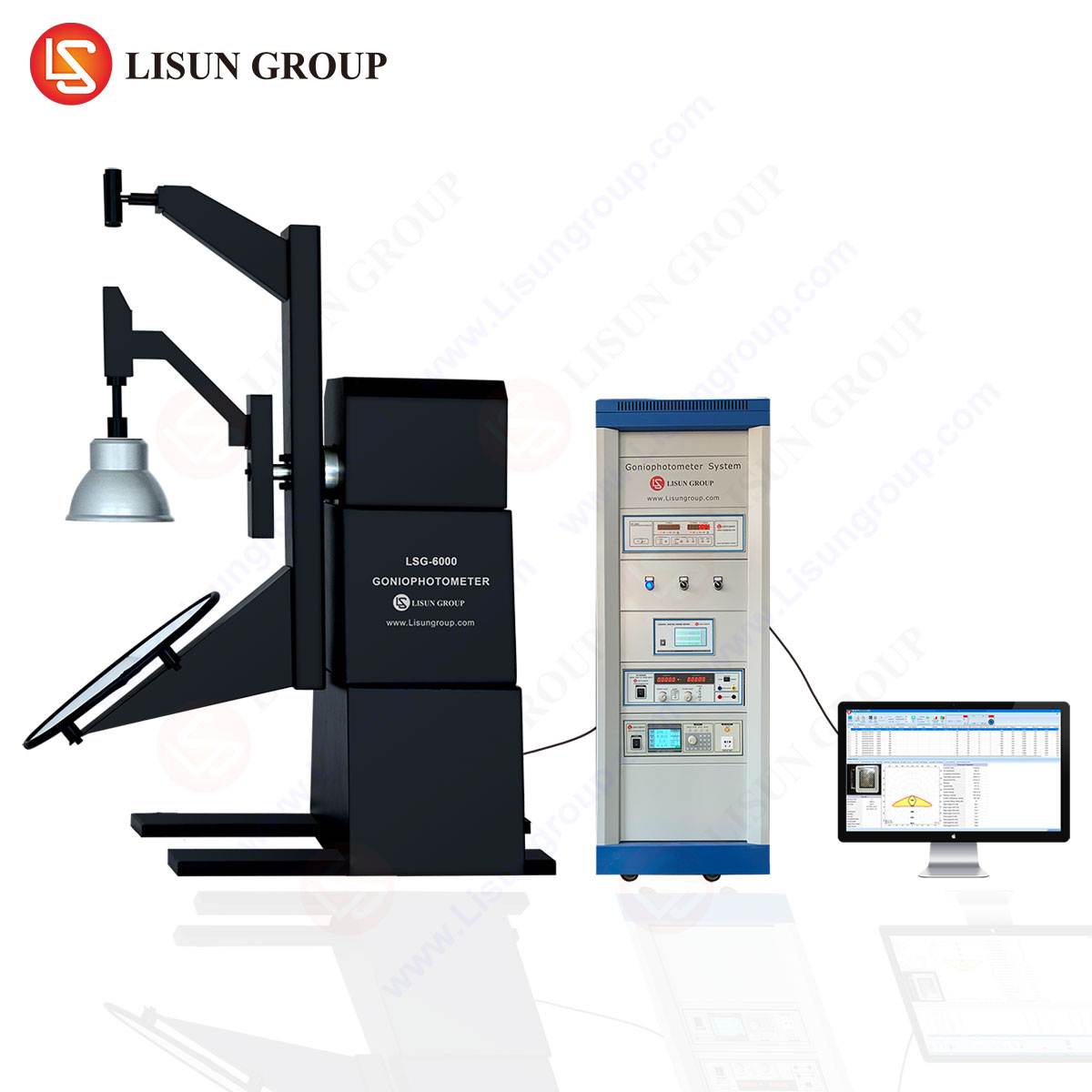
A goniophotometer functions by rotating a photometric sensor around a fixed light source, or vice versa, across two orthogonal axes: the vertical (C-axis, or gamma angle) and the horizontal (γ-axis). This spherical coordinate system allows for the comprehensive sampling of luminous intensity at discrete angular increments. The primary data output is the Intensity Distribution Curve (IDC), a polar plot that graphically represents the spatial radiation pattern. From this foundational data, a suite of critical photometric parameters is derived, including total luminous flux (lumens), luminous efficacy (lm/W), energy efficiency class, and the zonal lumen distribution. The measurement process is governed by the inverse square law, ensuring that intensity calculations remain accurate regardless of the measurement distance, provided the source is positioned at the center of rotation. The LSG-6000 implements a Type C coordinate system, where the light source is mounted on a moving arm that varies the vertical angle, while the photometer head traverses the horizontal plane, a configuration optimized for stability and precision with a diverse range of luminaires.
Architectural and Operational Overview of the LSG-6000 System
The LISUN LSG-6000 is a fully automated, computer-controlled system designed for measuring the photometric characteristics of luminaires and LEDs. Its architecture is engineered for high precision, operational flexibility, and long-term reliability. The system’s core mechanical structure is a rigid, machined aluminum frame that minimizes vibrational artifacts and ensures consistent rotational alignment. The central component is a high-torque, servo-driven positioning system that controls the movement of the goniometer arm with an angular precision exceeding 0.1°. The system is available in two primary mirror configurations: a near-field design for standard luminaire testing and a far-field, mirror-based version that utilizes a large, parabolic mirror to create a virtual photometer at a near-infinite distance, a necessity for measuring far-field intensity distributions as per stringent international standards.
The system is integrated with a high-performance spectroradiometer or photometer head, which serves as the detection unit. This sensor is calibrated directly against national standard references traceable to NIST (National Institute of Standards and Technology) or PTB (Physikalisch-Technische Bundesanstalt). Data acquisition and system control are managed by proprietary software that automates the entire measurement sequence, from defining the angular resolution to generating final test reports compliant with industry formats such as IESNA LM-63 (.ies) and EULUMDAT (.ldt).
Key Specifications of the LSG-6000:
- Measurement Distance: Adjustable, typically 5m, 10m, or longer for far-field systems.
- Goniometer Arm Length: Configurable up to 2.5 meters to accommodate large luminaires.
- Angular Resolution: ≤ 0.1° for both C and γ axes.
- Luminous Flux Measurement Range: 0.001 to 2,000,000 lm.
- Dimensions: Customizable based on the selected measurement distance and arm length.
- Standards Compliance: Designed to meet or exceed CIE 70, CIE 121, IESNA LM-79, and DIN 5032-6.
Deciphering the Investment: A Multi-Factor Pricing Model
The capital outlay for a system like the LSG-6000 is not a single figure but a composite of several interdependent factors. Understanding this pricing model is critical for an accurate assessment of total cost of ownership (TCO).
Core System Configuration: The base price typically includes the mechanical goniometer structure, the servo motion control system, a photometer head, and the basic control software. This configuration is suitable for fundamental photometric testing.
Sensor and Optical Path Upgrades: A significant cost variable is the choice of detector. A V(λ)-corrected photometer offers high-speed testing for standard photopic applications. However, upgrading to a high-resolution spectroradiometer adds spectral measurement capability, enabling the calculation of Correlated Color Temperature (CCT), Color Rendering Index (CRI), and chromaticity coordinates (x, y), which is essential for the LED & OLED Manufacturing and Display Equipment Testing industries. The choice between a near-field and a far-field (mirror-based) optical path also substantially impacts the price, with the latter representing a more complex and costly optical assembly.
Mechanical Customization and Ancillary Equipment: The physical size of the system, dictated by the required measurement distance and arm length, directly influences material and manufacturing costs. Furthermore, ancillary equipment such as programmable DC/AC power supplies, temperature-controlled chambers for thermal characterization of LEDs, and auxiliary spectrometers for simultaneous spatial and spectral analysis constitute additional, often necessary, investments.
Software Capabilities and Compliance: The software suite is a critical value driver. Basic packages handle data acquisition and simple reporting. Advanced modules that automate compliance reporting for Energy Star, DLC (DesignLights Consortium), or specific international standards like IEC 60598-1 and ANSI/IES RP-16 add to the initial cost but deliver immense value by reducing labor and ensuring regulatory approval.
Post-Procurement Costs: A comprehensive financial analysis must account for ongoing expenses, including periodic calibration services (typically annual), preventative maintenance contracts, software update subscriptions, and potential spare parts inventory. These recurring costs, while often overlooked during initial procurement, are integral to the long-term TCO and operational integrity of the system.
Quantifying Value Across Industrial and Research Applications
The true value of a precision instrument like the LSG-6000 is realized through its application-specific return on investment (ROI). Its versatility makes it an indispensable asset across numerous high-technology sectors.
Lighting Industry and LED & OLED Manufacturing: In this sector, the system is used for product qualification and R&D. It verifies compliance with stringent international standards such as IEC 62612 (self-ballasted LED lamps) and ANSI/IES LM-79 (electrical and photometric measurements of solid-state lighting products). For an LED manufacturer, the ability to precisely map the zonal lumen output directly impacts product binning, warranty claims, and the ability to design secondary optics that maximize application efficacy. The ROI is realized through reduced product failure rates, faster time-to-market for new designs, and the ability to command premium prices for products with certified performance data.
Display Equipment Testing and Optical Instrument R&D: For manufacturers of LCD, OLED, and micro-LED displays, uniform illumination is paramount. The LSG-6000 can characterize the angular dependence of luminance and color uniformity for backlight units (BLUs). In Optical Instrument R&D, the system is used to validate the performance of complex optical systems, lenses, and light guides, ensuring they meet design specifications for beam angle and intensity profile.
Photovoltaic Industry and Sensor Production: While primarily a photometric tool, the LSG-6000, when equipped with a spectroradiometer, can be configured to measure the angular response of photovoltaic cells to incident light, a critical factor in predicting real-world energy yield. Similarly, in Sensor and Optical Component Production, it is used to calibrate the angular sensitivity of photodiodes, ambient light sensors, and other optical detectors.
Scientific Research Laboratories and Medical Lighting Equipment: Research institutions utilize the LSG-6000 for fundamental studies in photobiology, material science, and horticultural lighting. In the medical field, the characterization of surgical lights, phototherapy devices, and diagnostic illumination systems is governed by standards like IEC 60601-2-41. The system’s precision ensures that these devices deliver the required illuminance and uniformity within the surgical field, directly impacting patient safety and clinical outcomes.
Urban Lighting Design and Stage/Studio Lighting: For Urban Lighting Design, the system generates the IES files required by lighting simulation software (e.g., Dialux, Relux) to accurately model and predict the performance of streetlights and architectural luminaires in a virtual environment, optimizing layouts for energy efficiency and minimizing light pollution. In Stage and Studio Lighting, the LSG-6000 provides the data needed to design and program complex lighting fixtures with specific beam shapes, field angles, and gobo projections, enabling creative professionals to achieve precise visual effects.
A Comparative Analysis of Competitive Positioning
The LSG-6000 occupies a strategic position in the global goniophotometer market. It is positioned as a high-performance alternative to entry-level systems, which often lack the precision, robustness, or software integration for industrial-grade testing, while offering a significantly more accessible price point than top-tier, bespoke systems from a handful of established European and American manufacturers. The competitive advantage of the LSG-6000 is not merely cost-based but is rooted in its technical feature set.
Its adherence to a wide array of international standards makes it a viable tool for companies exporting products to global markets, including North America (governed by IESNA standards) and the European Union (governed by EN standards). The system’s modularity allows for a “pay-as-you-grow” approach, where a basic photometric system can be field-upgraded with a spectroradiometer and advanced software modules as testing requirements evolve. This scalability protects the initial investment and defers capital expenditure, a significant value proposition for growing companies and research labs with fluctuating budgets.
Strategic Procurement and Total Cost of Ownership Considerations
The decision to procure a goniophotometer should be framed as a strategic investment in quality assurance, R&D capability, and market access. A thorough TCO analysis must extend beyond the initial purchase price. Factors such as the manufacturer’s reputation for reliability, the availability and cost of technical support, lead times for spare parts, and the comprehensiveness of training provided are intangible yet critical components of value. A system with a marginally higher initial cost but superior reliability and support infrastructure will typically yield a lower TCO over a 5 to 10-year lifespan than a cheaper, less-supported alternative prone to downtime. The LSG-6000’s design for compliance with international standards reduces the risk of costly non-conformance and product recalls, providing a form of financial risk mitigation that is a direct contributor to its overall value.
Frequently Asked Questions (FAQ)
Q1: What is the primary distinction between a near-field and a far-field goniophotometer configuration, and which is appropriate for testing high-bay industrial luminaires?
A near-field goniophotometer measures the source directly at a finite distance, suitable for many general lighting applications. A far-field system uses a parabolic mirror to effectively place the detector at an infinite distance, which is necessary to accurately measure the photometric distribution of highly directional luminaires, such as high-bay industrial lights and streetlights, as required by standards like EN 13032-1. For such applications, the far-field configuration of the LSG-6000 is the technically correct choice.
Q2: How does the integration of a spectroradiometer, as opposed to a standard photometer, expand the testing capabilities of the LSG-6000?
A photometer is filtered to match the CIE standard photopic observer function V(λ) and measures only photometric quantities (luminous flux, intensity). A spectroradiometer captures the full spectral power distribution of the source at each measurement angle. This enables the calculation of radiometric quantities and, critically, colorimetric data including Chromaticity Coordinates, Correlated Color Temperature (CCT), and Color Rendering Index (CRI). This is essential for characterizing color-tunable LEDs, display backlights, and any application where color quality is a performance metric.
Q3: Regarding compliance with international standards, can the LSG-6000 generate test reports directly acceptable by bodies like the DLC or for CE marking?
The LSG-6000 system is designed to perform measurements in accordance with the test methods stipulated by these organizations (e.g., IES LM-79 for the DLC). The accompanying software typically includes templates to format the acquired data into the specific report formats required for submission. However, final acceptance is contingent upon the laboratory’s overall quality system, including instrument calibration traceability to NIST or other NMIs, which is the responsibility of the end-user to establish and maintain.
Q4: What are the critical facility requirements for installing an LSG-6000 system?
A stable, vibration-free concrete floor is paramount. The facility must provide a dedicated, darkroom environment to eliminate stray light, which can severely compromise measurement accuracy. Stable, low-fluctuation mains power is required, often necessitating a dedicated power line or voltage regulator. The room must also have sufficient physical space to accommodate the system’s full mechanical sweep, including clearance for the moving goniometer arm and the required measurement distance. Temperature and humidity control are also recommended for optimal system performance and repeatability.