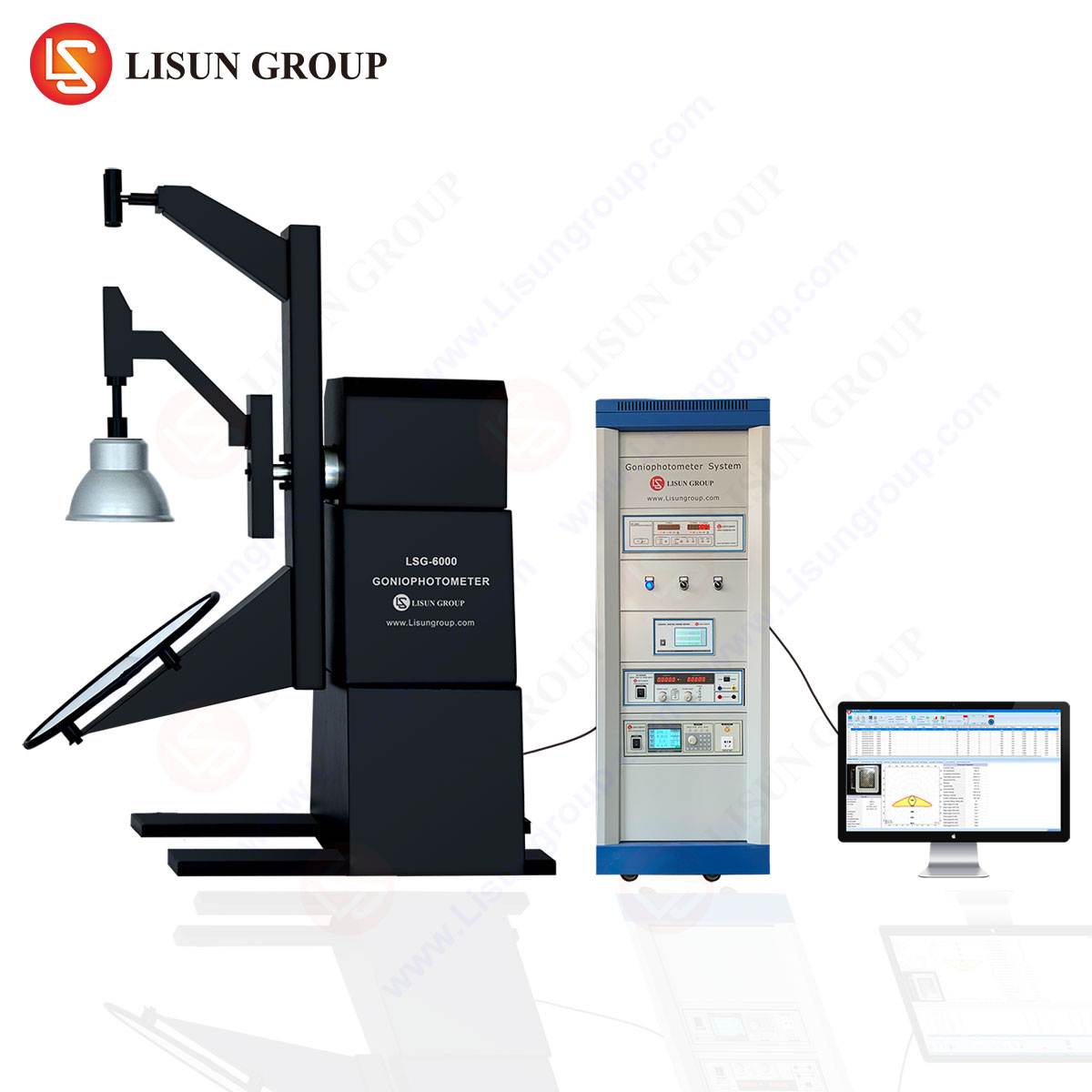





Key Features of Modern Goniophotometers for Accurate Photometric and Radiometric Testing
Introduction
The precise characterization of the spatial distribution of light, radiant flux, and color is a fundamental requirement across numerous scientific and industrial disciplines. The goniophotometer, an instrument designed to measure luminous intensity as a function of angle, serves as the cornerstone for this critical metrology. Modern goniophotometers have evolved from simple mechanical devices into sophisticated, computer-integrated systems capable of delivering unprecedented accuracy, repeatability, and efficiency. This evolution is driven by stringent international standards and the diverse needs of industries ranging from solid-state lighting to biomedical optics. This article delineates the key technological features that define contemporary goniophotometric systems, with a specific examination of the LSG-1890B Goniophotometer Test System as a representative embodiment of these advancements.
Precision Motion Control and Robust Mechanical Architecture
The foundational element of any goniophotometer is its mechanical system. Accuracy in angular positioning directly translates to the fidelity of the spatial intensity distribution map. Modern systems employ high-precision stepper or servo motors with integrated optical encoders, ensuring angular resolution often finer than 0.1°. The mechanical structure must be engineered for exceptional rigidity to minimize deflection under the weight of test specimens, which can range from small LED modules to large luminaires exceeding two meters in length. A dual-axis (C-γ or Type C) configuration is standard, where one axis rotates the luminaire (C: 0-360°) and a second, perpendicular axis positions the photodetector (γ: 0-180° or more). The LSG-1890B, for instance, utilizes a robust, large-radius arm design with a moving detector, capable of handling luminaires up to 1500mm in length and 150kg in weight. Its precision turntable and detector arm are driven by closed-loop servo systems, guaranteeing positional accuracy and repeatability that underpin compliance with standards such as IESNA LM-79 and IEC 60598-1.
Advanced Photometric and Spectroradiometric Detection Systems
The heart of the measurement chain is the detector. While traditional systems relied on filtered silicon photodiodes (photometers) for photopic (V(λ)-corrected) measurements, modern requirements demand spectroradiometric capability. Integrated spectroradiometers enable the simultaneous acquisition of photometric data (luminous flux, intensity) and colorimetric data (chromaticity coordinates, CCT, CRI, TM-30 metrics) across the entire spatial distribution. This is indispensable for industries like LED & OLED Manufacturing and Display Equipment Testing, where angular color uniformity is as critical as intensity. The LSG-1890B can be configured with high-sensitivity CCD array spectroradiometers, allowing for rapid, full-spectrum measurements at each angular step. This capability is essential for applications in Medical Lighting Equipment, where specific spectral power distributions must be verified, or in Stage and Studio Lighting, where color rendering properties at various beam angles are paramount.
Dynamic Range and Stray Light Mitigation
Accurate testing requires the measurement of both the intense central beam and the low-level stray light far from the optical axis of a luminaire. A modern goniophotometer must possess a wide dynamic range, often exceeding 1:1,000,000. This is achieved through a combination of high-quality detectors with low noise floors, programmable electronic shutters, and automatic range-switching amplifiers. Equally critical is the mitigation of internally reflected stray light within the test chamber. Baffling systems, non-reflective matte black coatings (with reflectivity <1%), and careful optical design of the detector path are employed to ensure that only light directly from the test specimen reaches the sensor. This feature is particularly vital for measuring cut-off angles of streetlights in Urban Lighting Design or for characterizing the precise beam patterns of narrow-angle optics in Sensor and Optical Component Production.
Thermal Management and Electrical Stabilization
The photometric output of light sources, especially LEDs, is highly dependent on junction temperature. Modern goniophotometers incorporate integrated thermal management systems. These often include a temperature-controlled mounting platform or chamber that maintains the luminaire at a specified temperature (e.g., 25°C ± 1°C) as per IEC 60598-1 Clause 12.3 requirements. Simultaneously, precision programmable power supplies and electrical parameter measurement units (PMMUs) are integrated to provide stable, metered power (AC/DC) to the device under test. This allows for measurements under standardized thermal and electrical conditions, ensuring data reproducibility and comparability. For the Photovoltaic Industry, similar principles apply when characterizing the angular response of photovoltaic modules or sensors.
Comprehensive Software and Data Analytics Integration
The software platform is the interface through which measurement protocols are executed, data is acquired, and results are analyzed. Modern software automates the entire process: defining measurement grids (C-plane, A-plane, or user-defined), controlling the motion system and detectors, applying necessary corrections (distance, temperature), and generating a wealth of derived data. Outputs include standard IES/LDT files, polar diagrams, 3D isolux plots, and tabular data of all photometric and colorimetric parameters. Advanced systems offer real-time visualization and analytics, such as calculating luminaire efficacy (lm/W), flux fractions (U0, U1, U2), and performing near-field to far-field transformations for Optical Instrument R&D. The software associated with systems like the LSG-1890B is designed to guide users through standardized testing routines while offering the flexibility needed for Scientific Research Laboratories to design custom measurement sequences.
Compliance with International and Regional Standards
A primary function of a modern goniophotometer is to facilitate compliance with a complex landscape of global standards. Key references include:
- IEC/EN 13032-4: Specifies methods for the photometric and colorimetric measurement of LED lamps, modules, and luminaires.
- IESNA LM-79: Approved method for the electrical and photometric testing of solid-state lighting products.
- ANSI C78.377: Defines chromaticity specifications for white LED light sources.
- CIE S 025/E:2015: Test method for LED lamps, luminaires, and modules.
- DIN 5032-7: German standard for photometric measurements using goniophotometers.
- JIS C 8152: Japanese industrial standard for LED lighting fixtures.
A system like the LSG-1890B is engineered to meet the stringent environmental, mechanical, and photometric requirements outlined in these documents, providing the traceability and uncertainty budgets required for certified testing laboratories worldwide.
The LSG-1890B Goniophotometer Test System: A Case Study in Modern Implementation
The LSG-1890B embodies the key features discussed, designed as a large, moving detector Type C goniophotometer for comprehensive testing. Its specifications and applications highlight its role in modern photometric laboratories.
Core Specifications:
- Measurement Geometry: Type C (moving detector), γ-axis: -180° to +180° or 0° to 360°, C-axis: 0° to 360°.
- Angular Resolution: ≤ 0.1°.
- Maximum Luminaire Size: 1500mm (L) x 1500mm (W) x 1500mm (H).
- Maximum Weight Capacity: 150kg.
- Photometric Distance: 5m, 10m, or longer (configurable).
- Detector Options: High-precision photometer head and/or high-resolution CCD spectroradiometer.
- Dynamic Range: > 1:5,000,000.
- Electrical Supply: Integrated AC/DC programmable power source with PMMU.
- Software Compliance: Outputs IES, LDT, EULUMDAT, TM-14, and CIE files.
Testing Principle: The luminaire is mounted on the temperature-controlled C-axis turntable. The detector, positioned at a fixed photometric distance on the moving γ-arm, measures luminous intensity (and spectrum) at each point in a spherical grid defined by the software. The system automatically corrects for the inverse square law and generates the complete photometric body.
Industry Use Cases and Competitive Advantages:
- Lighting Industry & LED Manufacturing: For full spatial flux integration, efficacy reporting, and quality control per LM-79 and IEC 60598. Its high weight capacity allows testing of large, high-bay industrial luminaires.
- Urban Lighting Design: Engineers use its data to simulate roadway lighting layouts (using software like Dialux) ensuring compliance with M-class lighting standards for roads.
- Stage and Studio Lighting: The spectroradiometric option enables precise mapping of color temperature and CRI shifts across the beam profile of Fresnel and profile spotlights.
- Competitive Advantages: The LSG-1890B’s combination of a large payload capacity, configurable long photometric distance (reducing near-field errors), and the option for a fully integrated spectroradiometer provides a versatile platform. Its software automation reduces operator error and measurement time, while its construction ensures long-term mechanical stability, a critical factor for measurement repeatability over years of service.
Conclusion
The modern goniophotometer is a synthesis of precision engineering, advanced optics, and intelligent software. Features such as sub-degree motion control, spectroradiometric detection, sophisticated stray light management, and integrated thermal/electrical stabilization are no longer luxuries but necessities for accurate, standards-compliant testing. As lighting technology continues to advance, with increasing emphasis on smart lighting, human-centric metrics, and spectral engineering, the role of the goniophotometer will only grow in importance. Systems like the LSG-1890B demonstrate how these key features are implemented to serve the rigorous demands of global industries and research institutions, providing the foundational data required for innovation, quality assurance, and regulatory compliance.
FAQ Section
Q1: What is the primary difference between a Type A (moving luminaire) and a Type C (moving detector) goniophotometer, and why is the LSG-1890B a Type C design?
Type A goniophotometers rotate the luminaire around its photometric center, while Type C systems rotate the detector around a stationary luminaire. The Type C design, as used in the LSG-1890B, is generally preferred for testing larger, heavier luminaires because it avoids the complexity and potential safety issues of rotating massive or awkwardly shaped objects. It also simplifies the integration of thermal control and power supply connections to the device under test.
Q2: How does the integrated spectroradiometer option benefit testing beyond basic photometric data?
A spectroradiometer captures the full spectrum (e.g., 380-780nm) at each measurement angle. This allows for the calculation of colorimetric parameters (CCT, Duv, CRI, Rf/Rg per TM-30) across the entire spatial distribution. This is critical for assessing angular color shift, a common issue in LED optics, and is a mandatory check for applications in retail lighting, museum lighting, and any field where color consistency is paramount.
Q3: Why is a temperature-controlled mounting platform necessary for LED testing?
The luminous flux and chromaticity of LED packages are strongly correlated with their junction temperature. To obtain reproducible and comparable data, standards like IEC 60598-1 require testing under specified thermal conditions (typically 25°C ambient or at a defined temperature point). An integrated thermal platform stabilizes the luminaire’s base temperature, ensuring measurements are not influenced by uncontrolled self-heating during the test cycle.
Q4: Can the LSG-1890B be used to test the angular dependence of photovoltaic (PV) cells or optical sensors?
Yes, the fundamental principle of measuring intensity (or responsivity) as a function of angle is directly applicable. By replacing the photometer with a calibrated reference cell or sensor and using a stable, collimated light source, the system can characterize the angular response function (ARF) of PV cells or the directional sensitivity of optical sensors, key data for system performance modeling.