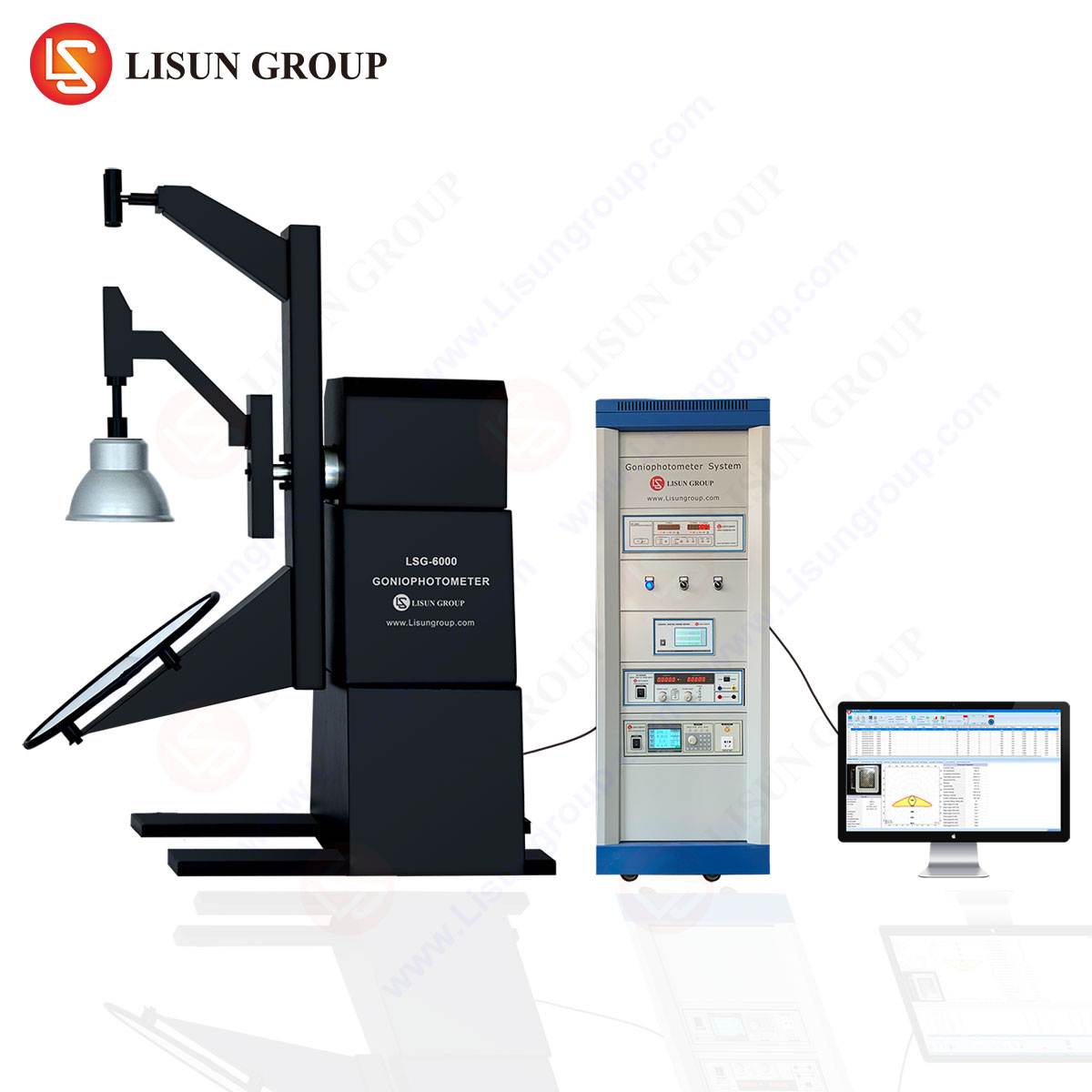



A Comparative Analysis of Integrating Sphere Systems for Radiometric and Photometric Measurement
Abstract
Integrating spheres are fundamental instruments in optical metrology, providing a means to measure total luminous flux, spectral power distribution, and other key photometric parameters of light sources. The selection of an appropriate integrating sphere system, comprising the sphere itself and a calibrated spectroradiometer, is critical for ensuring measurement accuracy, repeatability, and compliance with international standards. This technical analysis examines the design philosophies, performance specifications, and application suitability of integrating sphere systems from two prominent manufacturers: Thorlabs, a leader in general optical components, and LISUN, a specialist in photometric and electrical testing equipment. A particular focus is placed on the LISUN LPCE-2 Integrated Sphere Spectroradiometer System to elucidate its technical approach within a competitive landscape.
Fundamental Principles of Integrating Sphere Operation
The operational principle of an integrating sphere is based on the creation of a spatially uniform radiance field through multiple, diffuse reflections of incident light off a highly reflective and Lambertian interior coating. Light entering the sphere through an input port undergoes numerous reflections, resulting in a uniform distribution of radiance across the sphere’s interior surface. A baffle, strategically positioned between the input port and a detector port, prevents first-reflection radiation from directly reaching the detector, ensuring that only highly diffuse light is measured. This geometry allows for the accurate determination of the total radiant or luminous power of a source, independent of its spatial or angular emission characteristics. The mathematical foundation relies on the sphere’s multiplier, a function of the sphere’s diameter, coating reflectance, and port areas, which relates the measured signal at the detector to the total flux from the source.
Design and Construction Philosophies: A Comparative Overview
Thorlabs’ Modular and Research-Oriented Approach
Thorlabs positions its integrating sphere products within a broader ecosystem of modular optical components. Their spheres are often designed with flexibility in mind, catering to research and development laboratories where experimental setups are frequently reconfigured. The construction typically features aluminum or stainless-steel hemispheres with a molded polymer internal structure, coated with a proprietary diffuse reflective material such as Spectraflect® or Labsphere® Spectralon. The emphasis is on high reflectance across a broad spectral range (e.g., 250-2500 nm), making them suitable for applications beyond the visible spectrum, including UV and NIR research. Thorlabs systems often require the user to select and integrate a separate spectrometer or power meter, providing a high degree of customization but placing the onus of system calibration and validation on the end-user.
LISUN’s Integrated Systems for Standardized Compliance
LISUN adopts a systems-level approach, designing the integrating sphere and spectroradiometer as a pre-calibrated, unified instrument. The LPCE-2 system, for instance, is engineered as a turnkey solution for compliance testing against industry standards. Its construction is optimized for the visible spectrum, with a focus on durability and stability for high-throughput production environments. The interior coating is typically a specialized BaSO4-based diffuse reflectance paint, selected for its high and stable reflectance in the 380-780 nm range. This integrated philosophy minimizes setup complexity and ensures that the entire measurement chain—from the sphere to the spectrometer to the software—is calibrated and validated as a single entity, which is a significant advantage for quality control and certification laboratories.
In-Depth Examination of the LISUN LPCE-2 System
The LISUN LPCE-2 Integrated Sphere Spectroradiometer System is engineered for precise measurement of luminous flux, spectrum, colorimetric parameters, and flicker of various light sources. Its design is intrinsically linked to the requirements of standardized testing protocols.
System Specifications and Components
The core of the LPCE-2 system is a compact yet precise integrating sphere. A common configuration utilizes a 2-meter diameter sphere, though other sizes are available to accommodate different source luminances. The sphere is coupled with a high-resolution CCD array spectroradiometer. Key specifications of the spectroradiometer typically include:
- Wavelength Range: 380-780nm (aligned with human photopic vision).
- Wavelength Accuracy: ±0.3nm.
- Luminous Flux Accuracy: Class I (as per LM-79 and IESNA standards).
- Software Integration: The system is controlled by dedicated software that automates data acquisition, calculates photometric (luminous flux, efficacy), colorimetric (CIE chromaticity coordinates, CCT, CRI, CQS), and electrical (power, power factor, voltage, current) parameters simultaneously.
Testing Principles and Standard Compliance
The LPCE-2 operates on the principle of comparative measurement using an auxiliary lamp, a method prescribed by standards such as CIE 84 and IES LM-79. The process involves calibrating the entire system with a standard lamp of known luminous flux. Once calibrated, the device under test (DUT) is measured, and its total luminous flux is calculated based on the established calibration factor. This method inherently corrects for sphere imperfections and system responsivity. The LPCE-2 system is explicitly designed to comply with a range of international standards, including:
- IES LM-79-19: Approved Method for the Electrical and Photometric Measurement of Solid-State Lighting Products.
- CIE 84: Measurement of Luminous Flux.
- ANSI C78.377: Specifications for the Chromaticity of Solid-State Lighting Products.
- ENERGY STAR: Program Requirements for Lamps.
Application-Specific Performance Across Industries
Lighting Industry and LED Manufacturing
In the high-volume LED manufacturing sector, throughput and repeatability are paramount. The LPCE-2’s integrated and automated nature allows for rapid binning of LEDs based on flux and chromaticity, directly impacting production yield and consistency. Its ability to measure luminous efficacy (lm/W) is critical for evaluating energy efficiency, a key market differentiator. For OLED manufacturing, the system’s capability to measure large-area, low-luminance sources with high color accuracy is essential for quality assurance.
Automotive and Aerospace Lighting Testing
Automotive lighting, encompassing headlamps, taillights, and interior LEDs, must adhere to stringent regulations (e.g., SAE J578 for color, FMVSS 108 for photometry). The LPCE-2 system provides the necessary data on total luminous flux and color coordinates to ensure compliance. In aerospace and aviation, lighting for cockpit displays and cabin illumination must meet rigorous reliability and performance standards. The system’s comprehensive reporting facilitates the documentation required for certification processes.
Display Equipment and Photovoltaic Industry
For display backlight units (BLUs), consistent color and luminance are critical. The LPCE-2 can be used to characterize the spectral output of LED arrays used in BLUs. In the photovoltaic industry, while not for cell testing, the system is employed to measure the spectral distribution of solar simulators, which is a critical factor in determining the accuracy of solar cell efficiency measurements under standard test conditions (IEC 60904-9).
Scientific Research and Urban Lighting Design
In optical instrument R&D, the LPCE-2 provides a reliable method for characterizing prototype light sources. Scientific research laboratories studying human-centric lighting (HCL) utilize its spectral data to calculate metrics like Melanopic Equivalent Daylight Illuminance. For urban lighting design, the system allows designers to validate the photometric and color properties of commercial luminaires before large-scale deployment, ensuring they meet design specifications and municipal lighting codes.
Marine, Stage, and Medical Lighting
Marine and navigation lights must conform to international maritime regulations (COLREGs) regarding color and intensity. The LPCE-2 offers a laboratory-based method for pre-certification testing. In stage and studio lighting, the accurate measurement of color rendering indices (CRI) is vital for ensuring that lights reproduce colors faithfully on camera. For medical lighting equipment, particularly surgical and diagnostic lights, precise color temperature and high CRI are necessary for accurate tissue differentiation, making the LPCE-2 a valuable tool for validation and quality control.
Comparative Advantages in Key Performance Metrics
Measurement Accuracy and Traceability
Both Thorlabs and LISUN systems can achieve high levels of accuracy, but their paths differ. Thorlabs’ modular systems, when paired with a high-end, NIST-traceable spectrometer and a meticulously calibrated sphere, can achieve exceptional accuracy, suitable for primary and secondary photometric labs. The LISUN LPCE-2, as an integrated system, provides out-of-the-box accuracy that is traceable to national standards and is optimized for the specific, standardized tests it is designed to perform. Its turnkey nature reduces potential error sources from component mismatch.
Spectral Range and Application Scope
Thorlabs spheres, with their broad-spectrum coatings, offer superior versatility for research applications involving UV, VIS, and NIR light sources. This is critical for applications like material science, spectroscopy, and laser power measurement. The LISUN LPCE-2 is spectrally optimized for the visible region, which is the domain of most lighting and display applications. This focused optimization often results in a more cost-effective solution for its target markets without sacrificing performance within its specified range.
Software and Automation Capabilities
This is a key differentiator. Thorlabs provides software drivers and basic applications for data acquisition from their spectrometers, but the development of a comprehensive testing and reporting suite often falls to the user. LISUN’s software is a core component of the LPCE-2 system, featuring a user-friendly interface, automated test sequences, pre-configured standard compliance checks, and comprehensive report generation. This significantly reduces operator training time and minimizes human error in high-volume testing environments.
Durability and Suitability for Harsh Environments
LISUN systems are frequently deployed in factory floor QC settings, where robustness and long-term stability are required. The construction and coating are selected for this purpose. Thorlabs spheres, while precise, may be more commonly found in controlled laboratory environments. The choice of coating material (e.g., Spectralon vs. BaSO4 paint) also impacts durability; Spectralon is highly resistant to humidity and contamination but more expensive, while high-quality BaSO4 offers excellent performance for standard lighting tests at a lower cost.
Selection Criteria for Specific Use Cases
The choice between a Thorlabs-based modular system and an integrated LISUN LPCE-2 system is dictated by the primary application.
- Select a Modular Thorlabs System if: The application requires ultra-broadband spectral measurement (UV to NIR), the experimental setup is non-standard and requires frequent reconfiguration, or the user possesses the expertise to integrate and calibrate individual components to a high degree of precision for fundamental research.
- Select an Integrated LISUN LPCE-2 System if: The primary need is for standardized photometric and colorimetric testing (IES LM-79, ENERGY STAR) in a production or quality control environment, operational simplicity and high throughput are critical, and a single, traceable certificate of calibration for the entire system is required for audit purposes.
Frequently Asked Questions (FAQ)
Q1: What is the significance of the “Class I” luminous flux accuracy designation for the LPCE-2 system?
Class I is the highest accuracy grade for luminous flux measurement as defined by international standards such as CIE 84. It signifies that the system, when calibrated with a standard lamp of appropriate grade, has a total measurement uncertainty of less than 3% for incandescent standards and typically within 5% for LED sources, accounting for all systematic and random errors. This level of accuracy is mandatory for compliance testing and high-precision R&D.
Q2: How does the auxiliary lamp method used by the LPCE-2 correct for sphere imperfections?
The comparative (4π geometry) method inherently accounts for sphere throughput, spatial non-uniformity, and the spectral responsivity of the detector system. During calibration with the standard lamp, the system measures the signal for a known flux. Any sphere imperfections (e.g., port losses, coating non-uniformity) are effectively “baked into” this calibration factor. When an unknown DUT is measured, the system uses this pre-determined factor to calculate the DUT’s flux, thereby canceling out the effect of those fixed sphere imperfections.
Q3: Can the LPCE-2 system measure the flicker of a light source?
Yes, the LPCE-2 system, when equipped with the appropriate software module, can measure flicker parameters. By analyzing the high-speed waveform of the light output, it can calculate metrics such as percent flicker and flicker index, which are critical for evaluating the temporal light modulation of LED drivers and its potential impact on human health and perception.
Q4: What is the recommended recalibration interval for an integrating sphere system like the LPCE-2, and what does the process entail?
The typical recalibration interval is 12 months, although this can vary based on usage intensity and required accuracy. The process involves sending the entire system (or using a sent standard lamp) to an accredited calibration laboratory. The lab will recalibrate the system using NIST-traceable standard lamps, verifying and adjusting the system’s calibration factor to ensure ongoing measurement traceability and accuracy. The sphere’s internal coating should also be inspected and cleaned periodically to maintain its reflectance properties.