


The Imperative of Metrological Precision in Industrial Color Quality Control
Abstract
Industrial color quality control has evolved from a subjective visual assessment to a rigorous, data-driven scientific discipline. The consistent and accurate measurement of colorimetric and photometric parameters is critical across diverse sectors, influencing product performance, regulatory compliance, safety, and end-user experience. This technical article examines the foundational principles of spectroradiometric measurement, its application across key industries, and the implementation of advanced instrumentation, with a detailed analysis of the LISUN LMS-6000 series spectroradiometer as a paradigm of modern metrological capability.
Foundations of Spectroradiometric Measurement in Industrial Contexts
The transition from filter-based colorimeters to full-spectrum spectroradiometers represents the cornerstone of modern color quality control. While colorimeters provide tristimulus values (XYZ) through broadband filters approximating the CIE standard observer functions, spectroradiometers capture the complete spectral power distribution (SPD) of a source across the electromagnetic spectrum. This fundamental data enables the calculation of all derived photometric, colorimetric, and radiometric quantities with superior accuracy and traceability to national standards.
Key parameters derived from SPD include:
- Photometric: Luminous flux (lumens), luminous intensity (candelas), illuminance (lux).
- Colorimetric: Chromaticity coordinates (x, y; u’, v’), Correlated Color Temperature (CCT), Color Rendering Index (CRI), and more advanced indices like TM-30 (Rf, Rg).
- Radiometric: Radiant flux (watts), irradiance (W/m²), spectral irradiance.
The integrity of these measurements is governed by adherence to international standards such as CIE S 023/E:2013, IES LM-79, and industry-specific protocols. Instrumental factors including wavelength accuracy, spectral bandwidth, dynamic range, stray light rejection, and cosine correction for irradiance measurements directly determine the validity of the data in industrial quality control workflows.
The LISUN LMS-6000 Series: Architectural Overview and Metrological Specifications
The LISUN LMS-6000 series embodies a modular spectroradiometric platform engineered for laboratory-grade precision in industrial and research environments. The core system integrates a high-resolution spectrometer with a thermally stabilized CCD detector, a precision slit, and a diffraction grating, ensuring long-term wavelength stability. The series comprises specialized variants—including the LMS-6000, LMS-6000F, LMS-6000S, LMS-6000P, LMS-6000UV, and LMS-6000SF—each optimized for distinct spectral ranges and measurement scenarios.
Core Specifications of the LMS-6000 Platform:
- Wavelength Range: Configurable from 200-1100nm, with the LMS-6000UV extending into the deep ultraviolet and the LMS-6000SF covering a standard 380-780nm visible range.
- Wavelength Accuracy: ±0.3nm, critical for precise chromaticity and narrow-band emission source analysis.
- Wavelength Resolution: Full Width at Half Maximum (FWHM) ≤2.5nm, enabling discrimination of fine spectral features prevalent in laser diodes, OLEDs, and phosphor-converted LEDs.
- Dynamic Range: A high signal-to-noise ratio and linear response across 5-6 orders of magnitude facilitate the measurement of both very dim and intensely bright sources without gain switching artifacts.
- Optical Input: Configurable with integrating spheres for luminous flux measurement, cosine correctors for illuminance/irradiance, and fiber optics for remote sensing or small-source analysis.
The testing principle relies on the absolute calibration of the entire optical path against NIST-traceable standard lamps. The instrument’s software then applies this calibration matrix to captured SPDs, computing all required photometric and colorimetric values in compliance with CIE and ISO standards.
Applications in Lighting and Display Technology Manufacturing
In the Lighting Industry and LED & OLED Manufacturing, the LMS-6000 series is deployed for binning, efficacy validation, and spectral consistency assurance. Manufacturers utilize it to measure the precise SPD of LED chips and modules, ensuring batches fall within specified chromaticity quadrangles per ANSI C78.377. For OLED Manufacturing, the instrument’s high resolution and sensitivity are essential for characterizing the broad, often non-uniform emission spectra of organic materials and validating angular color uniformity.
Display Equipment Testing demands exacting colorimetric accuracy. The LMS-6000, when paired with a telescopic lens or fiber optic spot probe, measures the absolute luminance (cd/m²) and chromaticity of individual pixels or full-screen patterns on LCD, OLED, and micro-LED displays. This is vital for validating compliance with standards like DCI-P3, Rec. 2020, and sRGB color gamuts, and for quantifying parameters such as contrast ratio and white point stability.
Validation of Photometric Performance in Safety-Critical and Regulated Industries
The Automotive Lighting Testing sector requires adherence to stringent regulations (ECE, SAE, FMVSS). The LMS-6000 series is used in photometric laboratories to measure the intensity distribution (isocandela plots), total luminous flux, and chromaticity coordinates of headlamps, tail lights, and signal lamps. Its ability to accurately measure deep red and amber colors ensures compliance with legal color boundaries.
In Aerospace and Aviation Lighting, reliability is paramount. The spectroradiometer validates the performance of cockpit displays, warning lights, and exterior navigation/anti-collision lights (e.g., ensuring red/green wingtip lights meet ICAO specifications). The instrument’s robust design and stable calibration are necessary for environments where failure is not an option.
Similarly, Marine and Navigation Lighting depends on precise color and intensity to convey unambiguous signals as per COLREGs. The measurement of lighthouse beacons, buoy lights, and ship navigation lights for range and chromaticity requires the high dynamic range and environmental resilience offered by the LMS-6000 platform.
Advanced Applications in Research, Design, and Specialized Lighting
Scientific Research Laboratories and institutions in Optical Instrument R&D employ the LMS-6000UV and LMS-6000P variants for cutting-edge work. The UV variant is indispensable for studying UV-C disinfection efficacy, photolithography light sources, and material fluorescence. The platform’s programmability allows for automated long-term stability tests and spectral aging studies of novel light sources.
The Photovoltaic Industry utilizes spectroradiometers for measuring the spectral irradiance of solar simulators per IEC 60904-9 standards. The LMS-6000’s calibrated irradiance measurement ensures that solar cells are tested under known, standardized spectral conditions (AM1.5G), directly impacting the accuracy of cell efficiency ratings.
Urban Lighting Design and Stage and Studio Lighting benefit from advanced color quality assessment. Designers use the instrument to quantify the color rendering properties of architectural LED fixtures (using TM-30-18 metrics) and to profile the output of theatrical luminaires for precise color mixing and repeatability in lighting consoles.
In Medical Lighting Equipment, such as surgical lights and phototherapy units, spectral accuracy is a matter of patient safety and treatment efficacy. The LMS-6000 verifies that surgical lights provide high color rendering without shadows (high CRI and R9 values) and that phototherapy lamps for neonatal jaundice or skin conditions emit within the therapeutically effective narrow blue or UV-A bands.
Competitive Advantages of the LISUN LMS-6000 Series in Industrial Deployments
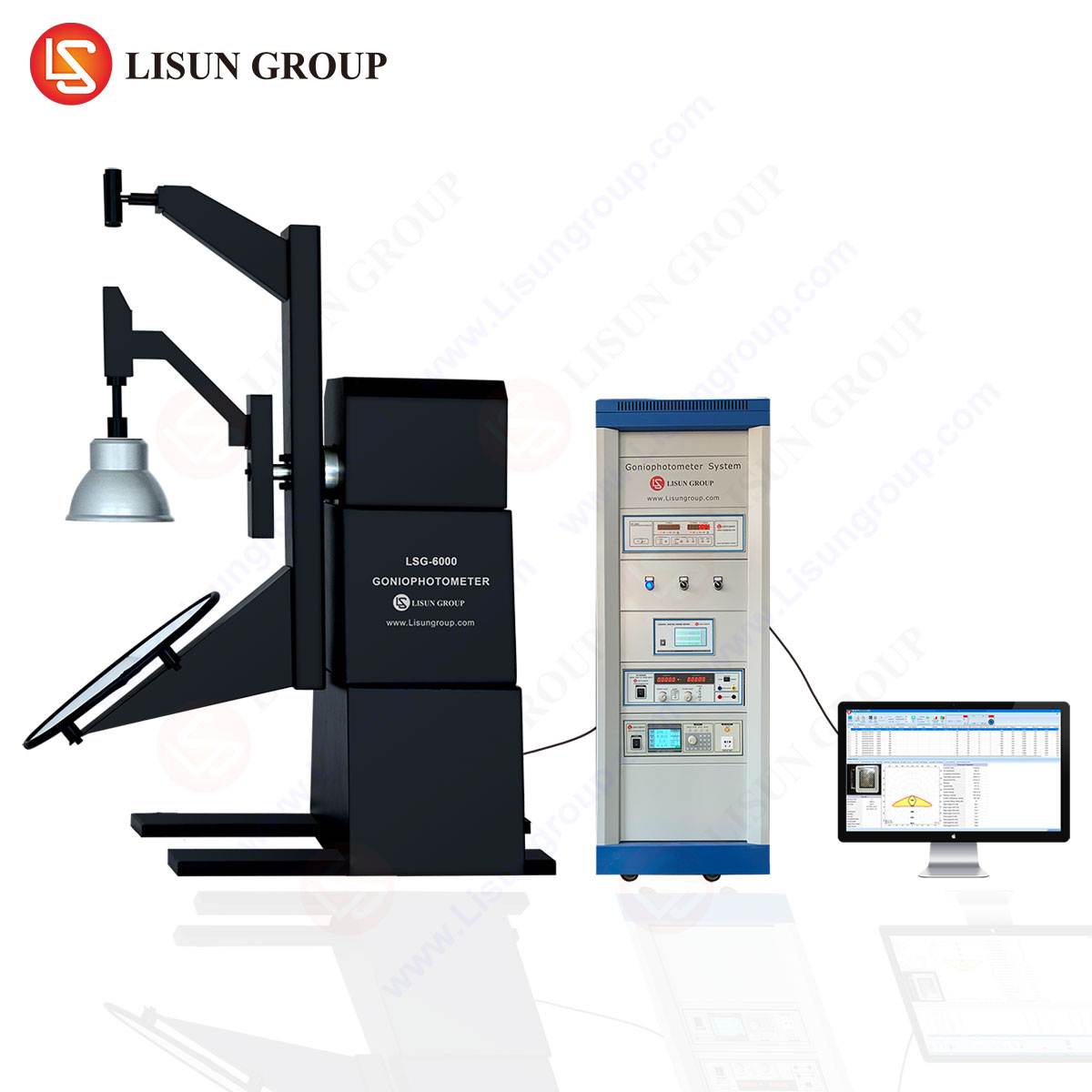
The competitive posture of the LMS-6000 series is defined by several synergistic advantages. Its modularity allows for a single platform to be reconfigured for disparate tasks—from integrating sphere measurements to goniophotometer integration—reducing capital expenditure and training overhead. The exceptional wavelength accuracy and resolution provide a level of diagnostic detail that simpler instruments cannot, enabling root-cause analysis of color shift in production. Furthermore, the instrument’s robust calibration stability minimizes downtime for recalibration, a critical factor in high-throughput industrial settings. The comprehensive software suite, capable of generating reports aligned with specific industry standards, integrates seamlessly into quality management systems, providing auditable traceability from measurement to final product certification.
Conclusion
Industrial color quality control is an interdisciplinary nexus of physics, metrology, and materials science. The accuracy of spectroradiometric data underpins innovation, safety, and quality in a vast array of modern technologies. Instrumentation such as the LISUN LMS-6000 series, with its rigorous specifications, adaptability, and traceable accuracy, provides the essential metrological foundation upon which industries can build reliable, high-performance, and compliant products. As light sources and applications continue to evolve in complexity, the role of precision spectroradiometry will only become more central to industrial manufacturing and research paradigms.
Frequently Asked Questions (FAQ)
Q1: What is the primary distinction between the LMS-6000UV and the standard LMS-6000 model, and which industries require the UV capability?
The LMS-6000UV is optimized with enhanced sensitivity and optical components for accurate measurement in the ultraviolet spectrum (down to 200nm). This is essential for industries working with UV-C germicidal irradiation, UV curing processes, fluorescence analysis, and phototherapy equipment validation, where precise quantification of UV irradiance and spectral power is critical for efficacy and safety.
Q2: How does the instrument maintain measurement accuracy when testing high-brightness sources like automotive headlamps alongside low-light sources like indicator LEDs?
The LMS-6000 series employs a scientific-grade CCD detector with a high linear dynamic range and low noise characteristics. This allows it to accurately measure signals across a vast intensity range without automatic gain switching, which can introduce errors. For extreme contrasts, calibrated neutral density filters can be used in conjunction with the instrument’s native range to maintain accuracy and prevent detector saturation.
Q3: Can the LMS-6000 series be integrated into an automated production line for 100% inspection of LED components?
Yes, the platform is designed for integration. It can be triggered remotely and its data output can be interfaced with programmable logic controllers (PLCs) and manufacturing execution systems (MES). When paired with automated fixturing and a properly designed optical sampling system, it can perform rapid, non-contact spectral measurements for pass/fail binning or data logging on a production line.
Q4: For display testing, how does the instrument handle the measurement of small, individual sub-pixels on high-resolution screens?
For micro-measurements, the LMS-6000 is configured with a microscope lens attachment or a high-quality fiber optic probe with a precision aperture. This creates a very small measurement spot size, allowing the instrument to isolate and measure the SPD of individual sub-pixels (red, green, blue) to validate color gamut and cross-talk, which is crucial for next-generation micro-LED and OLED displays.
Q5: What calibration cycle is recommended for the LMS-6000 series to ensure ongoing compliance with industry standards like IES LM-79?
While the instrument exhibits excellent long-term stability, an annual recalibration against NIST-traceable standards is the typical recommendation for maintaining accreditation in certified laboratories. However, the required frequency may be dictated by specific industry quality protocols, intensity of use, and the criticality of the measurements. Regular performance verification with stable reference sources is advised as a best practice.