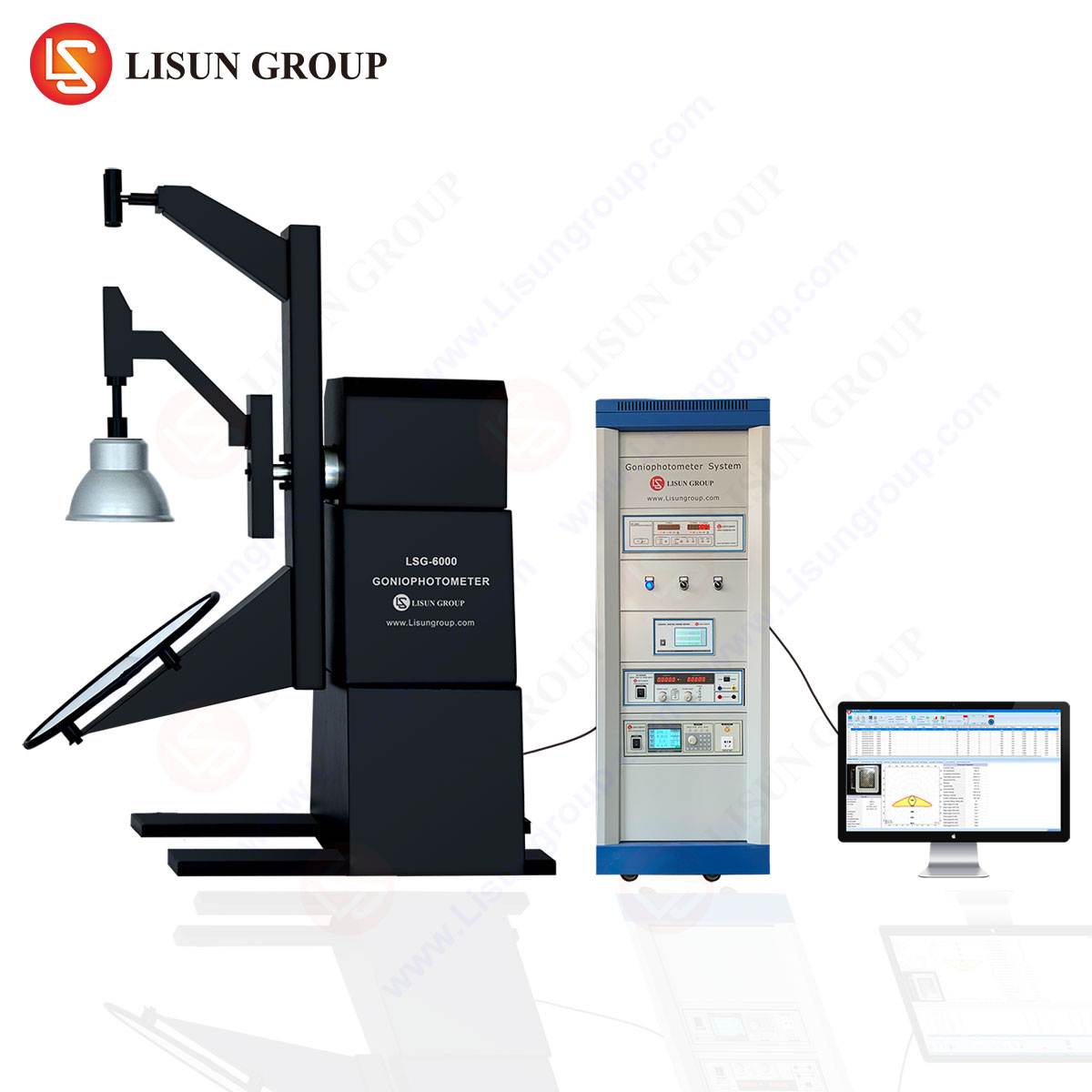



Advanced Photometric Characterization Through Goniophotometric Analysis
The precise measurement of light distribution is a fundamental requirement across a multitude of scientific and industrial disciplines. The performance, efficiency, and quality of any light-emitting device are not defined by its total luminous flux alone but by the spatial distribution of that flux. A goniophotometer is the preeminent instrument designed for this exact purpose, enabling the comprehensive angular characterization of luminous intensity, luminance, and chromaticity. This article examines the critical applications of goniophotometry, with a specific focus on the capabilities and deployment of the LISUN LSG-6000 goniophotometer test system in compliance with international standards.
Fundamental Principles of Goniophotometric Measurement
A goniophotometer functions by moving a precision photometer or spectroradiometer detector in a spherical coordinate system around a fixed light source under test (LUT). This motion traces a virtual sphere, capturing light intensity data at numerous points defined by azimuth (ϕ) and elevation (θ) angles. The two primary mechanical configurations are the Type C, where the detector moves on a rotating arm around a fixed LUT, and the Type B, where the LUT rotates on two axes relative to a fixed detector. The LSG-6000 employs a Type C, γ-axis design, which is particularly advantageous for testing large, heavy, or complex luminaires, as the LUT remains stationary at the center of the instrument, requiring no complex wiring or mounting that could induce measurement error.
The core data output is the luminous intensity distribution (LID), a three-dimensional representation of how light is emitted from a source. This data set is the foundation for deriving all other critical photometric parameters, including total luminous flux (via integration over the sphere), zonal lumen summary, efficacy (lm/W), beam angles, and candela plots. When integrated with a spectroradiometer, the system can further provide full spatial chromaticity data, including Correlated Colour Temperature (CCT), Colour Rendering Index (CRI), and chromaticity coordinates (x,y and u’,v’) across the entire spatial distribution.
Metrological Traceability and Compliance with International Standards
The deployment of goniophotometers like the LSG-6000 is governed by a stringent framework of international standards that ensure measurement accuracy, repeatability, and interoperability of data across global markets. Compliance is not optional but a prerequisite for product certification and market access. The LSG-6000 is engineered to meet or exceed the requirements of several pivotal standards:
- IEC 60598-1: Luminaires – Part 1: General requirements and tests. This standard references the need for accurate photometric testing to verify safety and performance claims.
- IESNA LM-79-19: Approved Method: Electrical and Photometric Measurements of Solid-State Lighting Products. This is a cornerstone standard for SSL testing, prescribing the use of goniophotometers for measuring total flux and spatial distribution.
- IESNA LM-63-19: ANSI/IES Standard File Format for the Electronic Transfer of Photometric Data. The LSG-6000 directly outputs .IES files, the universal format for sharing LID data for lighting design software.
- CIE 70-1987: The Measurement of Absolute Luminous Intensity Distributions. This publication provides the foundational methodology for goniophotometry.
- EN 13032-4: Light and lighting – Measurement and presentation of photometric data of lamps and luminaires – Part 4: LED lamps, modules and luminaires. This European standard details specific requirements for LED product testing.
Adherence to these standards ensures that data generated by the LSG-6000 is recognized by regulatory bodies such as OSHA (USA), the Energy Star program, and the European Commission under the Ecodesign Directive.
Applications in Solid-State Lighting Manufacturing and Qualification
The advent of Light Emitting Diodes (LEDs) and Organic Light Emitting Diodes (OLEDs) has revolutionized the lighting industry but has also introduced new measurement complexities. Unlike isotropic incandescent sources, LEDs are highly directional, and their performance is acutely sensitive to thermal and electrical driving conditions. The LSG-6000 is indispensable in this sector for several key processes.
In LED module and luminaire manufacturing, the system is used for rigorous quality control. Every production batch can be sampled to verify that the spatial light distribution matches the intended design and that there is no unacceptable variance in optical performance. For OLED panels, which are diffuse area sources, the goniophotometer accurately measures their unique Lambertian or near-Lambertian distribution, ensuring uniformity and colour consistency across wide viewing angles—a critical parameter for display and architectural lighting applications.
Furthermore, the system is used for performance benchmarking and competitive analysis. Manufacturers use the precise data from the LSG-6000 to validate efficacy claims, a primary differentiator in the market. By providing accurate lm/W calculations based on the integrated flux from the goniophotometer, manufacturers can certify their products for energy efficiency programs.
Precision Evaluation of Display and Optical Component Performance
The quality of displays, from consumer televisions to aviation cockpit screens, is judged by their viewing angle performance. A goniophotometer is the definitive tool for characterizing the angular dependence of luminance and chromaticity. The LSG-6000, with its high angular resolution, can map these parameters to identify colour shift, contrast degradation, and luminance fall-off at oblique angles. This data is vital for R&D teams working to improve optical films, polarizers, and pixel structures to achieve wider and more consistent viewing angles.
In the adjacent field of sensor and optical component production, the goniophotometer characterizes components like lenses, diffusers, reflectors, and light guides. By measuring the bidirectional transmittance distribution function (BTDF) or bidirectional reflectance distribution function (BRDF), engineers can validate optical simulations and ensure components meet their designed performance criteria for directing or shaping light. This is crucial for applications in automotive lighting, projector systems, and machine vision sensors.
Optimizing Photovoltaic Module and Cell Efficiency
While a goniophotometer traditionally measures light output, its principle can be applied inversely to characterize devices that capture light. In the photovoltaic industry, specialized goniophotometric setups are used to measure the angular response of solar cells and modules. The incident light response (ILR) or the angular dependence of the photocurrent is a critical factor in predicting the real-world energy yield of a PV installation, as sunlight is rarely incident at a perfect perpendicular angle.
By mounting a PV cell as the LUT and using a stable, collimated light source, the LSG-6000’s motion system can precisely alter the angle of incidence while measuring the resulting current output. This data reveals how efficiency drops off with increasing angle of incidence, allowing manufacturers to optimize anti-reflective coatings and module encapsulation materials to capture more energy throughout the day and across different seasons.
Scientific Research in Photobiology and Medical Lighting
The biological and therapeutic effects of light are profoundly influenced by its spectral power distribution and its directionality. Medical lighting equipment, such as surgical lights, phototherapy units for neonatal jaundice or skin conditions, and diagnostic illumination devices, must meet exacting photometric specifications to ensure patient safety and treatment efficacy.
A goniophotometer like the LSG-6000, equipped with a spectroradiometer, is used to certify that a surgical light provides a sufficiently uniform and shadow-free field of illumination with a specific colour temperature that enhances tissue contrast. For phototherapy devices, it verifies that the irradiance and spectral dose are delivered within the strict therapeutic window and that the spatial distribution ensures even exposure to the patient. This metrological rigor is a non-negotiable aspect of obtaining regulatory approval from agencies like the U.S. FDA and the European Medicines Agency.
Architectural and Urban Lighting Design Integration
The aesthetic and functional success of lighting schemes for urban environments, buildings, and public spaces hinges on accurate photometric data. Lighting designers rely on .IES files generated by systems like the LSG-6000 to perform realistic simulations in software such as Dialux, Relux, and AGi32.
By importing the precise LID of a luminaire, designers can predict illuminance levels on streets and facades, model visual comfort by calculating glare indices (UGR), and plan for uniformity before a single fixture is installed. This prevents costly design errors and ensures that projects meet lighting standards such as ANSI/IES RP-8 (Roadway Lighting) and EN 12464-1 (Light and lighting – Workplace lighting). The ability to test and provide verified .IES files is therefore a key service offered by luminaire manufacturers to the design community.
Entertainment Industry Lighting Validation
The demands of stage and studio lighting are unique, requiring extreme reliability, precise beam control, and dynamic colour mixing. Moving heads, profile spots, Fresnel lanterns, and LED video walls must all perform to their published specifications. Goniophotometry is used to measure parameters critical to this industry, such as beam angle, field angle, cut-off sharpness, and the colour mixing performance at different angles.
A manufacturer of a moving head light would use the LSG-6000 to characterize its output across its entire zoom range and for various colour filter combinations. This data informs the programming of digital light boards and ensures that the lighting designer’s creative intent is faithfully reproduced during a performance. The high dynamic range and ability to measure very high-intensity point sources make a system like the LSG-6000 particularly suited for this demanding application.
Technical Specifications of the LSG-6000 Goniophotometer System
The LISUN LSG-6000 is a large, Type C (moving detector) goniophotometer designed for the most demanding testing applications. Its key specifications include:
- Measurement Geometry: Type C, γ-axis (detector rotates in 2 axes around a fixed luminaire).
- Measurement Distance: 5m, 10m, 15m, 20m, 30m (customizable).
- Angular Range: γ-axis: 0° to 360° (continuous rotation); β-axis: -90° to 90° or -180° to 180°.
- Angular Resolution: ≤ 0.1°.
- Positioning Accuracy: ≤ 0.2°.
- Maximum Luminaire Weight: 300kg (can be customized for higher capacity).
- Maximum Luminaire Dimensions: 2000mm x 2000mm x 2000mm (can be customized).
- Detector Options: High-precision photopic photometer (V(λ) matched) and high-resolution spectroradiometer.
- Compliance: Fully complies with LM-79-19, LM-80-19, IESNA LM-63-19, CIE 70-1987, EN 13032-4, and other international standards.
Competitive Advantages:
- Stable Foundation: Built on a massive, vibration-dampening mechanical structure to ensure measurement stability and repeatability.
- Flexible Configuration: Customizable mounting fixtures and measurement distances accommodate an enormous range of luminaire sizes and types, from small LED bulbs to large highway lighting poles.
- High-Accuracy Motion Control: Utilizes precision servo motors and encoders to achieve exceptional angular positioning accuracy and resolution.
- Integrated Software: The proprietary software provides complete control over measurement parameters, automated testing sequences, and immediate data analysis and report generation in standard formats (.IES, .LDT, .XML).
Frequently Asked Questions (FAQ)
Q1: What is the primary advantage of a Type C (moving detector) goniophotometer like the LSG-6000 over a Type B (moving luminaire) design?
The primary advantage is the ability to test heavy, large, or complex luminaires that would be difficult or impossible to rotate precisely. Since the luminaire remains stationary, there are no issues with twisting power cables or changing thermal characteristics due to movement, leading to more stable and accurate measurements for such devices.
Q2: Can the LSG-6000 measure the chromaticity spatial distribution of a light source?
Yes, when equipped with the optional high-resolution spectroradiometer detector, the LSG-6000 can perform spatial chromaticity measurements. It can generate full 3D maps of Correlated Colour Temperature (CCT), Colour Rendering Index (CRI), and chromaticity coordinates (x,y; u’v’) across the entire angular distribution of the light source.
Q3: How does goniophotometric data integrate with architectural lighting design software?
The system software exports the measured luminous intensity distribution data in the standard IES (.IES) or EULUMDAT (.LDT) file formats. These files are the industry-standard formats that can be directly imported into all major lighting design and simulation software (e.g., Dialux, Relux, AGi32) to perform accurate calculations of illuminance, luminance, and uniformity for lighting layouts.
Q4: What are the environmental control requirements for the laboratory housing an LSG-6000?
For maximum accuracy, the testing environment should be a darkroom with black, non-reflective walls. Temperature should be stabilized, typically at 25°C ± 1°C, as LED output is sensitive to temperature. The luminaire should be powered by a stable DC power supply to avoid flicker and ensure consistent output during the measurement cycle, which can last several hours for a high-resolution scan.
Q5: Is the system capable of performing automated testing sequences for quality control?
Absolutely. The LSG-6000 is controlled by sophisticated software that allows engineers to define custom test plans. This includes setting the angular resolution, defining specific scan patterns, and specifying all photometric and colorimetric parameters to be recorded. The system can then run these sequences unattended, automatically generating pass/fail reports based on predefined tolerance limits, making it ideal for high-volume production QC.