





Advanced Spectroradiometric Analysis: The Critical Role of FTIR-Integrated Integrating Sphere Systems in Modern Photometry and Radiometry
Introduction to Spectrally-Resolved Radiometric Measurement
The accurate quantification of light, encompassing its total radiant power, spatial distribution, and spectral composition, is a fundamental requirement across a diverse array of scientific and industrial disciplines. Traditional photometric measurements, which weight radiation according to the human photopic or scotopic response, provide essential but limited data. For applications where the spectral power distribution (SPD) is critical—such as evaluating the efficiency of light sources, assessing material reflectance or transmittance, or ensuring compliance with stringent spectral emission standards—Fourier Transform Infrared (FTIR) spectroscopy coupled with an integrating sphere represents the pinnacle of measurement technology. This synergistic combination enables highly accurate, spectrally-resolved measurements over a broad wavelength range, from the ultraviolet (UV) through the visible (VIS) and into the near-infrared (NIR) and infrared (IR) regions. This technical article delineates the principles, applications, and implementation of FTIR-integrating sphere systems, with a detailed examination of a representative instrument: the LISUN LPCE-3 High Precision Spectroradiometer Integrating Sphere System.
Fundamental Principles of Integrating Sphere Operation and FTIR Synergy
An integrating sphere is an optical component consisting of a hollow spherical cavity whose interior is coated with a highly diffuse, highly reflective material, typically Spectralon® or barium sulfate-based paint. Its primary function is to create a spatially uniform radiance field by means of multiple diffuse reflections. When a light source is placed inside the sphere (for total luminous flux measurement) or light is directed onto its interior wall (for reflectance/transmittance measurements), the detector port receives light that has been homogenized, effectively averaging over the spatial and angular characteristics of the input. This eliminates errors associated with the source’s beam profile and the detector’s angular sensitivity.
The integration with an FTIR spectrometer elevates this capability. Unlike dispersive spectrometers that use gratings and slits, an FTIR spectrometer employs an interferometer to modulate the incoming light. The resulting interferogram is Fourier-transformed to yield a high-resolution spectrum. The core advantages of FTIR technology include the Fellgett (multiplex) advantage, where all wavelengths are measured simultaneously, improving signal-to-noise ratio; the Jacquinot (throughput) advantage, offering higher energy throughput due to the absence of narrow slits; and superior wavelength accuracy, calibrated using a built-in helium-neon laser. When the input to the FTIR spectrometer is the homogenized output from an integrating sphere, the system achieves absolute spectroradiometry—measuring the complete SPD of the source under test with exceptional accuracy and dynamic range.
Architectural Overview of the LISUN LPCE-3 Integrated Measurement System
The LISUN LPCE-3 system exemplifies a fully integrated solution designed for precision photometric, colorimetric, and spectral analysis. The system architecture is built around a high-stability, coated integrating sphere paired with a high-precision CCD array spectroradiometer, which utilizes FTIR-derived principles of calibration and signal processing for superior performance.
- Integrating Sphere Module: The sphere is constructed with a diameter optimized for the measurement of LEDs, luminaires, and other small to medium-sized light sources. The interior is coated with a stable, non-selective diffuse reflective material (e.g., a proprietary blend mimicking Spectralon) to ensure a near-perfect Lambertian surface and minimal spectral distortion across the measurement range of 300-1100 nm.
- Spectroradiometer Core: The heart of the system is a fast-scanning CCD spectrometer. While distinct from a traditional FTIR in physical operation, its calibration and performance metrics are benchmarked against FTIR-grade standards. It offers a wavelength accuracy of ±0.3 nm and a programmable optical resolution. The system is calibrated for absolute irradiance using a NIST-traceable standard lamp, enabling direct measurement of spectral radiance and irradiance from the sphere’s output port.
- System Specifications and Performance Metrics:
- Wavelength Range: 300-1100 nm (extendable based on configuration)
- Wavelength Accuracy: ≤ ±0.3 nm
- Wavelength Resolution: ≤ 2.0 nm (FWHM)
- Luminous Flux Measurement Range: 0.001 lm to 200,000 lm
- Photometric Parameters: Luminous Flux (lm), Luminous Efficacy (lm/W), CCT (K), CRI (Ra), Chromaticity Coordinates (x,y, u’v’), Peak Wavelength, Dominant Wavelength, Spectral Half Width, etc.
- Compliance Standards: The system is designed to meet the testing requirements of CIE 127, CIE 84, CIE 13.3, IES LM-79, and ANSI C78.377.
Industry-Specific Applications and Use Cases
Precision Evaluation in LED and OLED Manufacturing
In semiconductor lighting, spectral consistency is paramount. The LPCE-3 system provides binning-critical data beyond simple chromaticity. It measures the SPD with sufficient resolution to calculate metrics like the Color Fidelity Index (IES TM-30-18 Rf), gamut index (Rg), and spectral mismatch for photobiological safety (IEC 62471). For OLED panels, the sphere can measure the angular color uniformity by integrating with a goniometer, and the spectral data is used to verify the consistency of emissive layers across the substrate.
Automotive Lighting Compliance and Safety Testing
Automotive lighting must adhere to rigorous regional standards (SAE, ECE, GB) that specify not only intensity but also color coordinates of signal lights. The LPCE-3’s high wavelength accuracy ensures precise measurement of the chromaticity of red stop lamps, amber turn signals, and white headlamps. Furthermore, the system can assess the spectral irradiance of infrared LEDs used in night vision systems or LiDAR, and the SPD of interior ambient lighting for driver comfort and safety.
Aerospace, Aviation, and Marine Navigation Lighting Certification
In these safety-critical fields, lighting serves as a primary communication tool. Navigation lights on aircraft (FAA standards) and ships (COLREGs) have strict spectral and photometric requirements. The integrating sphere system provides the absolute spectral radiant flux needed for certification, ensuring that a red port light, for instance, emits within the mandated narrow band of the chromaticity diagram to avoid confusion with other signals under all atmospheric conditions.
Advanced Display and Photovoltaic Device Characterization
For display equipment (LCD, LED-backlit, micro-LED), the sphere measures the SPD of backlight units (BLUs) to calculate color gamut coverage (e.g., DCI-P3, Rec. 2020). In the photovoltaic industry, the system is used in two key ways: first, to measure the SPD of solar simulators to ensure they meet Class A, B, or C spectral match requirements per IEC 60904-9; and second, to characterize the spectral reflectance of anti-reflective coatings and the spectral response of PV cells themselves when configured for reflectance/transmittance measurements.
Scientific Research and Optical Instrument R&D
In research laboratories, the system serves as a primary tool for calibrating light sources used in photochemical studies, plant growth experiments (measuring Photosynthetically Active Radiation – PAR), and vision research. For instrument R&D, it provides the reference source for calibrating cameras, sensors, and other optical devices, offering a known, uniform spectral radiance source traceable to national standards.
Urban, Architectural, and Specialized Lighting Design
Urban lighting designers utilize spectral data to evaluate the Color Rendering Index (CRI) and spectral power distribution of streetlights, balancing energy efficiency with visual comfort and minimizing light pollution. The LPCE-3 can help select sources that minimize blue-light emission at night. In stage, studio, and medical lighting, the system validates the SPD of lights to ensure they meet the required color rendering for television broadcast (e.g., CRI >90) or provide the specific spectral output needed for surgical visualization or dermatological treatments.
Competitive Advantages of an Integrated FTIR-Based Sphere System
The principal advantage of a system like the LPCE-3 lies in its integrated, traceable accuracy. By combining a spectrally neutral sphere with a high-precision spectrometer in a single, calibrated instrument, it eliminates the systematic errors that can accumulate when using separate components. The software provides direct calculation of over 30 photometric and colorimetric parameters from a single spectral scan, ensuring consistency and saving time. The system’s design for compliance with international testing standards (LM-79, CIE, etc.) makes it a turnkey solution for quality assurance and R&D laboratories, reducing the need for complex in-house system integration and validation. Furthermore, the extended wavelength range (300-1100 nm) future-proofs the instrument for emerging technologies such as UV-C disinfection lighting, IR-based sensing, and beyond.
Conclusion
The integration of FTIR-calibrated spectroradiometry with the spatial averaging capability of an integrating sphere constitutes an indispensable methodology for advanced optical measurement. Systems like the LISUN LPCE-3 encapsulate this technology into a robust, standards-compliant platform. Their application spans the entire lifecycle of light-based technologies—from fundamental material research and component manufacturing to final product certification and field performance monitoring. As the demand for spectral precision grows across lighting, display, energy, and scientific sectors, the role of such integrated spectroradiometric systems as the primary arbiter of optical quality and compliance will only become more pronounced.
Frequently Asked Questions (FAQ)
Q1: What is the critical difference between using an integrating sphere for total flux measurement versus a goniophotometer?
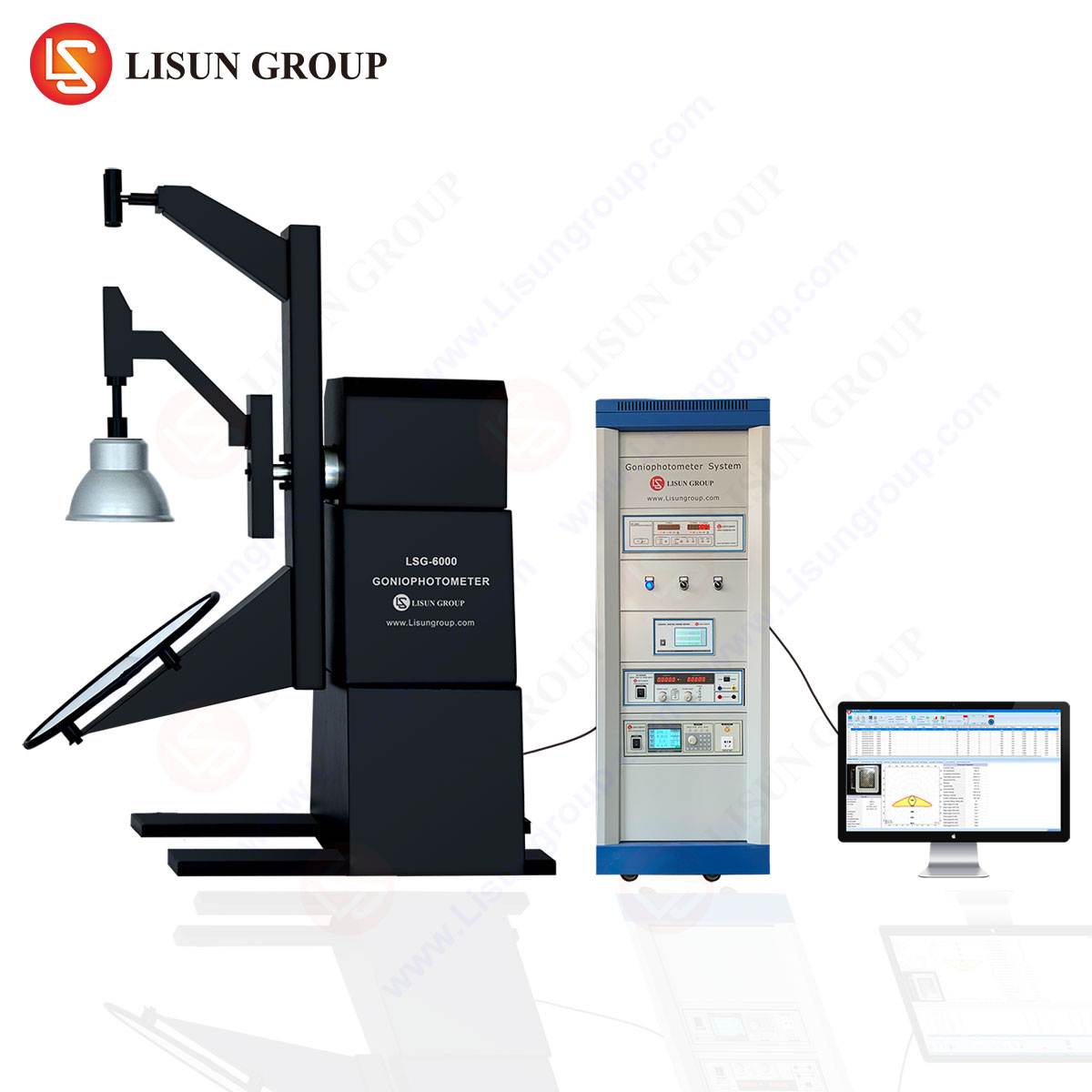
A goniophotometer measures luminous intensity distribution by rotating the source or detector, from which total flux is mathematically integrated. It is excellent for analyzing spatial distribution but can be time-consuming. An integrating sphere measures total luminous flux directly and rapidly by spatially integrating the light within the sphere. For spectral flux measurements, the sphere is generally faster and more practical, though the sphere requires careful correction for self-absorption effects using an auxiliary lamp.
Q2: How often should the LPCE-3 system be recalibrated, and what does calibration entail?
Recalibration frequency depends on usage intensity and required measurement uncertainty. For most quality control environments, an annual recalibration is recommended. The calibration process involves using NIST-traceable standard lamps to recalibrate the spectroradiometer’s absolute irradiance response and verifying the wavelength accuracy using known spectral line sources. The sphere’s spatial uniformity may also be checked.
Q3: Can the LPCE-3 system measure the spectral characteristics of pulsed light sources or sources with rapidly changing output?
Standard configurations are optimized for continuous-wave (CW) sources. Measuring pulsed sources (e.g., camera flashes, strobes) requires specific synchronization capabilities and a spectrometer with a sufficiently fast integration time or triggered acquisition mode. This is a specialized configuration that should be specified at the time of order.
Q4: What is the “self-absorption” effect in an integrating sphere, and how is it corrected?
Self-absorption occurs when the test source itself absorbs a portion of the diffusely reflected light within the sphere, altering the measured signal compared to a reference source with different physical dimensions or reflectance. Correction is performed using an auxiliary lamp of known stability. A measurement sequence comparing sphere response with and without the test source powered, and with the auxiliary lamp, allows for a mathematical correction factor to be applied.
Q5: Is the system suitable for measuring laser diodes?
Caution must be exercised. While the integrating sphere is ideal for homogenizing the highly directional and often non-uniform beam of a laser diode, the high power density of a coherent source can cause localized heating of the sphere wall or even damage the coating. Additionally, the coherence can lead to speckle patterns that may not be fully averaged out. For laser diode measurement, a sphere with a specialized diffuser or attenuator at the entrance port is required, and power levels must be carefully managed.