


Advanced Spectroradiometric Measurement Systems for Photometric and Colorimetric Characterization in Modern Industries
Introduction to Integrated Sphere-Based Spectroradiometry
The precise quantification of light—encompassing its total radiant flux, spectral power distribution, spatial intensity, and chromaticity coordinates—is a cornerstone of research, development, and quality assurance across a diverse array of technological fields. As light-emitting technologies evolve from traditional incandescent sources to sophisticated solid-state lighting (SSL), including Light Emitting Diodes (LEDs) and Organic LEDs (OLEDs), and into specialized applications from aerospace to biomedical devices, the demand for accurate, reliable, and comprehensive measurement solutions has intensified. Traditional photometers, which rely on filtered detectors approximating the human photopic response, are insufficient for characterizing the nuanced spectral properties of modern sources. This necessitates the use of spectroradiometry, the science of measuring the absolute spectral power distribution of optical radiation. When combined with an integrating sphere, a device designed to create a spatially uniform radiance field through multiple diffuse reflections, spectroradiometry enables the accurate measurement of total luminous flux, the fundamental metric for a light source’s output. This article examines the technical principles, implementation, and critical applications of such integrated systems, with a detailed focus on the LISUN LPCE-2 Integrating Sphere Spectroradiometer System as a paradigm for contemporary testing infrastructure.
Architectural Principles of the Integrating Sphere and Spectroradiometer Synergy
The efficacy of an integrated sphere-spectroradiometer system hinges on the harmonious operation of two core components: the integrating sphere and the array spectroradiometer. The integrating sphere, typically constructed from a material with high diffuse reflectance (e.g., barium sulfate or Spectralon), functions as an optical averaging chamber. Light from the source under test (SUT) is introduced into the sphere through a port. Through a series of isotropic diffuse reflections from the sphere’s inner coating, the direct spatial characteristics of the source are eradicated, producing a uniform radiance at the sphere’s wall. A baffle, strategically positioned between the SUT and the detector port, prevents first-reflection light from reaching the detector, ensuring measurement integrity. This spatial integration allows for the measurement of total luminous flux (in lumens) by a detector placed at a second port, which samples a known fraction of the sphere’s total internally reflected flux.
The spectroradiometer elevates this capability beyond total flux. It decomposes the integrated light into its constituent wavelengths. Modern systems like the LPCE-2 employ a CCD array-based spectrometer. Light from the sphere is coupled via a fiber optic cable to the spectrometer’s entrance slit. A diffraction grating then disperses the light spatially across a linear CCD array. Each pixel corresponds to a specific wavelength interval, and the signal intensity at each pixel is proportional to the radiant power in that spectral band. This yields a complete spectral power distribution (SPD) curve, typically from 380nm to 780nm for visible light applications, or wider ranges for specific industries. The SPD is the foundational data set from which all other photometric and colorimetric quantities are derived computationally, including chromaticity coordinates (CIE x, y; u’, v’), correlated color temperature (CCT), color rendering index (CRI), and the newer TM-30 metrics (Rf, Rg).
Technical Specifications and Calibration Methodology of the LPCE-2 System
The LISUN LPCE-2 system exemplifies a turnkey solution designed for laboratory-grade accuracy. Its specifications are engineered to meet international standards such as CIE 84, CIE 13.3, IES LM-79, and ANSI/IESNA standards. The system typically comprises a 1.0-meter or 2.0-meter diameter integrating sphere (size selected based on source luminance and required accuracy), a high-sensitivity CCD spectroradiometer, a precision constant current/voltage power supply for the SUT, a reference standard lamp for absolute calibration, and dedicated software for control, data acquisition, and analysis.
Key specifications of the LPCE-2 spectroradiometer include a wavelength range of 380-780nm, a wavelength accuracy of ±0.3nm, and a wavelength resolution (FWHM) of approximately 2.5nm. The dynamic range and linearity of the CCD detector are critical for measuring sources with varying intensities and spectral peaks. The integrating sphere’s coating exhibits a reflectance of >95% within the visible spectrum, minimizing absorption losses and ensuring high measurement efficiency. The system’s calibration is a two-stage process. First, a spectral radiant flux calibration is performed using a NIST-traceable standard lamp of known SPD and total luminous flux. This establishes the relationship between the spectrometer’s digital counts and absolute spectral irradiance at the detector port. Second, the system’s spatial response is validated to account for any minor non-uniformities, ensuring that the measurement is independent of the SUT’s spatial distribution—a principle known as the integrating sphere’s spatial integration property.
Application in LED and OLED Manufacturing and Quality Assurance
In the LED and OLED manufacturing sector, the LPCE-2 system is indispensable for binning, performance validation, and lifetime testing. LEDs from a single wafer can exhibit variations in luminous flux, dominant wavelength, and forward voltage. High-speed spectral measurement allows for precise binning into tight chromaticity and flux categories, which is essential for producing consistent lighting products, especially in multi-chip arrays or display backlights. For OLED panels, which are area sources, the integrating sphere’s ability to capture total flux is vital for measuring efficacy (lm/W). Furthermore, the system calculates CRI, CCT, and peak wavelength with the accuracy required for datasheet publication and compliance with Energy Star or DLC standards. Accelerated life testing protocols (LM-80, TM-21) rely on periodic spectroradiometric measurements to track chromaticity shift and lumen depreciation over time, key predictors of product lifetime (L70, L90).
Automotive and Aerospace Lighting Compliance and Performance Validation
Automotive lighting, encompassing headlamps, daytime running lights (DRLs), signal lights, and interior displays, is subject to stringent international regulations (ECE, SAE, FMVSS). These regulations specify not only intensity distributions but also chromaticity boundaries for various functions. A white headlamp, for instance, must fall within a defined chromaticity box. The LPCE-2 system provides the precise colorimetric data needed for certification. In aerospace, similar requirements govern cockpit displays, panel lighting, and external navigation lights. The system’s ability to measure under different drive currents and environmental conditions (when placed in a thermal chamber) is crucial for validating performance across the operational envelope. The spectral data also aids in assessing potential glare and compatibility with night-vision imaging systems.
Display Equipment and Medical Lighting: Precision Color Fidelity Assessment
For display manufacturers (LCD, OLED, microLED), color accuracy and gamut are paramount. The integrating sphere method is used to measure the display’s self-emitted light or the output of backlight units (BLUs). The derived color coordinates ensure consistency across panels and adherence to standards like sRGB, DCI-P3, or Rec. 2020. In medical lighting, particularly surgical luminaires and examination lights, color rendering is a critical safety and diagnostic factor. The ability to distinguish tissue coloration accurately is vital. The LPCE-2 system’s calculation of extended CRI values (R1-R15) and the more perceptually relevant TM-30-18 metrics (Fidelity Index Rf and Gamut Index Rg) provides a comprehensive assessment of a light source’s color quality, far beyond the limitations of the general CRI (Ra).
Photovoltaic Industry and Optical Instrument R&D
While primarily for visible light, spectroradiometer systems can be configured with broader spectral range detectors (e.g., 300-1100nm) for applications in the photovoltaic (PV) industry. Here, they are used to characterize the spectral responsivity of solar cells and the spectral irradiance of solar simulators. Accurate knowledge of a simulator’s spectrum is essential for reliable PV cell efficiency testing under standard test conditions (STC). In optical instrument R&D, such as for cameras, sensors, and lenses, the integrating sphere serves as a uniform radiance source for calibrating the radiometric and colorimetric response of the device under development. The known, spectrally resolved output of the sphere-system combination is used to create calibration curves that correct for sensor non-uniformity and spectral sensitivity.
Urban, Marine, and Entertainment Lighting Design and Compliance
Urban lighting design requires balancing efficacy, visual comfort, and environmental impact. Spectroradiometric measurement of street luminaires allows designers to verify CCT, glare metrics, and spectral content, the latter being important for studies on light pollution’s effect on astronomy and ecosystems. For marine and navigation lighting, compliance with International Maritime Organization (IMO) and Coast Guard regulations regarding luminous intensity and color is mandatory for safety. The LPCE-2 system provides the certification-grade data required. In stage and studio lighting, the creative use of color demands predictable and repeatable output from luminaires. Gelatin filters are being replaced by LED engines with digitally controllable spectra. Profiling these lights with a spectroradiometer allows for precise color matching and seamless integration in digital lighting consoles, ensuring that the recorded or broadcasted image matches the director’s intent.
Competitive Advantages of an Integrated System Approach
The primary advantage of a pre-integrated system like the LPCE-2 is measurement integrity and repeatability. By designing the sphere, spectrometer, power supply, and software as a cohesive unit, variables such as port fraction, baffle geometry, detector field of view, and calibration procedures are optimized and controlled. This reduces systematic error and improves inter-laboratory reproducibility. The software automation streamlines testing protocols, enabling rapid sequential measurements, data logging, and direct report generation against chosen standards. Furthermore, such systems are often designed for upgradeability, allowing for sphere size changes, spectrometer range extensions, or the addition of goniophotometric arms for spatial spectral measurements, protecting the capital investment as testing needs evolve.
Conclusion
The characterization of light sources has transitioned from a simple measurement of brightness to a multifaceted analysis of spectral composition, color quality, and temporal stability. The integrating sphere spectroradiometer system, as embodied by instruments like the LISUN LPCE-2, represents the necessary technological convergence to address these demands across industries. By providing traceable, accurate, and comprehensive spectral data, these systems underpin innovation in lighting technology, ensure regulatory compliance, enhance product quality, and enable scientific discovery. As light sources continue to advance in complexity and application specificity, the role of sophisticated spectroradiometric testing will only become more central to technological progress.
FAQ Section
Q1: What is the critical difference between using an integrating sphere system versus a goniophotometer for total luminous flux measurement?
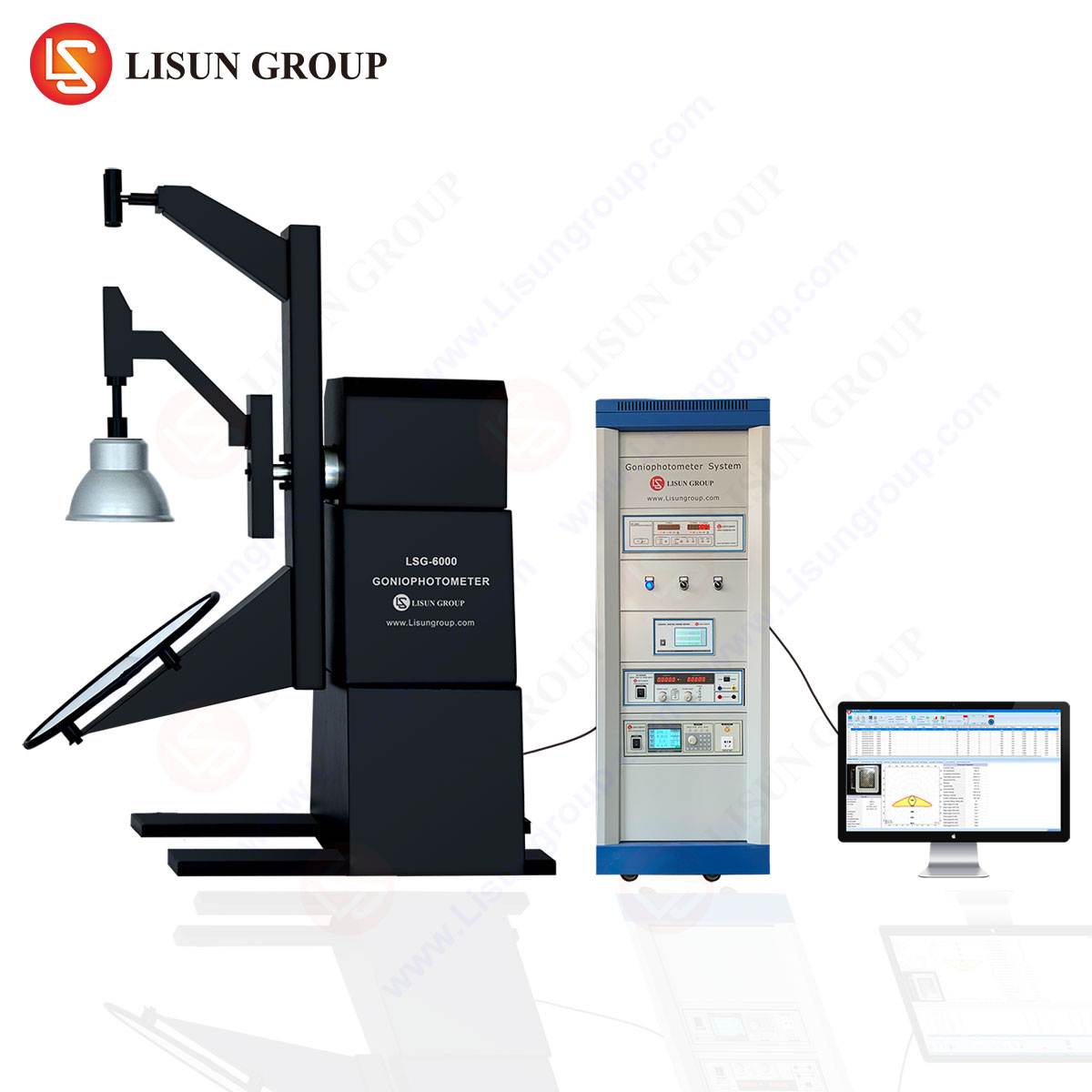
A1: Both methods can measure total luminous flux, but they operate on different principles. An integrating sphere captures and spatially integrates all light from the source in a single measurement, deriving flux from a sample of the sphere’s internal radiance. A goniophotometer measures the luminous intensity distribution of the source at numerous angles in a spherical coordinate system and computationally integrates the data to calculate total flux. Spheres are generally faster for total flux and spectral data, while goniophotometers provide detailed spatial intensity distribution (photometric patterns) but are slower and may require separate equipment for full spectral data at each angle.
Q2: How does the size of the integrating sphere impact measurement accuracy, particularly for directional light sources like LED spotlights?
A2: Sphere size is crucial for minimizing measurement errors, primarily those related to spatial non-uniformity and self-absorption. For highly directional sources, a larger sphere diameter increases the average path length of light rays before their first reflection onto the sphere wall, improving spatial integration. It also reduces the relative size of the ports and the SUT itself, minimizing errors caused by the source and its holder blocking and absorbing a significant fraction of the internally reflected flux. Standards like LM-79 provide guidelines on appropriate sphere size relative to the physical dimensions and luminous intensity distribution of the source under test.
Q3: Why is a standard lamp calibration required, and how often should it be performed?
A3: The standard lamp, with its NIST-traceable calibrated spectral power distribution and total luminous flux, provides the absolute radiometric and photometric scale for the entire system. It corrects for the sphere’s throughput efficiency, the spectrometer’s wavelength-dependent sensitivity, and the fiber optic coupling losses. Recalibration frequency depends on usage intensity, environmental stability of the lab, and required measurement uncertainty. A typical recommendation for critical quality assurance work is an annual recalibration of the standard lamp and a system verification using that lamp at least monthly, or whenever a change in system configuration is suspected.
Q4: Can the LPCE-2 system measure the flicker percentage or temporal light modulation of a light source?
A4: While the primary function of a CCD array spectroradiometer like that in the LPCE-2 is to measure steady-state spectral power distribution, it is not inherently designed for high-speed temporal measurement. Flicker characterization requires a photodetector with a very fast response time (microsecond range) and a high sampling rate data acquisition system. Some advanced integrated systems may offer an auxiliary high-speed photometric detector channel specifically for measuring flicker (percent flicker, flicker index) and stroboscopic effects simultaneously with spectral data, but this is a distinct measurement modality from the core spectroradiometric function.
Q5: In testing displays, is it better to measure the display as a whole or its backlight unit separately?
A5: The appropriate method depends on the display technology and the desired metrics. For emissive displays (OLED, microLED) or when evaluating the final, assembled product’s color performance, the entire display is measured as a self-luminous source. For transmissive LCD displays, it can be informative to measure the backlight unit (BLU) separately in an integrating sphere to characterize its native spectrum, uniformity, and efficacy before color filtration by the liquid crystal layer and color filters. However, the final colorimetric performance (gamut, white point) must be evaluated on the fully assembled display, as the filters significantly alter the spectrum.