



A Comprehensive Guide to LED Testing Equipment: Principles, Standards, and Applications
Introduction to Photometric and Radiometric Measurement for Solid-State Lighting
The proliferation of Light Emitting Diode (LED) technology across diverse industries has necessitated the development of sophisticated, accurate, and reliable testing methodologies. Unlike traditional incandescent or fluorescent sources, LEDs are complex optoelectronic devices whose performance characteristics—luminous flux, chromaticity, efficacy, and spatial distribution—are highly dependent on drive current, thermal conditions, and optical design. Consequently, comprehensive testing is not merely a quality control step but a fundamental requirement throughout the product lifecycle, from semiconductor die characterization to final luminaire validation. This guide delineates the core principles, equipment categories, and application-specific considerations for LED testing, with a detailed examination of integrating sphere spectroradiometry as a cornerstone methodology.
Fundamental Quantities and Metrics in LED Metrology
Accurate testing begins with a precise understanding of the physical quantities being measured. Photometric quantities, weighted by the human eye’s spectral sensitivity (the V(λ) function), include Luminous Flux (lumens, lm), Luminous Intensity (candelas, cd), and Illuminance (lux, lx). Radiometric quantities, representing the raw optical power, encompass Radiant Flux (watts, W) and Irradiance (W/m²). For color characterization, chromaticity coordinates (e.g., CIE 1931 x,y or CIE 1976 u’,v’), Correlated Color Temperature (CCT), and Color Rendering Index (CRI) or the more modern TM-30 metrics (Rf, Rg) are essential. Furthermore, spatial measurements of intensity distribution, captured via goniophotometers, are critical for evaluating luminaire performance. All measurements must be traceable to national standards, such as those maintained by NIST (USA) or PTB (Germany), to ensure global consistency and compliance.
Core Testing Methodologies: From Bench-Top to Full-System Analysis
LED testing can be broadly categorized into component-level, module-level, and system-level evaluations. Component-level testing often employs specialized probe stations and temperature-controlled fixtures to measure the electro-optical parameters of individual LED chips or packages, generating I-V curves and analyzing efficiency droop. Module-level testing assesses LED arrays, light engines, or drivers under realistic thermal and electrical conditions. The most comprehensive evaluation occurs at the system, or luminaire, level, where the complete light source—including optics, housing, and driver—is tested as an integrated unit. This requires equipment capable of capturing total light output, spectral power distribution (SPD), and spatial characteristics under stabilized thermal and electrical conditions, as specified by standards like IES LM-79 and LM-80.
The Integrating Sphere Spectroradiometer: A Central Instrument for Total Flux and Spectral Analysis
For the measurement of total luminous flux and spectral power distribution, the integrating sphere coupled with a spectroradiometer forms the industry-standard apparatus. The principle of operation relies on the sphere’s highly reflective, diffuse interior coating, which creates a uniform radiance distribution by multiple reflections. A baffle shields the detector port from direct illumination from the light source under test (LUT), ensuring only diffusely reflected light is measured. A spectroradiometer, placed at a detector port, then analyzes the SPD of this integrated light. This system enables the simultaneous calculation of all photometric, radiometric, and colorimetric quantities from a single measurement. Calibration is performed using a standard lamp of known luminous flux and spectral distribution, establishing the system’s absolute responsivity.
Detailed Examination: The LISUN LPCE-3 High-Precision Integrating Sphere Spectroradiometer System
The LISUN LPCE-3 system exemplifies a modern, high-precision solution for comprehensive LED testing. It consists of a modular integrating sphere, a high-resolution CCD array spectroradiometer, a precision AC/DC programmable power supply, and dedicated software for data acquisition, analysis, and reporting.
System Specifications and Operational Principles
The LPCE-3 typically employs a sphere coated with BaSO4, a material chosen for its near-perfect diffuse reflectance and high spectral stability across the visible and near-infrared spectrum. The spectroradiometer utilizes a CCD detector with a wavelength range of 380nm to 780nm, a critical span for visible light analysis, with a typical wavelength accuracy of ±0.3nm and a high optical resolution (FWHM of approximately 2nm). The system is designed to measure LEDs, LED modules, and complete luminaires. For self-absorbing luminaires—where the fixture’s own structure absorbs a significant portion of its emitted light—a secondary auxiliary lamp method is used to correct for spatial flux distribution errors inherent in sphere measurements, as per CIE and IES guidelines.
Industry Applications and Use Cases
The versatility of the LPCE-3 system addresses stringent requirements across multiple sectors:
- Lighting Industry & LED Manufacturing: For quality assurance, verifying datasheet claims (LM-79), and conducting accelerated lifetime testing (LM-80, TM-21).
- Automotive Lighting Testing: Measuring signal lamps for compliance with SAE/ECE regulations for luminous intensity and chromaticity, and evaluating adaptive driving beam (ADB) module output.
- Display Equipment Testing: Characterizing the white point, color gamut, and uniformity of LED backlight units (BLUs) for LCDs and direct-view LED signage.
- Aerospace and Aviation Lighting: Testing cockpit panel LEDs and exterior navigation/strobe lights for compliance with stringent RTCA/DO-160 or MIL-STD environmental and performance standards.
- Urban Lighting Design: Validating the photometric performance and spectral characteristics of street lighting LEDs to meet municipal specifications and dark-sky-friendly requirements.
- Stage and Studio Lighting: Measuring color-rendering properties (CRI, TM-30) and tunable white LED fixtures to ensure accurate color reproduction under cameras.
- Medical Lighting Equipment: Validating the spectral output and irradiance levels of surgical and diagnostic lighting systems, which must meet specific clinical efficacy and safety standards.
Competitive Advantages in Precision Testing
The LPCE-3 system offers distinct technical advantages. Its use of a CCD array spectroradiometer enables simultaneous capture of the entire spectrum, eliminating errors from source flicker or drift that can affect scanning monochromator systems. The integrated, programmable power supply allows for automated testing sequences at various drive currents, facilitating the generation of comprehensive performance curves. The software architecture supports direct reporting against a multitude of international standards, including CIE, IES, DIN, and ANSI, streamlining the certification process. The system’s modularity allows for sphere sizes to be matched to the LUT, optimizing signal-to-noise ratio—a small sphere for low-flux LED packages and a large sphere for high-output luminaires.
Complementary Equipment for a Complete Test Regimen
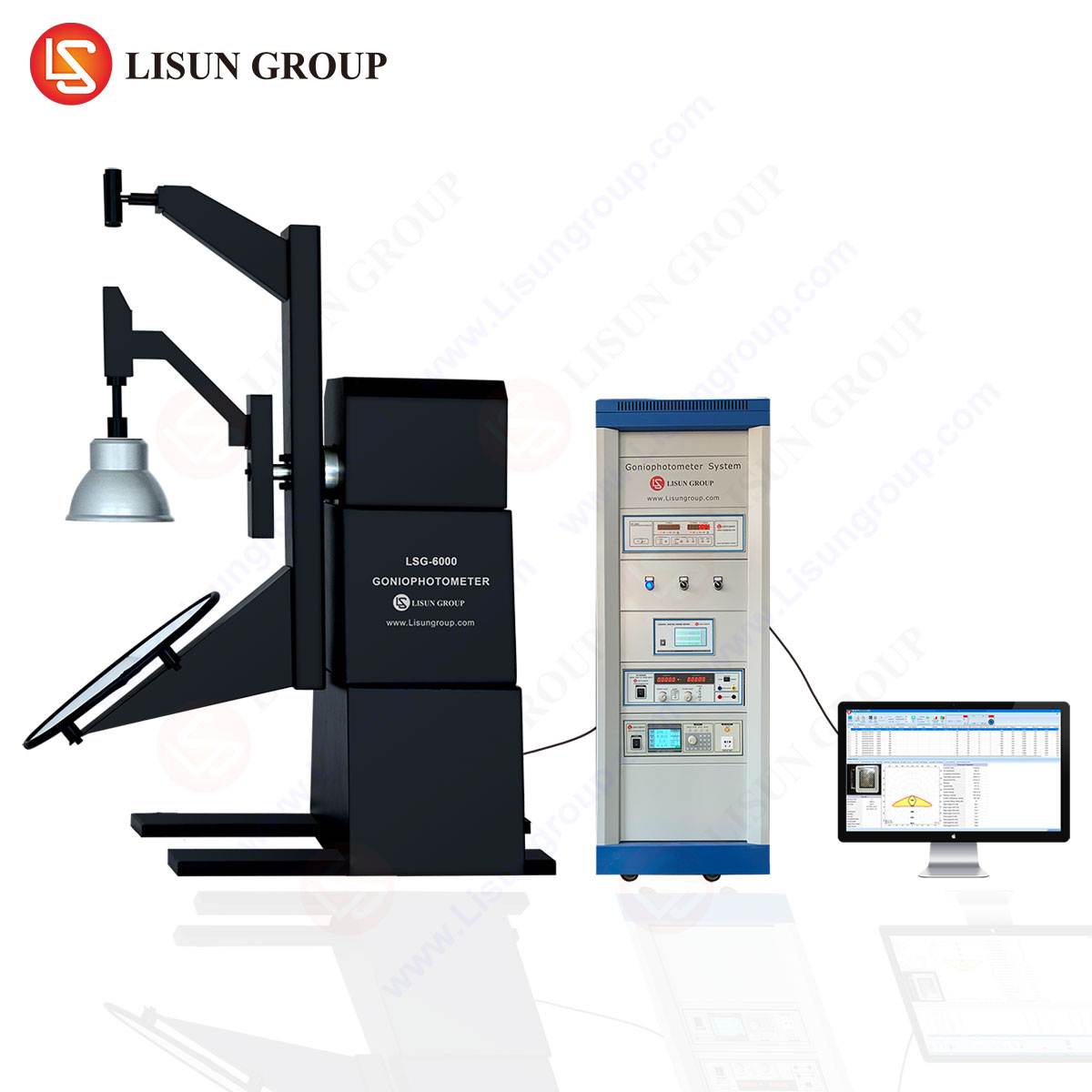
While integrating sphere systems measure total flux and spectrum, a full test laboratory requires complementary instruments. Goniophotometers measure the spatial intensity distribution of a luminaire, generating far-field candela plots and files (IES, LDT) for lighting design software. Environmental chambers subject LEDs to temperature cycling and humidity stress to evaluate performance degradation and lifetime. Flicker meters quantify temporal light modulation, a critical parameter for occupant comfort and health. Electrostatic discharge (ESD) and surge testers validate the robustness of LED drivers and control circuitry.
Adherence to International Standards and Compliance Frameworks
Reliable testing is defined by adherence to published standards. Key documents include:
- IES LM-79: Approved Method for the Electrical and Photometric Testing of Solid-State Lighting Products.
- IES LM-80: Approved Method for Measuring Lumen Maintenance of LED Light Sources.
- IES TM-21: Projecting Long-Term Lumen Maintenance of LED Light Sources.
- CIE 13.3: Method of Measuring and Specifying Colour Rendering Properties of Light Sources.
- CIE 15: Colorimetry.
- IEC/PAS 62717: LED modules for general lighting – Performance requirements.
- ANSI C78.377: Specifications for the Chromaticity of Solid-State Lighting Products.
Compliance with these standards is mandatory for market access in most global regions, including ENERGY STAR (USA), CE (Europe), and CCC (China) certifications.
Application-Specific Testing Considerations Across Industries
Photovoltaic Industry: Testing involves characterizing the spectral responsivity of PV cells and modules. While not an LED light source, the test equipment principles overlap; spectroradiometers calibrate solar simulators to ensure they match the AM1.5G standard solar spectrum for accurate panel efficiency ratings.
Optical Instrument R&D & Scientific Laboratories: Here, precision radiometry is paramount. Systems like the LPCE-3 are used to calibrate light sources for microscopes, spectrophotometers, and other sensitive instruments, requiring extreme accuracy in radiant flux measurement.
Marine and Navigation Lighting: Testing focuses on extreme environmental robustness (salt fog, vibration) and precise chromaticity and intensity to meet International Association of Lighthouse Authorities (IALA) and COLREG regulations for safe maritime navigation.
Medical Lighting Equipment: Beyond photometry, testing often involves validating non-visual biological effects, requiring precise measurement of melanopic irradiance or action spectra for phototherapy applications.
Data Analysis, Reporting, and Traceability
Modern testing systems generate vast datasets. Effective software not only controls the hardware but also manages calibration chains, performs uncertainty budgets, and generates standardized test reports. Maintaining a clear, unbroken chain of calibration from the working standard (the sphere system) to a NIST-traceable reference lamp is a non-negotiable requirement for any accredited testing laboratory. Uncertainty analysis, considering factors such as sphere wall uniformity, detector linearity, and standard lamp uncertainty, must be documented for each measurement type.
Future Trends in LED Testing Technology
The evolution of LED technology drives testing innovation. The rise of laser diodes and µLEDs for displays demands equipment with higher spatial resolution and the ability to measure extremely high brightness levels. Human-centric lighting (HCL) research requires spectroradiometers with extended range into the cyan and near-UV to accurately quantify circadian stimulus. The integration of Internet of Things (IoT) capabilities into test equipment enables remote monitoring of long-term stability tests and predictive maintenance of the test systems themselves. Finally, the increasing speed of production lines is driving demand for faster spectral acquisition and processing without sacrificing accuracy.
Frequently Asked Questions (FAQ)
Q1: What is the critical difference between using an integrating sphere system versus a goniophotometer for LED luminaire testing?
A1: An integrating sphere spectroradiometer system, like the LPCE-3, is designed to measure the total luminous flux and the spectral power distribution of a light source. A goniophotometer measures the angular distribution of luminous intensity. For complete characterization, both are often used: the sphere provides total output and color data, while the goniophotometer generates the intensity distribution curve necessary for lighting design calculations.
Q2: Why is an auxiliary lamp required when testing certain luminaires in an integrating sphere, and how does the LPCE-3 system implement this?
A2: Traditional luminaires that absorb a significant portion of their own emitted light within their housing (e.g., downlights with deep recesses) cause an error in sphere measurements because the sphere wall sees less light than is actually emitted. The auxiliary lamp method (or substitution method) corrects for this. The LPCE-3 system automates this by using an internal auxiliary lamp to measure the sphere’s spatial response function with and without the luminaire present, applying a correction factor to the measured flux of the luminaire under test.
Q3: For LED lifetime projection (LM-80/TM-21 testing), can the LPCE-3 system be integrated into an environmental chamber?
A3: Yes, a standard configuration involves placing the integrating sphere outside the environmental chamber. LED samples are operated inside the chamber under controlled temperature (e.g., 55°C, 85°C, 105°C). At defined intervals (e.g., every 1,000 hours), samples are removed, allowed to thermally stabilize at ambient conditions, and then quickly placed into the integrating sphere for photometric and colorimetric measurement. The LPCE-3’s software can track these measurements over time to generate the lumen maintenance curves required for TM-21 analysis.
Q4: How does the system ensure accuracy when testing LEDs with highly saturated colors or unusual spectral power distributions?
A4: The accuracy of a spectroradiometer-based system like the LPCE-3 is fundamentally tied to its calibration and its detector’s spectral sensitivity. Calibration using a standard lamp with a known continuous spectrum (typically tungsten halogen) establishes a correction factor across all wavelengths. The high resolution and wavelength accuracy of the CCD spectroradiometer ensure that even narrow-band emissions from saturated color LEDs are accurately sampled and integrated. The system’s software applies the calibration coefficients to the raw spectral data, ensuring accurate results regardless of the SPD shape.