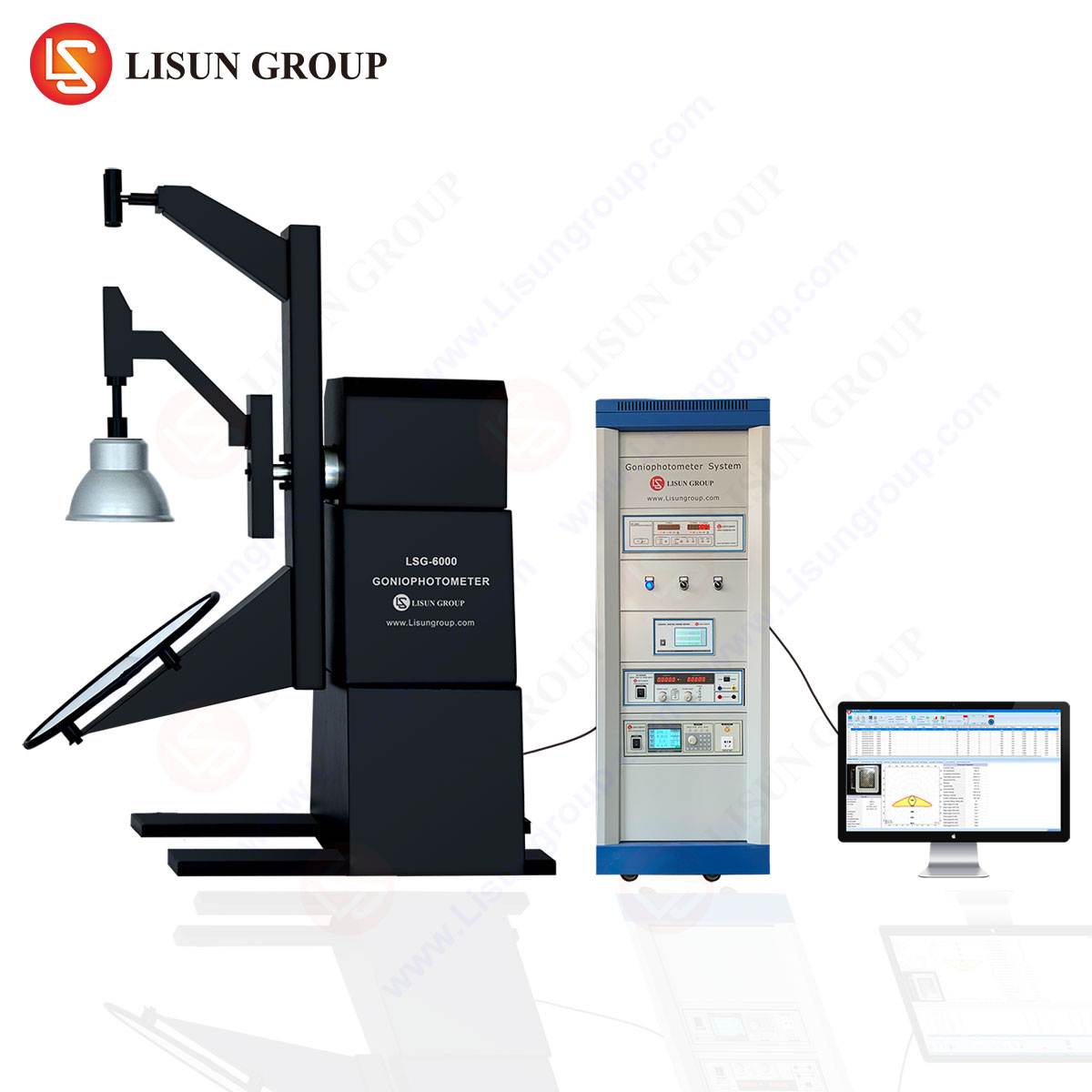





A Comprehensive Guide to Goniophotometer Applications: Precision Measurement in Photometric Analysis
Introduction to Goniophotometric Measurement Principles
A goniophotometer constitutes an essential photometric instrument designed for the precise spatial measurement of light radiation. Its core function is to characterize the luminous intensity distribution of a light source or luminaire as a function of angular direction. The fundamental principle involves rotating a high-precision photodetector, or the light source under test, around one or more axes within a defined coordinate system. This systematic angular traversal enables the collection of luminous intensity data across the entire sphere surrounding the device. The resultant data set, known as the luminous intensity distribution curve (LIDC), is foundational for deriving total luminous flux, spatial luminance patterns, and other critical photometric parameters. The accuracy of these measurements is paramount, as they directly inform product compliance, performance benchmarking, and optical design efficacy across a diverse spectrum of industries.
The LSG-1890B: System Architecture and Technical Specifications
The LISUN LSG-1890B represents a state-of-the-art moving-detector goniophotometer system engineered for high-accuracy, laboratory-grade testing. Its design adheres to stringent international standards, including CIE, IEC, and IESNA guidelines, ensuring globally recognized measurement validity. The system’s architecture is optimized for comprehensive spatial photometry, accommodating a wide range of luminaire sizes and types.
Key Technical Specifications:
- Measurement Geometry: Type C (Gamma, Alpha) coordinate system, as defined by CIE 70 and CIE 121.
- Angular Resolution: 0.1° for the horizontal (Gamma) axis and 0.01° for the vertical (Alpha) axis, enabling highly detailed LIDC mapping.
- Maximum Luminaire Payload: 50 kg, suitable for most commercial and industrial lighting fixtures.
- Measurement Distance: Variable, supporting far-field photometry as per standard requirements.
- Detector System: Utilizes a high-sensitivity, spectrally corrected silicon photodiode detector with a V(λ) filter matching the CIE standard photopic observer function to within f1′ < 3%.
- Compliance Standards: Directly conforms to IEC 60598-1, LM-79-19, EN 13032-1, and other regional equivalents.
The system operates on the moving-detector principle, where the luminaire remains stationary at the center of the goniometer, and the detector moves along a spherical trajectory. This configuration is advantageous for testing temperature-sensitive light sources like LEDs, as the fixed position prevents convective cooling variations that can alter luminous output during testing.
Fundamental Photometric Data Acquisition and LIDC Generation
The primary output of the LSG-1890B is the generation of a complete luminous intensity distribution curve. The process involves the detector measuring luminous intensity at predefined angular increments, typically generating an I-table (Intensity table) with data points at various Gamma and Alpha angles. This raw data is then processed by specialized software to create both tabular reports and graphical polar diagrams (C0-C180 and C90-C270 planes). Beyond the polar curve, the system software calculates integral photometric quantities. The most critical derived metric is the total luminous flux (in lumens), obtained by mathematically integrating the intensity distribution over the entire 4π steradian solid angle. Additional calculated parameters include zonal lumen distribution, efficacy (lm/W), beam angles (e.g., 50% and 10% intensity points), and maximum intensity values. This comprehensive data set forms the objective basis for all subsequent performance analysis and standards compliance verification.
Standards Compliance Verification for Global Market Access
Regulatory and performance standards mandate specific photometric testing protocols. The LSG-1890B is engineered to facilitate compliance with a comprehensive suite of international and national standards beyond China, which is critical for manufacturers targeting global exports.
- IEC/EN Standards: For general lighting, IEC 60598-1 (Luminaires) and EN 13032-1 (Photometric data measurement and presentation) are fundamental. The system’s accuracy is validated against these benchmarks.
- IESNA LM-79-19: This is the paramount standard for electrical and photometric measurements of solid-state lighting products in North America. The LSG-1890B executes the required spatial photometry for total flux and intensity distribution as specified in LM-79.
- Energy Efficiency Programs: Compliance with regulations such as the U.S. Department of Energy’s ENERGY STAR® program or the European Union’s Ecodesign Directive requires precise flux and efficacy data, which the goniophotometer provides.
- Regional Standards: It supports testing according to national standards like ANSI/IES in the United States, AS/NZS in Australia/New Zealand, and IS in India, ensuring products meet localized performance and safety requirements.
Applications in LED and OLED Manufacturing and Quality Assurance
In the domain of LED and OLED manufacturing, the LSG-1890B serves as a critical tool for performance validation and quality control. For LED packages, modules, and complete luminaires, it quantifies total luminous flux (binning), spatial color uniformity, and angular color consistency (Δu’v’ over angle). This is vital for ensuring batch-to-batch consistency in high-volume production. For OLED panels, which are inherently area light sources with specific angular emission characteristics, the goniophotometer measures luminance distribution and viewing angle performance, key parameters for display and specialty lighting applications. The system’s ability to maintain thermal stability of the device under test (DUT) is particularly crucial for LEDs, whose flux output is strongly temperature-dependent.
Optical Performance Validation in Display Equipment and Component Production
The display industry, encompassing LCD, OLED, and micro-LED technologies, relies on precise optical characterization. The LSG-1890B is employed to evaluate the angular dependence of luminance and chromaticity for display panels and their optical components, such as backlight units (BLUs) and light guides. Measurement of viewing angle characteristics, including contrast ratio and color shift as a function of angle, is essential for product specification sheets. Furthermore, in the production of optical components like diffusers, lenses, and light guides, the goniophotometer quantifies the scattering profile and transmission efficiency, providing data to optimize optical design for desired illumination patterns.
Supporting Research and Development in Optical Instrumentation
Scientific research laboratories and optical instrument R&D departments utilize the LSG-1890B for fundamental and applied research. Applications include the development of novel light sources, characterization of advanced optical materials (e.g., photoluminescent quantum dot films, metamaterials), and validation of theoretical optical models. The high angular resolution allows researchers to detect subtle features in scattering patterns or emission profiles. In the development of sensors—such as ambient light sensors, photodiodes, and imaging systems—the goniophotometer can be used to map the angular responsivity of the sensor or to characterize the uniform illumination sources required for sensor calibration.
Informing Design and Compliance in Architectural and Urban Lighting
Urban lighting designers and engineers utilize goniophotometric data to perform accurate lighting simulations and ensure regulatory compliance. The LSG-1890B provides the essential IES file format (.ies), which contains the complete photometric data of a luminaire. This file is imported into lighting design software (e.g., DIALux, Relux) to simulate illuminance levels, uniformity, and glare indices for street lighting, stadium lighting, or facade illumination projects. Compliance with standards such as ANSI/IES RP-8 for roadways or EN 13201 requires verified photometric files derived from instruments like the LSG-1890B. This ensures that installed lighting meets safety, efficiency, and environmental (light pollution) guidelines.
Specialized Applications in Medical, Stage, and Studio Lighting
Specialized lighting sectors demand unique photometric profiles. For medical lighting equipment, such as surgical lights and examination lamps, standards like IEC 60601-2-41 specify requirements for field of illumination, depth of illumination, and color rendering. The LSG-1890B precisely maps the intense, uniform, and shadow-reduced beam patterns required, ensuring they meet clinical safety and performance standards. In stage, studio, and entertainment lighting, the instrument characterizes the complex beam shapes, sharp cut-offs, and gobo projections of ellipsoidal reflector spotlights (ERS), fresnels, and moving head lights. This data is used by lighting designers for pre-visualization and by manufacturers for quality control of beam consistency and intensity.
Advantages in the Photovoltaic Industry and Sensor Calibration
While primarily a photometric tool, the LSG-1890B finds application in adjacent fields through configuration with appropriate detectors. In photovoltaic R&D, it can be adapted with a reference solar cell or a spectroradiometer to measure the angular response of PV modules or to characterize the spatial distribution of solar simulators per standards like IEC 60904-9. In sensor production, particularly for ambient light sensors integrated into consumer electronics or automotive systems, the goniophotometer provides a highly uniform and controllable light field for calibrating sensor angular response, ensuring accurate performance under varied real-world lighting conditions.
Operational Workflow and Data Integrity Management
A standardized operational workflow is critical for measurement reproducibility. The process begins with the thermal stabilization of the DUT at its rated operating temperature and electrical conditions. The DUT is then mounted at the center of the goniometer, aligned with its photometric center. The LSG-1890B software is configured with the appropriate angular step resolution and measurement distance. A system calibration, traceable to national metrology institutes, is performed using a standard lamp prior to measurement. During the automated scan, the software collects the intensity array, corrects for background noise, and processes the data. Robust data integrity management includes routine calibration checks, environmental monitoring (temperature, humidity, stray light), and adherence to standard operating procedures (SOPs) documented in a quality management system.
Frequently Asked Questions (FAQ)
Q1: What is the primary advantage of the moving-detector (Type C) design in the LSG-1890B for LED testing?
A1: The moving-detector design maintains the LED luminaire in a fixed position and orientation during testing. This is critical because the junction temperature and thus the luminous output of LEDs are sensitive to changes in convective cooling. Rotating the luminaire itself can alter its thermal characteristics, introducing measurement error. The fixed position ensures stable thermal conditions and more accurate, repeatable photometric data.
Q2: How does the LSG-1890B ensure compliance with IESNA LM-79-19 for total luminous flux measurement?
A2: LM-79-19 prescribes specific methods for measuring total luminous flux, including the use of a goniophotometer with a defined measurement geometry and photometric distance. The LSG-1890B is configured to operate in the required far-field condition (distance ≥ 5 times the largest luminaire dimension) and uses a spectrally corrected detector. Its software integrates the measured spatial intensity distribution over the full sphere, providing the total flux value as mandated by the standard, and can generate the required LM-79 test report.
Q3: Can the system measure the spatial color distribution (angular color uniformity) of a luminaire?
A3: Yes, when equipped with an optional spectroradiometer mounted on the moving arm, the LSG-1890B can perform spatially resolved spectral measurements. It can capture the spectral power distribution (SPD) at each angular point, enabling the calculation of chromaticity coordinates (CIE x, y or u’, v’), correlated color temperature (CCT), and Duv across the entire emission pattern. This is essential for evaluating color over angle, a key quality metric for high-end LED luminaires and display panels.
Q4: What file formats does the system generate for lighting design applications?
A4: The system’s primary output for design software is the IESNA LM-63 (IES) file format, which is the industry standard for transmitting photometric data. Additionally, it can generate EULUMDAT (LDT) files commonly used in European software, and CIE files. These files contain the intensity matrix and other metadata, allowing designers to accurately simulate the luminaire’s performance in a virtual environment.
Q5: What are the critical environmental controls for a goniophotometer testing laboratory?
A5: To achieve high-accuracy measurements, the laboratory must control stray light (requiring a darkroom with non-reflective, black walls), ambient temperature (typically stabilized at 25°C ±1°C as per many standards), and air drafts that could affect the thermal state of the DUT. Electrical supply stability is also crucial, as fluctuations can affect the DUT’s power input and light output. The LSG-1890B itself should be installed on a stable, vibration-isolated foundation.