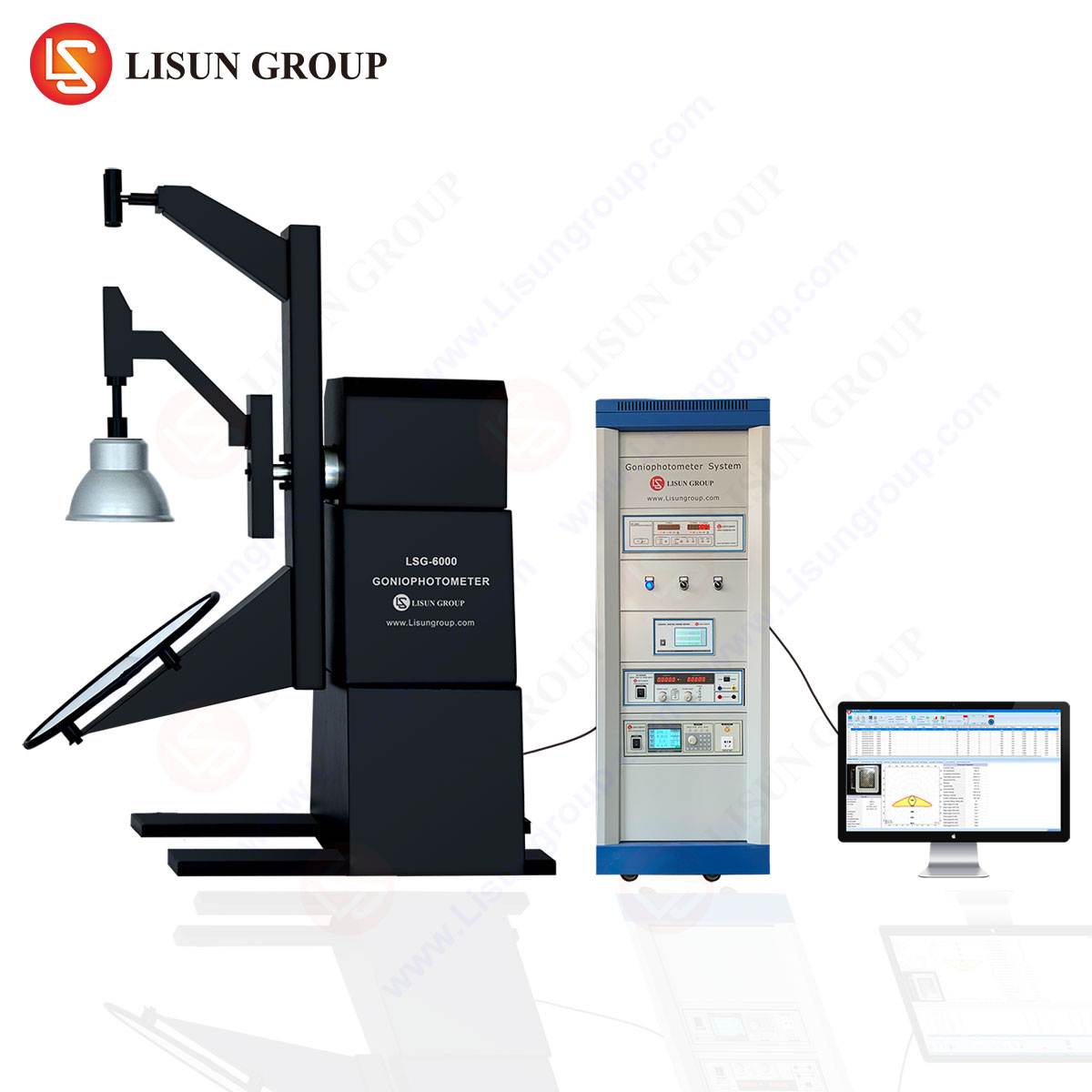






Comparing Goniophotometer and Integrating Sphere: A Guide to Photometric Instruments
Introduction to Photometric Measurement Systems
Accurate characterization of light sources and luminaires is a fundamental requirement across numerous scientific and industrial disciplines. The selection of appropriate photometric instrumentation is critical, as it directly influences the validity, scope, and application of the derived data. Two principal systems dominate this field: the goniophotometer and the integrating sphere. While both serve to quantify light, their operational principles, capabilities, and resultant data outputs are fundamentally distinct. This analysis provides a formal comparison of these instruments, delineating their respective methodologies, applications, and limitations to guide selection based on specific measurement objectives. The discussion is grounded in international standards and practical industry requirements, with a detailed examination of a representative high-performance goniophotometer system to illustrate advanced capabilities in spatial photometry.
Fundamental Principles of Integrating Sphere Photometry
The integrating sphere, or Ulbricht sphere, operates on the principle of spatial integration. The device is a hollow spherical cavity with a highly diffuse, spectrally neutral reflective coating on its interior surface. The light source under test (often a bare LED, lamp, or other small emitter) is placed within the sphere or, for thermal or size considerations, attached to an external port. Light emitted from the source undergoes multiple diffuse reflections, creating a uniform radiance distribution across the sphere’s inner wall. A detector, shielded from direct illumination by a baffle, samples this uniform flux. By comparing the signal from the test source to that of a standard source of known luminous flux, the total luminous flux (in lumens) of the test source is calculated.
This method excels in providing a rapid, single-value measurement of total radiant or luminous flux. It is the prescribed apparatus in standards such as IES LM-78 and CIE 84 for total flux measurement. However, its primary limitation is the loss of all spatial information. The measurement yields no data on intensity distribution, chromaticity uniformity, or the geometry of emission. Corrections, such as the self-absorption correction for sources placed inside the sphere, are required and can introduce uncertainty, particularly for sources with large physical size or significantly different absorption characteristics compared to the standard lamp.
Fundamental Principles of Goniophotometric Measurement
In contrast, goniophotometry preserves and quantifies the spatial characteristics of light emission. A goniophotometer mechanically rotates the photodetector around the stationary light source (Type C geometry) or, more commonly for luminaires, rotates the light source itself relative to a fixed detector (Type B geometry) across two axes: the vertical (C-plane) and horizontal (γ-plane). At each angular coordinate (C, γ), the luminous intensity is measured. This comprehensive set of intensity values, often comprising tens of thousands of data points, forms a three-dimensional intensity distribution known as the luminous intensity solid.
Post-processing of this raw goniophotometric data enables the derivation of all key photometric parameters. Through numerical integration, the total luminous flux can be calculated. More importantly, the system generates far-field illuminance distributions, intensity curves in any plane, luminance maps, and efficiency metrics like the Light Output Ratio (LOR). This spatial data is indispensable for lighting design software (e.g., utilizing IES or EULUMDAT files), compliance verification against zoning regulations, and optical system analysis. The methodology is codified in standards including IES LM-79, CIE 121, and EN 13032-1.
Comparative Analysis: Measurement Outputs and Data Fidelity
The core distinction lies in the nature of the output data. An integrating sphere provides a precise scalar quantity—total flux—but is inherently blind to directionality. A goniophotometer provides a vector field—the complete angular intensity distribution—from which the scalar total flux is derived as a secondary, albeit accurate, calculation.
For applications requiring only total light output, such as benchmarking LED chip efficacy (lumens per watt) in LED & OLED Manufacturing or verifying batch consistency in Sensor and Optical Component Production, the integrating sphere offers speed and cost-effectiveness. Conversely, any application where light must be controlled, shaped, or predicted in a spatial context necessitates goniophotometry. This includes verifying the beam pattern of a street luminaire for Urban Lighting Design (meeting IESNA Type II, III, or IV distributions), characterizing the viewing angle and uniformity of a backlight unit in Display Equipment Testing, or ensuring the homogeneous illumination field of a Medical Lighting Equipment surgical light per IEC 60601-2-41.
Industry Applications and Standards Alignment
The choice of instrument is dictated by industry-specific standards and end-use requirements.
- Lighting Industry & Urban Lighting Design: Compliance with regional standards (e.g., ANSI/IES RP-8 for roadways, EN 13201) mandates precise intensity distributions and glare ratings (UGR, TI), which only a goniophotometer can provide. The generation of standardized photometric data files (IES, LDT) for design software is a goniophotometric function.
- Scientific Research Laboratories & Optical Instrument R&D: Investigations into novel optical materials, advanced lens systems, or non-Lambertian sources require full spatial flux mapping to understand emission physics, a task exclusive to goniophotometry.
- Stage and Studio Lighting: The specification of beam angle, field angle, and throw distance for spotlights and wash lights is fundamentally goniophotometric.
- Photovoltaic Industry: While not for light emission, goniophotometers (often referred to as gonioradiometers in this context) are used to measure the angular dependence of solar cell responsivity or the reflectance/transmittance of materials under varied incident angles.
The LSG-1890B Goniophotometer: A System for Precision Spatial Photometry
As a representative example of a modern, high-capacity Type B goniophotometer, the LISUN LSG-1890B system embodies the capabilities required for rigorous spatial photometry across the aforementioned industries. This system is engineered to accommodate large and heavy luminaires, a critical requirement for testing commercial and industrial lighting products.
Specifications and Testing Principles: The LSG-1890B features a dual-axis robotic arm mechanism with a large mounting platform. The luminaire is mounted and rotated through the full 4π steradian solid angle. A high-precision, spectroradiometric or photopic-filtered detector is positioned at a fixed distance on the system’s optical bench, typically 5m, 10m, or longer, to ensure far-field measurement conditions as stipulated in standards like LM-79. The system’s software controls the coordinated movement and data acquisition, building the intensity matrix point-by-point. Advanced models incorporate real-time temperature monitoring and electrical parameter logging to correlate photometric performance with operating conditions.
Standards Compliance and Industry Use Cases: The system is designed for compliance with international photometric testing standards, including IES LM-79, LM-80 (when used for angular intensity tracking over time), EN 13032-1, CIE 121, and ANSI C82.77. In LED & OLED Manufacturing, it is used to validate the final assembled luminaire’s performance against design simulations. For Display Equipment Testing, it can characterize the angular color uniformity and contrast ratio of displays. Scientific Research Laboratories employ such systems to map the bi-directional scattering distribution function (BSDF) of materials.
Competitive Advantages: Key operational advantages of a system like the LSG-1890B include its large load capacity and dimensional flexibility, allowing testing of luminaires up to 50kg or more. The use of a spectroradiometer as the detector enables simultaneous measurement of photometric and colorimetric quantities (chromaticity, CCT, CRI) at every angle, which is essential for applications where color consistency is critical, such as in retail lighting or film production. The precision of the robotic positioning system ensures angular resolution and repeatability necessary for generating reliable IES files used globally by lighting designers.
Synthesis: Selecting the Appropriate Instrument
The decision matrix is clear. An integrating sphere is the instrument of choice when the sole parameter of interest is the total radiant or luminous flux of a light source, particularly for small, omnidirectional sources where spatial data is irrelevant. Its advantages are speed, relatively lower cost, and a simpler measurement process.
A goniophotometer is essential when any spatial property of the emission is under investigation. This includes the vast majority of applications involving complete luminaires with optics, where performance is defined by its intensity distribution. It is the comprehensive tool, providing total flux, efficacy, and the complete spatial dataset required for design, regulation, and advanced research. The investment correlates directly with the depth and breadth of actionable photometric intelligence obtained.
Conclusion
The integrating sphere and the goniophotometer are complementary yet non-interchangeable pillars of photometric science. The former integrates spatial information to deliver a singular, critical value of total output. The latter meticulously deconstructs and records light’s angular behavior, enabling the prediction and control of light in real-world applications. For industries and research domains where lighting performance is multidimensional, the goniophotometer, as exemplified by systems like the LSG-1890B, remains the indispensable standard for authoritative spatial photometric characterization. Understanding their distinct operational paradigms is paramount for the specification of accurate measurements, compliance with international standards, and the advancement of lighting technology across all sectors.
FAQ Section
Q1: Can a goniophotometer like the LSG-1890B measure the total luminous flux of a light source as accurately as an integrating sphere?
A1: Yes, when operated in accordance with standards such as IES LM-79, a goniophotometer determines total luminous flux through numerical integration of the measured intensity distribution. This method is recognized as equally authoritative and, for large or non-omnidirectional sources, can be more accurate than an integrating sphere measurement, which may require significant correction factors.
Q2: For testing a newly developed LED module intended for general replacement lamps, which instrument should be used first?
A2: Initial efficacy validation (lumens per watt) is most efficiently performed using an integrating sphere on the bare LED module. However, once the module is integrated into a complete luminaire with a housing and lens, a goniophotometer is required to verify the final product’s intensity distribution, glare metrics, and spatial color uniformity to meet application-specific standards.
Q3: What are the critical laboratory environmental controls for operating a high-precision goniophotometer?
A3: Stable ambient temperature (typically 25°C ±1°C) is crucial, as LED output and detector sensitivity are temperature-dependent. The facility must also provide a darkroom environment to eliminate stray light, stable voltage supply to the luminaire under test, and minimal air currents that could affect thermal management of the test sample during extended measurement cycles.
Q4: How does the LSG-1890B system handle the measurement of colorimetric properties across different angles?
A4: When equipped with a spectroradiometric detector, the system captures the full spectral power distribution (SPD) at each angular measurement point. From the SPD, it calculates not only luminous intensity but also chromaticity coordinates (x,y or u’v’), correlated color temperature (CCT), and color rendering index (CRI) for that specific direction, enabling full spatial color analysis.
Q5: In the context of international standards, what is the significance of the measurement distance in a Type B goniophotometer?
A5: The distance between the luminaire’s photometric center and the detector must satisfy the “far-field” or “inverse-square law” condition. Standards like EN 13032-1 specify minimum distances (often 5x the largest luminaire dimension) to ensure that measurements are of luminous intensity (candelas), not illuminance, and that the intensity distribution is independent of distance, yielding universally applicable data.