







Precision Metrology of the Optical Spectrum: Applications of Light Wavelength Meters
Abstract
The precise characterization of optical radiation is a foundational requirement across a diverse array of scientific and industrial disciplines. Light wavelength meters, or spectroradiometers, serve as the primary instruments for this metrological task, enabling the quantitative measurement of spectral power distribution (SPD), irradiance, illuminance, and chromaticity coordinates. This technical article delineates the critical applications of high-precision spectroradiometers, with a specific examination of the operational principles and deployment of the LISUN LMS-6000 series. The discourse encompasses its role in ensuring compliance with international standards, driving quality in manufacturing, and facilitating innovation in research and development.
Fundamental Principles of Spectroradiometric Measurement
At its core, a spectroradiometer functions by decomposing incident optical radiation into its constituent wavelengths and measuring the intensity at each discrete interval. The LISUN LMS-6000 series implements a diffraction-grating-based optical system. Incident light is collimated and directed onto a planar diffraction grating, which angularly disperses the light according to its wavelength. The spatially separated spectrum is then focused onto a high-sensitivity linear array detector, typically a CCD or CMOS sensor. Each pixel on the detector array corresponds to a specific narrow band of wavelengths. The instrument’s software correlates pixel position with wavelength through a calibration process traceable to national metrology institutes, using standard lamps such as tungsten-halogen or deuterium sources.
The critical specifications of the instrument directly govern its application suitability. For the LISUN LMS-6000, key parameters include a wavelength range spanning from 350nm to 1050nm, extendable to 200nm-1050nm with the LMS-6000UV variant for deep ultraviolet applications. Its wavelength accuracy is typically within ±0.5nm, with a full width at half maximum (FWHM) optical resolution of approximately 2.5nm, ensuring precise discrimination of spectral lines. The integral cosine corrector ensures angular response fidelity for irradiance measurements per CIE 177 and ISO 9050 standards. This foundational metrology enables its deployment in the following specialized domains.
Ensuring Photometric and Colorimetric Compliance in General Lighting
The commercial lighting industry is governed by stringent photometric and colorimetric regulations. Manufacturers must certify products against standards such as ANSI C78.377 (chromaticity specifications for LED lighting), IES LM-79 (electrical and photometric testing of solid-state lighting), and ENERGY STAR requirements. The LISUN LMS-6000 series is employed to perform the requisite SPD measurements from which all photometric and colorimetric quantities are derived.
For instance, the Correlated Color Temperature (CCT) and Color Rendering Index (CRI) are not directly measured but calculated from the complete SPD. An inaccurate spectral measurement, particularly in the cyan region (~490nm) or deep red region, can lead to significant errors in CRI (Ra, R9) calculation, potentially resulting in non-compliant products. The high wavelength accuracy and repeatability of the LMS-6000 ensure that these derived quantities are reliable. Furthermore, for human-centric lighting applications, the instrument can measure melanopic irradiance, a key metric for evaluating the non-visual, biological impact of light, as outlined in the WELL Building Standard.
Characterization of Spectral Output in LED and OLED Fabrication
In semiconductor lighting, spectral consistency is synonymous with quality and binning accuracy. During LED epitaxial wafer growth and chip fabrication, minute variations in quantum well composition or thickness manifest as shifts in peak wavelength and spectral width. The LMS-6000F, with its fast scanning capability, is integrated into production lines for 100% inspection or high-frequency sampling. It verifies that emitted wavelengths fall within specified binning categories, crucial for applications where color matching is paramount, such as in display backlighting or architectural lighting installations.
For Organic Light-Emitting Diode (OLED) panels, the measurement challenge includes low luminance levels and large-area, diffuse sources. The spectroradiometer, coupled with an appropriate telescopic or lens-based optic, measures the SPD uniformity across the panel surface. This data is vital for identifying mura defects and ensuring the color uniformity of the final display product. The instrument’s low-noise detector is essential for accurately characterizing the deep blue emission of OLEDs, which is critical for both color gamut and operational lifetime predictions.
Validation of Automotive Lighting Safety and Function
Automotive lighting systems, encompassing headlamps, daytime running lights (DRLs), signal lights, and interior displays, are subject to rigorous international regulations (ECE, SAE, GB standards). These regulations specify not only luminous intensity but also chromaticity boundaries defined within the CIE 1931 chromaticity diagram. A red stop lamp, for example, must emit light within a very specific red sector; deviation can reduce conspicuity or cause legal non-compliance.
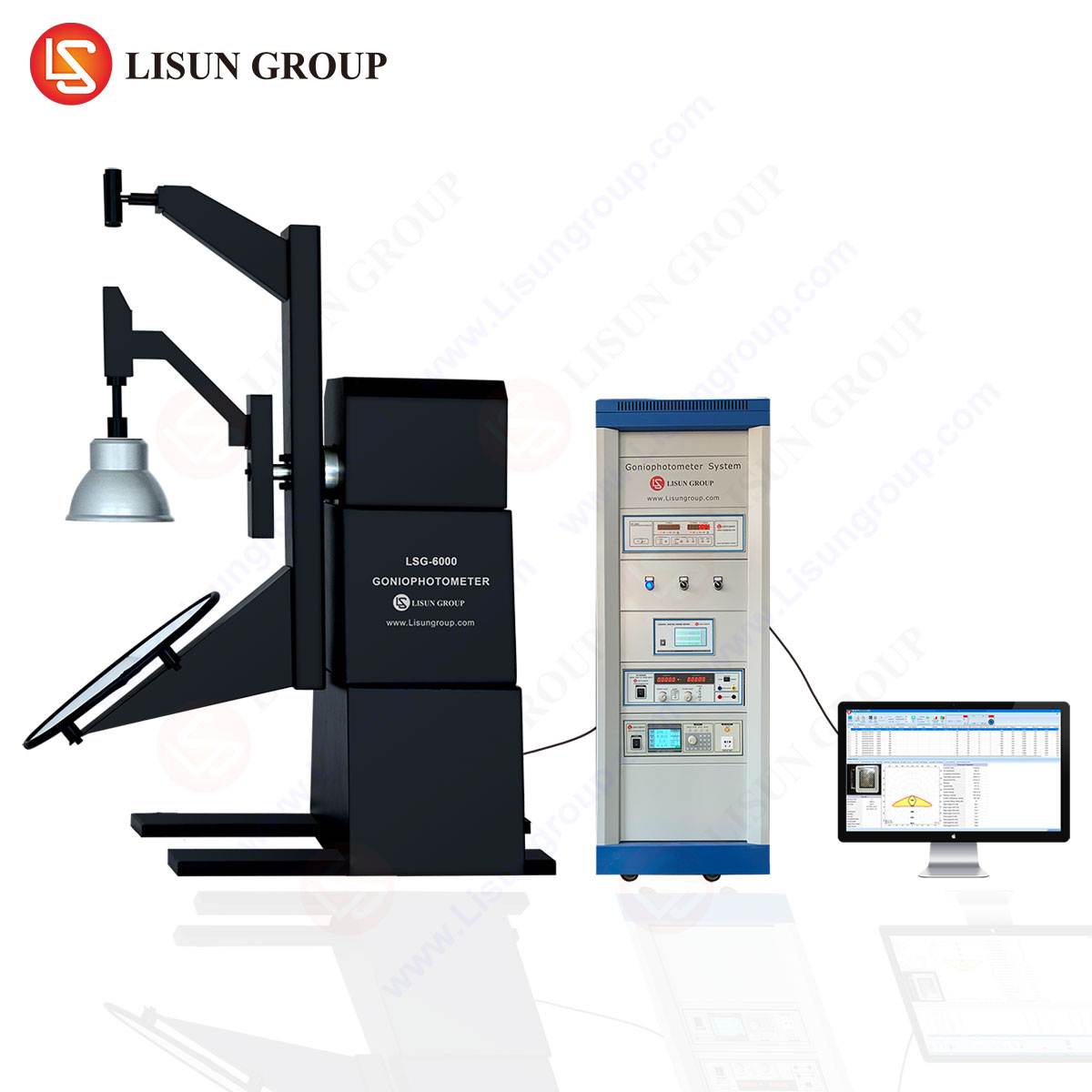
The LMS-6000S, designed for stability in varied environments, is used in conjunction with goniophotometers to perform spatially resolved spectral measurements. As a headlamp is rotated through its beam pattern, the spectroradiometer captures the SPD at each angular position. This allows engineers to verify that the white light from LED or laser headlamps maintains acceptable chromaticity both on-axis (hotspot) and off-axis, preventing undesirable color shifts that could impair driver vision. Furthermore, it is used to test the spectral characteristics of in-cabin ambient lighting and instrument cluster displays to ensure they do not cause driver distraction or reflection issues.
Certification of Aerospace and Aviation Navigation Lighting
The stakes for spectral accuracy are exceptionally high in aerospace. Aviation navigation lights—port (red), starboard (green), and stern (white)—must comply with precise chromaticity and intensity standards (as per FAA TSO-C96a, ICAO Annex 14) to ensure unambiguous identification by other pilots. The use of LED technology in these lights offers reliability benefits but introduces the need for precise spectral verification.
The LMS-6000P, with its robust design, is utilized in environmental testing chambers where lights are subjected to temperature cycling, vibration, and humidity. Spectroradiometric measurements are taken before, during, and after stress tests to ensure the LED’s peak wavelength does not shift beyond the narrow allowable tolerances. A shift of just a few nanometers in a red aviation LED could move its chromaticity coordinates outside the legally defined “red” sector, a critical failure. The instrument’s calibration stability is paramount for these long-duration certification tests.
Calibration of Display Color Gamut and Flicker Analysis
The display industry, covering LCD, OLED, and micro-LED technologies, relies on spectroradiometers for objective color performance quantification. Key metrics include color gamut volume (e.g., % of DCI-P3, Rec.2020), white point accuracy, and grayscale tracking. The LMS-6000, when mounted on a motorized stand, can automate measurements of luminance and chromaticity uniformity across the entire screen surface.
Beyond static measurements, the instrument’s fast sampling mode is critical for analyzing temporal light artifacts, commonly known as flicker. Pulse-width modulation (PWM) dimming in displays and LED lights can induce stroboscopic effects and headaches. By measuring the SPD at a high temporal resolution, the LMS-6000 can characterize the modulation depth and frequency, enabling engineers to design drivers that minimize these effects in compliance with standards like IEEE PAR1789 and IEC TR 61547-1.
Quantifying Spectral Mismatch in Photovoltaic Cell Testing
The efficiency of a photovoltaic (PV) cell is intrinsically linked to the spectrum of the incident light. Laboratory testing under standard test conditions (STC) requires a solar simulator with a spectral irradiance distribution matching the AM1.5G reference spectrum (IEC 60904-3). The LMS-6000 is the primary tool for measuring the simulator’s output spectrum to calculate its spectral mismatch index.
A high spectral mismatch error invalidates efficiency ratings. By comparing the measured simulator spectrum against the AM1.5G standard, the deviation at each wavelength is quantified. This data is used to apply correction factors to PV cell current measurements or to tune the simulator with filters. The wide wavelength range of the LMS-6000, covering from UV to near-infrared, is essential as silicon and multi-junction cells respond across this broad spectrum.
Supporting Research in Photobiology and Material Science
In scientific laboratories, spectroradiometers are indispensable tools for hypothesis-driven research. In photobiology, studies on plant growth under artificial lighting require precise control of the photosynthetic photon flux density (PPFD) across the photosynthetically active radiation (PAR) spectrum (400-700nm). The LMS-6000 measures the exact SPD of growth lights, allowing researchers to correlate specific wavelength bands with morphological or biochemical responses in plants.
In material science, the instrument characterizes the excitation and emission spectra of phosphors, quantum dots, and fluorescent materials. When integrated into custom setups, it can measure the spectral reflectance or transmittance of optical coatings, filters, and novel photonic materials. The LMS-6000UV variant is particularly valuable for research involving UV-curable resins, photocatalytic processes, or the study of material degradation under UV exposure.
Optimizing Spectral Power Distribution for Human-Centric Urban Lighting
Modern urban lighting design transcends simple illumination, embracing concepts of spectral tuning for safety, aesthetics, and ecological impact. The field of mesopic vision research informs lighting for roadways and pedestrian paths, where the spectral sensitivity of the eye shifts between photopic (cone-dominated) and scotopic (rod-dominated) vision.
Urban planners and lighting designers use the LMS-6000 to audit existing installations and prototype new ones. Measurements of SPD are used to calculate S/P ratios (scotopic/photopic ratio), which influence perceptions of brightness at low light levels. Furthermore, to mitigate light pollution’s impact on astronomy and wildlife, designers specify lights with minimal blue-light emission at night. The spectroradiometer provides the empirical data to verify that installed luminaires meet these “dark-sky friendly” spectral specifications, often requiring a sharp cutoff below 500nm.
Verification of Maritime Signal Light Chromaticity Ranges
Maritime and navigation lighting, governed by the International Association of Marine Aids to Navigation and Lighthouse Authorities (IALA) and COLREGs, has strict chromaticity requirements similar to aviation. The identification of a buoy, lighthouse, or ship’s navigation light by its color is a critical safety function.
These lights operate in harsh marine environments with salt spray, humidity, and wide temperature fluctuations. The LMS-6000SF, featuring enhanced environmental sealing, is used in qualification testing to ensure that the LED’s chromaticity remains stable over its lifetime and under environmental stress. The instrument measures the light output through simulated fog and rain to ensure the spectral signal remains distinguishable, a key factor in safety.
Precision Color Reproduction in Broadcast and Cinematography
In stage, studio, and film production, consistent color rendering is non-negotiable. LED-based stage lights and studio panels are used to create specific moods and ensure accurate skin tone reproduction under cameras with defined spectral sensitivities. The gaffer and director of photography require that all fixtures used in a scene emit spectrally consistent white light or saturated colors.
The LMS-6000 is used to profile and calibrate these lighting fixtures. By measuring the SPD of a fixture at various dimming levels and color temperature settings, a profile can be created to ensure that all units match perfectly. This prevents the need for extensive color correction in post-production and ensures that the lighting observed on set is faithfully captured by the camera.
Validating Therapeutic and Diagnostic Medical Lighting
Medical lighting applications present unique challenges. Surgical lights must provide high-intensity, shadow-free illumination with a color temperature that enhances tissue contrast and visual acuity for the surgeon. Dermatological phototherapy devices for treating conditions like psoriasis or neonatal jaundice must emit tightly controlled narrowband UVB or blue light (circa 470nm) at precise irradiance levels.
The LMS-6000UV is employed in the manufacturing and periodic calibration of these devices. For phototherapy, the exact peak wavelength and bandwidth are medically critical; deviations can reduce efficacy or cause skin damage. The spectroradiometer certifies that the emitted spectrum matches the prescribed therapeutic window. Its calibration traceability to national standards is a fundamental requirement for medical device regulatory approvals (e.g., FDA 510(k), IEC 60601).
Conclusion
The applications of precision light wavelength meters are as diverse as the industries that rely on controlled optical radiation. From ensuring the safety of transportation to enabling breakthroughs in scientific research and guaranteeing the quality of consumer goods, the spectroradiometer is a foundational metrological tool. The LISUN LMS-6000 series, through its variants tailored for specific challenges—speed (F), stability (S), portability (P), ultraviolet range (UV), and harsh environments (SF)—embodies the technological response to these multifaceted demands. Its adherence to fundamental optical principles, coupled with robust engineering and standards compliance, positions it as a critical instrument for advancing quality, safety, and innovation across the optical spectrum’s entire domain.
FAQ Section
Q1: What is the primary difference between the LMS-6000UV and other models in the series, and when is it specifically required?
The LMS-6000UV features an extended wavelength measurement range down to 200nm, covering the deep ultraviolet (UV-C and UV-B) spectrum. This is specifically required for applications involving UV sterilization equipment validation, phototherapy device calibration, semiconductor lithography light source measurement, and material degradation studies under UV exposure. Standard models typically begin measurement at 350nm.
Q2: How does the instrument maintain measurement accuracy when testing light sources with highly dynamic or pulsed outputs, such as camera flashes or PWM-dimmed LEDs?
For pulsed or rapidly modulating sources, the LMS-6000 series can be operated in “Fast Mode” or synchronized via an external trigger input. This allows the integration time of the detector to be precisely aligned with the pulse window, capturing the SPD of the flash itself rather than averaging with the off period. For PWM analysis, a high-speed sampling mode characterizes the temporal waveform of the intensity at each wavelength, enabling flicker and stroboscopic effect quantification.
Q3: In photovoltaic testing, how is the spectral mismatch index (MM) calculated using data from the LMS-6000, and what is an acceptable threshold?
The spectral mismatch index is calculated per IEC 60904-7. The LMS-6000 measures the spectral irradiance of the solar simulator, E_test(λ). This is compared to the reference AM1.5G spectrum, E_ref(λ), and weighted by the spectral responsivity, R_DUT(λ), of the device under test (PV cell) and a reference cell, R_ref(λ). The formula is MM = ∫[E_test(λ) R_DUT(λ) dλ] / ∫[E_test(λ) R_ref(λ) dλ] ∫[E_ref(λ) R_ref(λ) dλ] / ∫[E_ref(λ) * R_DUT(λ) dλ]. An MM value closer to 1.000 indicates better match; for precise calibration, a value within ±0.03 is often targeted, though stricter tolerances may apply for primary reference cell calibration.
Q4: For automotive headlamp testing, why is spatially resolved spectral measurement necessary instead of a single point measurement?
The chromaticity of an LED-based headlamp beam pattern is not uniform. The hotspot (central high-intensity zone) and the peripheral flood areas may pass through different phosphor regions or optical elements, potentially causing visible color shifts (e.g., yellow or blue fringes). A single-point measurement would miss this non-uniformity. Spatially resolved spectral data, collected via a goniophotometer-coupled spectroradiometer, ensures the entire beam pattern complies with chromaticity regulations (e.g., ECE R112) which specify limits for light at any point in the pattern, preventing visual discomfort and safety issues for oncoming drivers.
Q5: How is the angular response of the instrument’s cosine corrector verified, and why is it critical for illuminance and irradiance measurements?
The angular response is verified by mounting the spectroradiometer on a rotary stage in a darkroom and exposing it to a highly collimated, stable light source at varying angles of incidence (typically from 0° to 85°). The measured irradiance at each angle is compared to the ideal cosine law (illuminance ∝ cos(θ)). Deviation from this ideal, especially at high angles, is quantified. This is critical because real-world light sources (e.g., skies, luminaires) strike the detector from all angles. A poor cosine response leads to significant errors in measuring total flux from an integrating sphere or ambient light levels in architectural spaces, violating the principles defined in CIE and ISO standards.