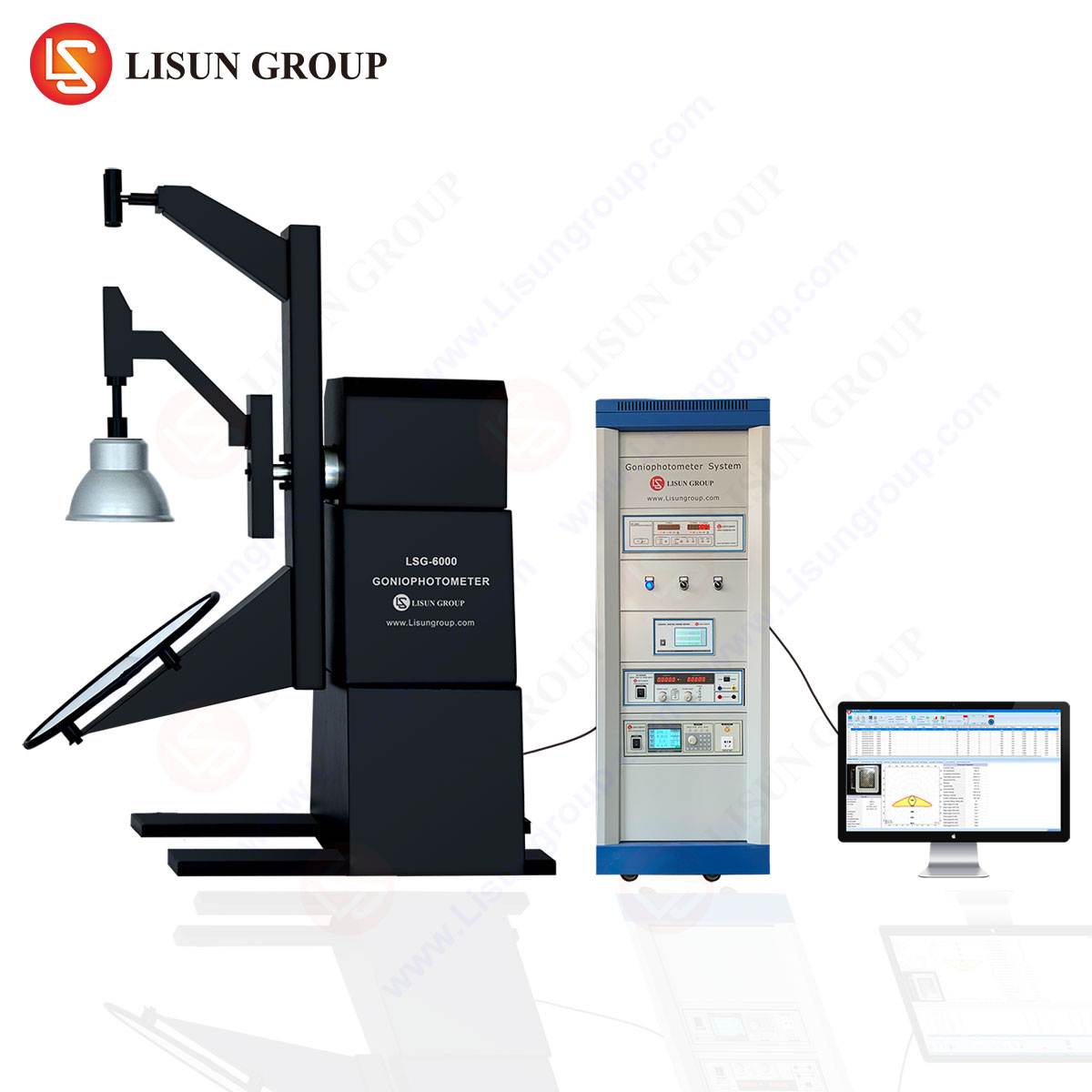



A Comprehensive Guide to Goniophotometric Measurement Systems: Principles, Selection Criteria, and Industry Applications
Abstract
Goniophotometry represents a cornerstone of quantitative photometric and colorimetric analysis, providing spatially resolved luminous intensity and spectral flux distribution data critical for characterizing light sources and luminaires. This technical article delineates the fundamental principles of goniophotometric measurement, establishes a structured selection framework for system procurement, and examines specific applications across diverse industrial and research sectors. A detailed analysis of the LSG-1890B Type C Goniophotometer is presented as a representative high-performance system, with explicit reference to its operational specifications, compliance with international standards, and its role in facilitating precision-driven development and quality assurance.
Fundamental Principles of Goniophotometric Measurement
Goniophotometry is defined as the measurement of the angular distribution of light emitted from a source or luminaire. The core principle involves positioning a photometric sensor at a fixed distance from the test specimen, which is rotated through a series of spherical coordinates—typically polar (γ) and azimuthal (C) angles—to capture luminous intensity values across the entire spatial emission profile. The resulting data set, often visualized as an isolux diagram or a luminous intensity distribution curve (LIDC), is mathematically integrated to derive total luminous flux, a parameter that cannot be accurately ascertained through single-point measurements for directional or asymmetric sources.
The measurement geometry is categorized by the International Commission on Illumination (CIE) into Type A, B, and C systems. Type A systems rotate the luminaire about its photometric center in two perpendicular axes. Type B systems, now less common, rotate the luminaire about its vertical axis while a mirror system scans the vertical plane. The Type C system, exemplified by the LSG-1890B, rotates the luminaire about its vertical axis (C-plane, 0-360°) while the photodetector, mounted on a moving arm, traverses the vertical γ-plane (0-180° or 0-90° for planar sources). This configuration is widely preferred and specified in standards such as IESNA LM-79 and CIE 70 for its mechanical stability and alignment with common luminaire coordinate systems.
Critical Selection Parameters for Goniophotometer Systems
The selection of an appropriate goniophotometer is a multidimensional decision process contingent upon technical specifications, intended applications, and compliance requirements. Key parameters must be evaluated systematically.
Measurement Accuracy and Dynamic Range: System accuracy is a function of detector linearity, angular positioning precision, and distance calibration. High-quality systems employ temperature-stabilized silicon photodiodes with V(λ) correction filters to match the CIE standard photopic observer function. A wide dynamic range, often exceeding 1:10⁶, is essential for measuring luminaires with high dynamic contrast, such as streetlights with sharp cut-offs or highly directional spotlights. The LSG-1890B, for instance, integrates a high-precision spectrometer or photometer head with automatic range switching to maintain signal fidelity across intensity variations.
Mechanical Configuration and Payload Capacity: The system’s mechanical design dictates the size and weight of testable luminaires. A Type C goniometer with a robust central rotation stage and a long, rigid detector arm is necessary for large, heavy specimens like high-bay industrial luminaires or full-sized street lighting modules. The LSG-1890B supports a payload capacity exceeding 50kg, enabling the testing of most commercial and industrial lighting products. The rotational resolution must be finer than 0.1° to ensure smooth LIDC generation without aliasing artifacts.
Spectral and Colorimetric Capabilities: While traditional photometric goniophotometers measure luminous intensity, modern applications demand spectral data. Integrating a fast, calibrated array spectrometer into the detector path enables measurement of spectral power distribution (SPD) at each angular coordinate. This allows for the calculation of color coordinates (CIE x, y; u’, v’), correlated color temperature (CCT), color rendering index (CRI), and newer metrics like TM-30 (Rf, Rg). This is indispensable for industries like LED manufacturing and display testing, where angular color uniformity is a critical quality metric.
Software and Data Processing Architecture: The controlling software is the operational interface and data engine. It must provide automated calibration routines, flexible measurement sequences, and comprehensive data analysis tools. Capabilities should include real-time 3D visualization, direct generation of standardized file formats (e.g., IESNA LM-63 IES files, EULUMDAT LDT files), and comparative analysis against reference distributions. Compliance with standards is often embedded within software routines, automating tests per prescribed methodologies.
The LSG-1890B Type C Goniophotometer: A Technical Analysis
The LSG-1890B embodies a fully automated, Type C geometry system designed for precision photometric and colorimetric characterization. Its design prioritizes mechanical rigidity, optical accuracy, and operational versatility to serve a broad spectrum of industrial and research applications.
Core Specifications and Testing Principle: The system operates on the far-field condition, maintaining a constant photometric distance (variable, typically 5m, 10m, or longer) as the detector moves along a precise circular arc. The luminaire rotates continuously in the C-plane, while the detector scans in the γ-plane, enabling a complete 4π steradian measurement. Key specifications include an angular resolution of ≤0.1°, a photometric distance error of <0.3%, and a total luminous flux measurement uncertainty of <1.5% (for standard lamps). It can be configured with either a high-precision photometer head or a high-speed spectrometer, the latter enabling full spectral measurements at each point with a typical wavelength accuracy of ±0.3nm.
Standards Compliance and International Use Cases: The LSG-1890B is engineered to meet or exceed the requirements of major international and national standards, facilitating global market access for manufactured products.
- Lighting Industry & LED Manufacturing: Compliance with IESNA LM-79-19 (“Electrical and Photometric Measurements of Solid-State Lighting Products”) and ANSI/IES RP-16-17 (nomenclature) is fundamental. The system generates the data required for Energy Star, DLC, and other certification programs in North America.
- Display Equipment Testing: For characterizing the angular luminance and color uniformity of backlight units (BLUs) and displays, alignment with IEC 62529 (uniformity measurement methods) and SID (Society for Information Display) guidelines is relevant.
- Photovoltaic Industry: While primarily for lighting, the precise angular motion system can be adapted for measuring the angular responsivity of photovoltaic cells and modules, relating to IEC 60904-10 for linearity measurements.
- European and Other Markets: The system directly supports testing per EN 13032-1 (lighting measurement and presentation) and the European CE marking directives. Its accuracy fulfills the requirements of ISO/IEC 17025 for calibration laboratories worldwide.
Competitive Advantages in Application Contexts:
- Integrated Spectral Mapping: The option for spectrometer-based measurement provides a distinct advantage in LED & OLED Manufacturing and Optical Instrument R&D, where angular color shift (ACS) must be quantified and minimized. A single automated scan yields a complete spatial-spectral data cube.
- High-Payload Versatility: The ability to accommodate heavy and bulky luminaires makes it uniquely suited for Urban Lighting Design validation and Stage and Studio Lighting fixture testing, where large-form-factor products are common.
- Automated Standard Testing Routines: Embedded software routines for Medical Lighting Equipment testing, such as per IEC 60601-2-41 for surgical luminaire performance (field diameter, depth of illumination), reduce operator error and increase throughput in Scientific Research Laboratories.
- Precision for Component-Level Analysis: The system’s fine angular resolution and low noise floor are critical for Sensor and Optical Component Production, enabling the characterization of emission patterns from LEDs, laser diodes, and diffractive optical elements before integration.
Industry-Specific Application Scenarios
Urban Lighting Design: Engineers utilize goniophotometric data to model the performance of streetlights in simulation software (e.g., Dialux). The IES file generated by the LSG-1890B predicts illuminance and uniformity on roadways, ensuring compliance with standards like ANSI/IES RP-8-18, while minimizing light trespass and obtrusive light.
Stage and Studio Lighting: For ellipsoidal reflector spotlights (ERS) and LED profile fixtures, the sharpness of the beam edge (cut-off), field flatness, and color consistency across the field angle are paramount. Goniophotometry provides quantitative data on beam angle, intensity fall-off, and CCT uniformity, enabling precise fixture selection and programming.
Medical Lighting Equipment: Surgical headlights and examination lights require specific photometric distributions to provide shadow-free illumination within a defined field. Goniophotometric verification ensures adherence to strict medical device standards, quantifying parameters such as central illuminance, field uniformity, and depth of illumination.
Photovoltaic and Sensor Testing: In a research configuration, the goniophotometer can be used to map the angular sensitivity of photodiodes, solar cells, or imaging sensors. This inverse application—using a stable source and rotating the device under test—characterizes acceptance angles and directional responsivity, critical for optimizing energy harvest or field of view.
Conclusion
The selection of a goniophotometric system is a strategic investment that underpins product quality, regulatory compliance, and innovation capacity across numerous photonics-dependent industries. A methodical evaluation based on mechanical configuration, photometric and spectral accuracy, software capabilities, and direct applicability to relevant international standards is essential. Systems like the LSG-1890B Type C Goniophotometer, with their robust design, high-precision measurement chains, and comprehensive standards alignment, serve as versatile platforms capable of addressing the rigorous and evolving demands of modern lighting development, optical component characterization, and scientific research.
Frequently Asked Questions (FAQ)
Q1: What is the primary distinction between a Type A and a Type C goniophotometer, and why is Type C generally preferred for luminaire testing?
A1: Type A systems rotate the luminaire around its own photometric center in two axes, which can be mechanically challenging for large, asymmetric, or heavy luminaires. Type C systems rotate the luminaire around a vertical axis while a detector moves along a vertical arc. This Type C geometry offers superior mechanical stability for large specimens, aligns directly with the standard photometric coordinate system (C, γ planes), and is the prescribed geometry in most industry standards (e.g., IESNA LM-79, CIE 70).
Q2: Can a goniophotometer like the LSG-1890B measure the true spatial color uniformity of an LED module or OLED panel?
A2: Yes, when equipped with a high-speed array spectrometer as the detector. The system performs a goniospectroradiometric scan, capturing the full spectral power distribution (SPD) at every angular coordinate. From this spatial-spectral data set, colorimetric parameters (CIE x,y; u’,v’; CCT, Duv) are calculated for each point, allowing for the generation of 2D contour maps or 3D surfaces depicting angular color shift, a critical quality parameter for high-end displays and uniform illumination systems.
Q3: How does the measurement distance impact results, and how is the “far-field” condition ensured?
A3: Measurements must be conducted at a distance where the test luminaire approximates a point source to satisfy the inverse-square law, defining the “far-field” or photometric distance. This minimum distance is typically five times the largest dimension of the luminaire’s luminous area. The LSG-1890B allows for configurable measurement radii (e.g., 5m, 10m). The software accounts for the fixed radius in its calculations, and the system is calibrated using standard lamps at the same distance to ensure accuracy.
Q4: For compliance with Energy Star or DLC requirements, what specific outputs from the goniophotometer are necessary?
A4: These programs require photometric testing per IESNA LM-79. The essential deliverable is an IESNA LM-63 formatted file (IES file), which contains the complete luminous intensity distribution data. The goniophotometer’s software directly generates this file from the measurement. Additionally, total luminous flux, efficacy (lm/W), electrical power, and sometimes zonal lumen data are reported directly from the same integrated measurement.
Q5: In a production QA environment, how can measurement speed be optimized without sacrificing accuracy?
A5: Optimization involves balancing angular resolution with throughput. For routine quality assurance, a pre-defined measurement grid with coarser angular increments (e.g., 5° or 10° in C-plane, 2.5° or 5° in γ-plane) may be sufficient to verify key parameters against a golden sample. The LSG-1890B’s software allows for saving and executing such optimized test plans. Full high-resolution scans are reserved for design validation or initial certification. Automated sequencing and fast detector integration times further enhance throughput.