




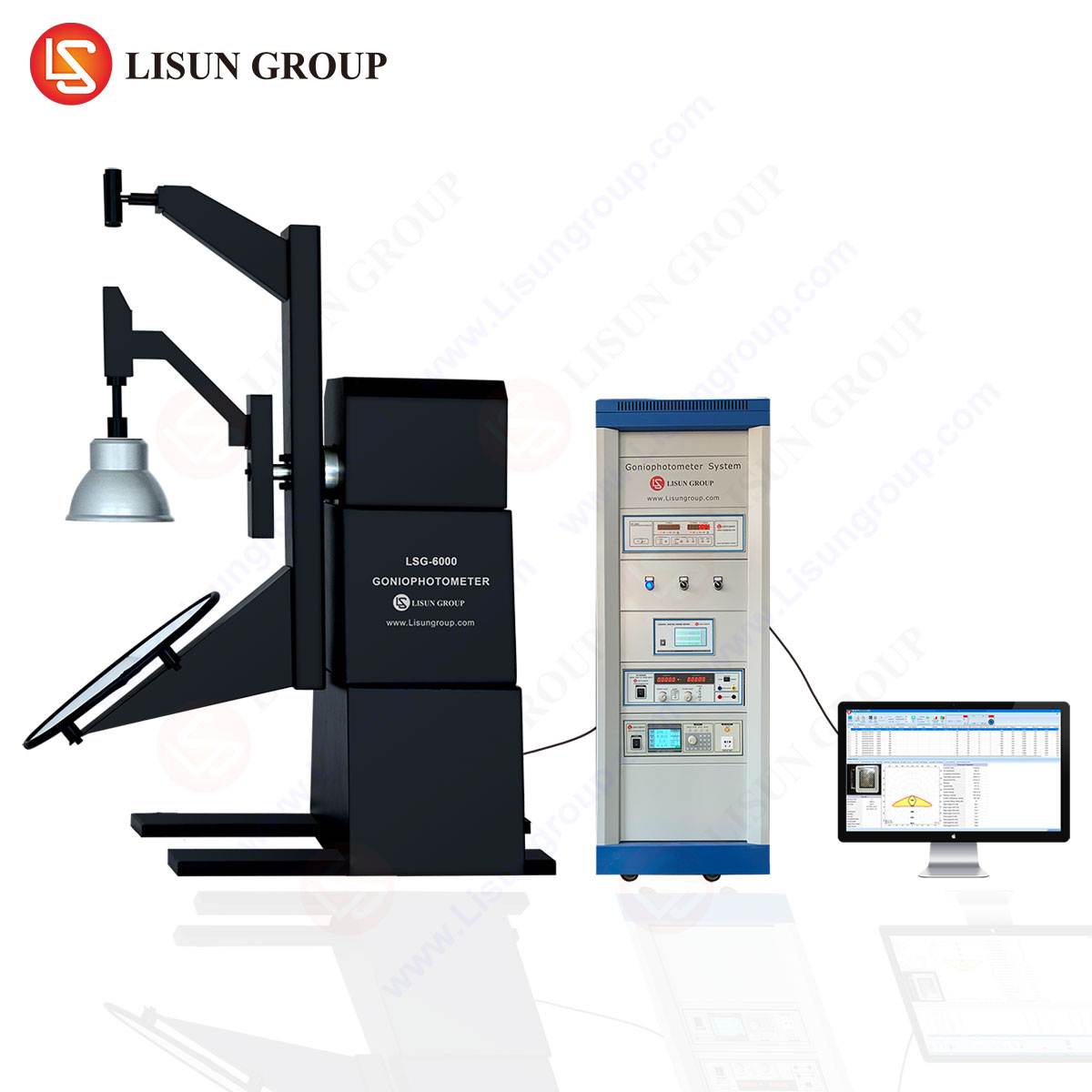




Advanced Goniophotometric Analysis Enhanced by Spectroradiometric Integrating Sphere Systems
Introduction to Comprehensive Photometric and Colorimetric Characterization
The precise measurement of light sources and luminaires is a cornerstone of modern optical engineering, impacting fields ranging from urban infrastructure to biomedical device validation. Traditional goniophotometers provide the foundational ability to measure luminous intensity distribution by rotating a photodetector or the light source under test around one or more axes. However, the increasing complexity of light-emitting diode (LED) technologies, organic light-emitting diode (OLED) panels, and spectrally tunable sources necessitates a more holistic approach. Advanced systems that synergistically integrate a moving goniophotometer with a stationary spectroradiometer and an integrating sphere represent the pinnacle of such comprehensive testing. These hybrid configurations enable the concurrent acquisition of spatial, photometric, and spectral data, delivering a complete radiative profile that is indispensable for research, development, and quality assurance.
Architectural Synthesis: The Hybrid Goniophotometer-Sphere System
The core innovation of an advanced hybrid system lies in its dual-measurement architecture. A precision robotic goniometer, typically of Type C (moving detector) or Type B (moving luminaire) configuration as defined by CIE 70 and CIE 121, forms the spatial mapping framework. This apparatus is coupled with a separate, high-accuracy integrating sphere system. The sphere, coated with a spectrally neutral diffuse material such as barium sulfate or polytetrafluoroethylene (PTFE), serves as a uniform radiance source for the spectroradiometer. In operation, the device under test (DUT) is first measured spatially by the goniophotometer to capture its far-field intensity distribution (C-γ planes). Subsequently, or in some automated sequences, the DUT is placed within or at the port of the integrating sphere. The sphere spatially integrates the total luminous flux, while the fiber-coupled spectroradiometer samples the radiant output to derive a full spectrum (typically 380-780nm for visible light applications). This dual-data set is then correlated, allowing parameters like correlated color temperature (CCT), color rendering index (CRI), chromaticity coordinates (x, y; u’, v’), and peak wavelengths to be mapped directly onto the spatial intensity distribution.
The LPCE-3 Integrated System: A Paradigm for Conformity and Research
Exemplifying this advanced architecture is the LISUN LPCE-3 High Precision Spectroradiometer Integrating Sphere System with a CCD Spectroradiometer. This system is engineered to meet the stringent requirements of both international testing standards and cutting-edge research. Its design centers on a modular approach, where the spectroradiometric sphere system can function as a standalone total flux and spectral analyzer or be seamlessly paired with a compatible goniophotometer for full spatial-spectral characterization.
The LPCE-3 system employs a high-reflectance, computer-designed integrating sphere. The interior coating utilizes a specialized diffuse polymer with exceptional spectral flatness and durability, minimizing measurement drift. A key design feature is the inclusion of auxiliary lamps for precise sphere self-absorption correction, a critical step for accurate absolute flux measurement as per IES LM-78 and CIE 84. The optical input is coupled via a precision cosine-corrected receptor or a direct port adapter to a high-sensitivity CCD array spectroradiometer. This spectrometer offers a typical wavelength accuracy of ±0.3nm and a repeatability of ±0.1nm, enabling the detection of subtle spectral shifts crucial for LED binning and OLED color uniformity assessment.
Testing Principles and Metrological Traceability
The measurement principles governing such a system adhere to a strict chain of traceability to national metrology institutes. For the goniophotometric segment, the luminous intensity is derived from illuminance measurements at a known distance, following the inverse square law. The spatial scan resolution, defined by angular step increments (e.g., 0.1° to 5.0° selectable), determines the granularity of the resulting intensity matrix (I-table).
Within the integrating sphere, the principle of spatial integration is applied. The total luminous flux (Φ) of the DUT is calculated by comparing the spectroradiometer’s signal from the sphere wall when the DUT is active to the signal from a standard lamp of known luminous flux, following the substitution method outlined in CIE 84 and IES LM-79. The spectroradiometer itself is calibrated using NIST-traceable standard light sources, ensuring accuracy in spectral power distribution (SPD) measurements. The system software synthesizes these data streams, enabling the calculation of photometric quantities (luminous flux, intensity, efficacy in lm/W) and colorimetric quantities (CCT, CRI R1-R15, Duv, chromaticity) from the same fundamental SPD data, ensuring internal consistency.
Industry-Specific Applications and Use Cases
- LED & OLED Manufacturing: For LED package and module producers, the LPCE-3 system provides essential data for binning according to ANSI C78.377 and ENERGY STAR criteria. It measures flux, efficacy, and chromaticity with the precision required for high-volume consistency. OLED manufacturers utilize it to validate spatial color uniformity and angular color shift, critical for display and lighting panel quality.
- Automotive Lighting Testing: The system validates compliance with UNECE, SAE, and FMVSS regulations. The goniophotometer measures the precise beam pattern of headlamps, signal lights, and interior lighting, while the sphere-spectroradiometer quantifies total flux and color coordinates of individual LEDs within a cluster, ensuring safety and regulatory conformity.
- Aerospace and Aviation Lighting: In this safety-critical domain, lighting must meet RTCA/DO-160 and specific OEM standards. The system tests navigation lights, cockpit backlighting, and cabin illumination for intensity distribution, color per ICAO specifications, and performance under potential spectral degradation.
- Display Equipment Testing: It calibrates and characterizes the luminance, chromaticity, and uniformity of backlight units (BLUs) for LCDs and direct-view LED/OLED displays, referencing standards like IEC 62563 and ISO 13406-2.
- Photovoltaic Industry: While primarily for visible light, the spectroradiometer’s range can be extended into the near-infrared for characterizing the spectral performance of photovoltaic cells and the emission profiles of solar simulators, referencing IEC 60904-9.
- Scientific Research Laboratories: Researchers in photobiology, material science, and optical physics employ the system to characterize novel light-emitting materials, study angular emission profiles of micro-LEDs, or validate the performance of light sources for controlled environmental studies.
- Urban Lighting Design: The data informs the selection of luminaires by providing full spatial and spectral profiles, enabling accurate simulations of light pollution (skyglow spectral impact) and mesopic visual performance in public lighting projects.
- Marine and Navigation Lighting: Compliance with International Association of Lighthouse Authorities (IALA), COLREGs, and specific classification society rules (e.g., DNV, ABS) requires precise photometric and colorimetric verification of buoys, beacon lights, and ship navigation lamps.
- Stage and Studio Lighting: The system tests intelligent lighting fixtures (moving heads, LED washes) for output, beam angle, and color gamut coverage (e.g., Rec. 709, DCI-P3), essential for lighting designers and equipment manufacturers.
- Medical Lighting Equipment: For surgical lights, phototherapy devices, and diagnostic illumination, standards such as IEC 60601-2-41 mandate specific photometric and colorimetric properties. The system verifies intensity distribution, shadow dilution, and color rendering characteristics critical for clinical efficacy and patient safety.
Competitive Advantages of an Integrated Measurement Solution
The primary advantage of a system like the LPCE-3 is the consolidation of multiple, otherwise discrete, measurement stations into a coherent workflow. This eliminates systematic errors introduced by transferring DUTs between different instruments with unique calibrations and alignment geometries. Data correlation becomes intrinsic rather than post-processed. The use of a spectroradiometer as the primary detector, as opposed to a filtered photopic photodetector, represents a fundamental metrological advancement. It enables the calculation of all photometric and colorimetric quantities from the fundamental SPD, ensuring accuracy even for narrow-band or discontinuous spectra where traditional V(λ)-filtered detectors exhibit significant mismatch errors. Furthermore, the system’s software typically automates complex correction routines (sphere self-absorption, spectral mismatch, stray light) and generates comprehensive reports aligned with industry-standard formats, significantly reducing analysis time and potential for human error.
Data Synthesis and Advanced Analytical Outputs
The integrated software platform transforms raw measurement data into actionable intelligence. Beyond standard polar candela diagrams and Isolux plots, it can generate false-color spatial maps of CCT or CRI, visually highlighting angular color uniformity issues. It calculates zonal lumen summaries for lighting application calculations and exports full IESNA LM-63 (IES) and EULUMDAT (LDT) files for use in architectural lighting design software (e.g., Dialux, Relux). Tabular outputs provide detailed data matrices for every measured parameter at each goniometric angle, satisfying the most rigorous audit and analysis requirements.
Conclusion
The evolution from standalone goniophotometers and integrating spheres to their advanced, integrated counterparts marks a significant leap in optical metrology. Systems such as the LISUN LPCE-3 address the multifaceted characterization demands of next-generation light sources across a vast industrial and scientific landscape. By providing spatially resolved spectral data within a single, traceable measurement chain, they offer an unparalleled depth of analysis, driving innovation, ensuring compliance, and enhancing quality control in the global lighting and optoelectronics industries.
Frequently Asked Questions (FAQ)
Q1: What is the primary benefit of using a spectroradiometer instead of a standard photometer head in the integrating sphere?
A spectroradiometer measures the complete spectral power distribution (SPD) of the source. All photometric (luminous flux, intensity) and colorimetric (CCT, CRI, chromaticity) values are then calculated mathematically from this SPD. This method, known as the spectroradiometric method, eliminates the spectral mismatch error inherent in physical V(λ) filters, leading to superior accuracy, especially for LEDs, lasers, and other sources with narrow or irregular spectra.
Q2: How does the system account for the absorption of light by the test sample itself inside the integrating sphere?
Advanced systems like the LPCE-3 incorporate the auxiliary lamp method for sphere self-absorption (also known as spatial flux distribution) correction. A calibrated auxiliary lamp is mounted permanently inside the sphere. Measurements are taken with the auxiliary lamp both with and without the DUT present inside the sphere (but off). The difference in the spectroradiometer reading quantifies the absorption effect of the DUT, and this factor is applied to correct the DUT’s own flux measurement, as prescribed by IES LM-79 and CIE 84.
Q3: For automotive forward lighting testing, can the system generate the specific isocandela plots and photometric test point data required by regulations?
Yes. The goniophotometer component is designed to perform high-resolution scans over the angular fields specified in standards such as SAE J1383 and UNECE R112. The analysis software automatically processes the measured intensity matrix to produce compliant isocandela diagrams and tabulate values at all regulatory test points (e.g., 50R, 75R, 50L for headlamps), streamlining the certification process.
Q4: In LED manufacturing, how does this system assist with ANSI binning?
The system measures the chromaticity coordinates (x,y or u’v’) and the total luminous flux of each LED with high repeatability. The software can be configured with user-defined binning boundaries based on ANSI C78.377 quadrangles or custom shapes. It automatically assigns each tested unit to a specific bin based on its measured flux and chromaticity, facilitating consistent color and output sorting for production.
Q5: What is the significance of measuring Rf (Fidelity Index) and Rg (Gamut Index) in addition to traditional CRI (Ra)?
While CRI (Ra) averages only eight pastel test color samples (R1-R8), the IES TM-30-20 method evaluates 99 color samples. Rf (Fidelity) is a more robust average fidelity indicator, and Rg (Gamut) indicates the relative increase or decrease in color saturation. For applications like retail lighting, museum illumination, and medical diagnostics where color discrimination is vital, TM-30-20 (Rf/Rg) provided by a full-spectrum system offers a more complete assessment of color rendition properties.